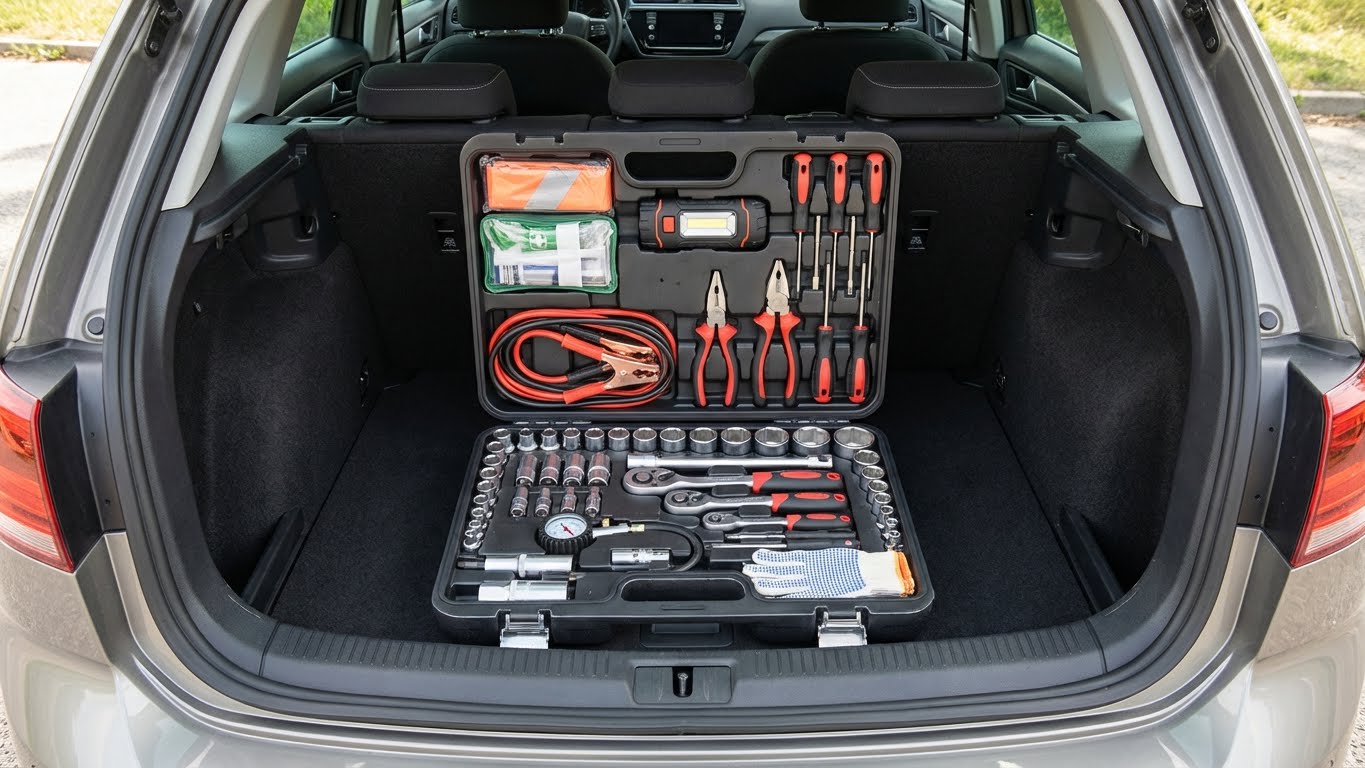
Starting a car tool kit can feel overwhelming, but having the right tools is key to handling common repairs and emergencies. A beginner car tool kit should include essential hand tools, safety gear, and a few specialized items to cover basic maintenance and unexpected roadside fixes. This helps any driver feel prepared and confident when working on their vehicle.
Choosing the right tools means focusing on reliability and usefulness. From wrenches and sockets to items like tire-changing tools and battery testers, these basics make simple repairs possible without extra cost or delay. Including safety gear and storage solutions keeps the kit effective and ready for action.
Building a kit step-by-step lets beginners avoid clutter and only invest in what truly matters. With clear guidance, anyone can assemble a practical tool collection that makes car care easier and safer.
Key Takeways
- A starter kit needs reliable hand tools and safety equipment.
- Basic tire, electrical, and fluid management tools are important.
- Organization and storage improve kit usability.
Essential Hand Tools for Beginners
A good beginner car tool kit includes tools that help with common repairs and maintenance. These tools focus on turning, gripping, and loosening fasteners. Each tool type serves a clear purpose and fits many car models.
Socket Set
A socket set is a must-have for working on nuts and bolts of different sizes. It usually includes a ratchet handle and multiple sockets. The ratchet allows for quicker tightening or loosening by moving in one direction while staying still in the other.
Most sets cover sizes in both metric and standard measurements. A set with sizes from 8mm to 19mm works for most basic car repairs. Deep sockets can be helpful for bolts set deep into the engine or chassis.
Look for a set with a sturdy case to keep sockets organized. Quality metal, like chrome vanadium, resists rust and ensures long life. A good socket set can save time and effort during repairs. For more details, this guide on socket sets explains what to look for when buying one.
Combination Wrenches
Combination wrenches have a box end on one side and an open end on the other. This design allows both secure grip and speed. The closed end fits tightly around bolts, preventing slipping, while the open end lets the user access tight spaces.
A set ranging from 8mm to 19mm covers most bolt sizes in everyday car work. Wrenches made from chrome vanadium steel resist wear and corrosion. A thin profile helps reach bolts in tight engine bays.
Using wrenches on stuck bolts reduces damage compared to pliers or adjustable wrenches. Combination wrenches are often easier to carry and use in small spaces. They serve as an essential complement to a socket set.
Screwdrivers
Screwdrivers are needed for screws in trim panels, electrical parts, and small fasteners. A good kit should include both flathead and Phillips styles.
Common sizes cover the different screws found on cars. Flathead screwdrivers fit slot-head screws while Phillips drivers fit cross-head screws. Handles with non-slip grips improve control and comfort.
Magnetic tips hold screws in place, making repairs easier in cramped spaces. Using the right type and size of screwdriver prevents stripping the screw heads. For safety and ease, it’s best to avoid cheap, worn-out screwdrivers.
Pliers
Pliers come in various shapes and serve different jobs like gripping, cutting, and bending. Needle-nose pliers are great for reaching tight spots or pulling wires. Slip-joint pliers adjust to different widths, useful for holding nuts or clamping hoses.
Cutting pliers or wire cutters trim wires or small parts. Pliers should have insulated handles to reduce the risk of electrical shock, especially when working near wiring.
A sturdy pair improves control when loosening stuck parts or holding small components. They often replace the need for multiple other tools in minor repairs. Investing in durable pliers means fewer replacements and safer work. More information on basic pliers can be found at This Automotive Tools Resource.
Must-Have Safety and Emergency Gear

A basic car tool kit should include items that help in common roadside emergencies. These tools support starting a dead battery, signaling for help, treating minor injuries, and protecting hands during repairs. Safety and preparedness are the focus.
Jumper Cables
Jumper cables are essential for restarting a car battery that has died. They allow a driver to connect their battery to another vehicle’s battery to transfer power safely. A good set of jumper cables should be at least 10 feet long to reach between two vehicles.
Look for cables with thick, well-insulated clamps to prevent sparks and ensure a solid connection. It’s important to know the proper steps to use jumper cables safely: connect the positive clamps first, then the negative clamps, avoiding contact between clamps.
Having jumper cables in the car prevents long waits for roadside assistance in case of a battery failure.
Reflective Warning Triangle
A reflective warning triangle is used to alert other drivers of a stopped vehicle. It increases visibility, especially in low light or bad weather conditions. This helps prevent further accidents when the car is disabled on the road or shoulder.
Most kits include foldable triangles that are easy to store and quick to set up. Place the triangle at least 50 to 100 feet behind the vehicle, depending on traffic speed, to give drivers enough warning.
A warning triangle is a simple but vital tool for roadside safety and is often required by law in many areas.
First Aid Kit
A basic first aid kit in the car handles minor injuries like cuts, scrapes, and burns. The kit should include adhesive bandages, sterile gauze pads, antiseptic wipes, adhesive tape, scissors, and pain relief medication.
Having gloves and wipes for cleaning wounds reduces the risk of infection. Small kits come pre-packed for convenience. Knowing how to use each item correctly ensures quick and effective treatment before professional help arrives.
This kit can make a difference in comfort and safety after minor accidents or injuries during travel.
Work Gloves
Work gloves protect hands during vehicle repairs or handling sharp or hot parts. Durable gloves made of thick fabric or leather are best. They prevent cuts, burns, and dirt from blocking grip.
A good pair allows flexibility to use small tools like wrenches or screwdrivers without removing the gloves. Gloves also improve safety when changing tires, handling jumper cables, or clearing debris.
Including gloves in the car tool kit ensures hands stay safe while performing basic roadside fixes.
Basic Tire and Wheel Tools
A good tire and wheel tool set helps with safety and quick fixes on the road. It includes items to check tire pressure, remove lug nuts, and inflate tires. Each tool has a clear role to keep a vehicle running smoothly and avoid breakdowns.
Tire Pressure Gauge
A tire pressure gauge measures the air pressure inside tires. Proper tire pressure improves fuel efficiency, tire life, and vehicle handling. Most passenger cars need between 30 and 35 PSI, which varies by model.
There are two main types: digital and analog. Digital gauges give quick, easy-to-read numbers while analog gauges work without batteries and are very durable. Either works well if used correctly.
Drivers should check tire pressure when tires are cold and before driving long distances. Carrying a tire pressure gauge allows quick monitoring and ensures tires are at safe levels to prevent wear or blowouts.
Lug Wrench
A lug wrench is essential for loosening and tightening lug nuts on car wheels. It is usually shaped like an L or X to provide the leverage needed for detail work on tires.
The size must match the lug nuts on the vehicle. A mismatched tool can round off the nuts or cause injury. Common sizes include 17mm, 19mm, or 21mm depending on the car.
Many lug wrenches come with a socket that fits over lug nuts and can be used with a breaker bar or by hand. Having a lug wrench in the car allows for wheel changes during emergencies like flat tires.
Portable Air Compressor
A portable air compressor provides a quick way to add air to tires when pressure is low. It usually plugs into the car’s 12-volt outlet or runs on battery power.
These compressors often include a pressure gauge and automatic shutoff to avoid over-inflating. They are compact enough to store easily in the trunk or tool kit.
Keeping a portable air compressor means drivers do not have to rely on gas stations or repair shops for tire inflation. It is critical for maintaining correct pressure after repairs or long trips.
Electrical and Battery Tools
Electrical and battery tools help diagnose and fix common car electrical problems. They are vital for checking voltage, replacing blown fuses, and safely handling battery connections. These tools keep a vehicle’s electrical system running smoothly and prevent small issues from becoming bigger problems.
Multimeter
A multimeter measures voltage, current, and resistance in a car’s electrical system. It helps identify dead batteries, faulty wiring, or blown fuses by providing accurate electrical readings.
For beginners, a simple digital multimeter is best. It should have easy-to-read displays and clear settings for measuring voltage (volts), current (amps), and resistance (ohms). Using a multimeter, someone can test the battery’s charge level or check if a fuse is working without removing it.
Multimeters can also test alternator output and the continuity of wires. Proper use reduces guesswork and saves time during troubleshooting. Learning to use a multimeter is an important skill in any basic car tool kit.
Fuse Puller
A fuse puller is a small plastic tool designed to safely remove and install fuses from the fuse box. It fits various fuse sizes and prevents damage to the fuse or electrical panel.
Using fingers to remove fuses is risky because fuses are fragile and could break or be hard to grasp. The fuse puller grips the fuse firmly, making removal easy and reducing the chance of electric shock or damaging other components.
A quality fuse puller is compact and often included in car tool kits. It simplifies quick fuse replacements during electrical troubleshooting.
Spare Fuses
Keeping a set of spare fuses is essential to quickly replace blown ones and restore electrical functions. Fuses protect circuits from overcurrent and prevent damage to wiring and components.
A beginner’s tool kit should include multiple amperage ratings like 5A, 10A, 15A, and 20A, to fit different circuits in the car. It is important to replace a fuse with one of the same rating to avoid electrical hazards.
Spare fuses should be organized and stored in a small container or fuse box case for easy access. This allows for fast repairs during emergencies or routine maintenance.
Fluids and Leak Management
Proper fluid levels and leak management are key to keeping a car running safely and efficiently. Regular checks prevent damage and costly repairs. Essential tools for this include items that help monitor and add fluids correctly without contamination or spills.
Engine Oil
Engine oil lubricates the engine’s moving parts and prevents overheating. It should be checked regularly using the dipstick, typically found near the engine. The oil level must be between the minimum and maximum marks. If it’s low, adding the right grade of oil is important; the vehicle’s manual usually specifies this.
Oil changes follow a schedule that depends on the car’s make and driving conditions but often fall between 3,000 to 7,500 miles. Fresh oil keeps the engine clean and running smoothly. Storing extra oil in the car tool kit is a good idea to top off if needed.
Regularly inspecting for leaks under the car is vital. Oil spots could mean worn seals or gaskets. Learn more about checking engine oil on EPA’s vehicle maintenance guide.
Coolant
Coolant (antifreeze) regulates engine temperature and prevents freezing or overheating. The coolant reservoir is usually translucent and marked with “min” and “max” levels. It should only be checked when the engine is cool to avoid burns from hot fluid or steam.
Low coolant levels can cause engine overheating and severe damage. Adding a 50/50 mixture of coolant and water is common unless the coolant container is pre-mixed. Always use the type of coolant recommended by the manufacturer to avoid corrosion or poor performance.
The coolant system should also be checked for leaks around hoses and the radiator. Signs of leaks include puddles under the car or a sweet smell. More details on coolant care can be found at Car Care Council.
Funnel
A funnel is a simple but essential tool in a car tool kit. It helps pour fluids without spilling or wasting them. Funnels of different sizes fit various reservoirs, such as oil, coolant, and windshield washer fluid.
Using a funnel minimizes dirt or debris from entering fluid containers. It also prevents overflows that can damage components or make messes. A small, collapsible funnel is convenient for storage.
Including a funnel ensures precise fluid top-offs, reduces cleanup, and extends the life of key car systems by helping maintain proper fluid levels.
Lighting and Visibility Tools
Effective lighting and visibility tools are essential for safety during a roadside emergency, especially at night or in poor weather. Proper equipment helps drivers see their surroundings and makes their vehicle noticeable to others. This section covers three key items that should be in every beginner car tool kit.
Flashlight
A heavy-duty flashlight is crucial for working in the dark or signaling for help. LED flashlights are preferred because they are bright, energy-efficient, and have a long battery life. It’s important to choose a model with a durable, water-resistant casing to handle rough conditions.
Extra batteries should be stored alongside the flashlight to ensure continuous use. The beam should be strong enough to illuminate several yards ahead, which helps when checking under the hood or changing a tire. Compact size and ease of handling are bonus features.
Headlamp
A headlamp provides hands-free lighting, which is very useful during emergencies. It frees both hands for fixing problems or managing safety gear. Adjustable brightness levels and beam angles are helpful to focus light where it’s needed.
Like flashlights, headlamps with LED bulbs offer bright, long-lasting light. Battery life and water resistance are important features to check. A comfortable, adjustable strap ensures the headlamp fits securely without slipping during use.
Spare Bulbs
Spare bulbs for headlights, brake lights, and turn signals are essential for drivers to maintain visibility and comply with road safety laws. Bulbs come in different sizes and types, so drivers should carry the specific ones for their vehicle.
It’s helpful to keep bulbs in a small, labeled container to avoid damage and confusion. Replacing a blown bulb promptly prevents accidents and avoids fines. Including both standard and high-beam headlight bulbs covers most emergency needs.
Inspection and Cleaning Essentials
A good beginner car tool kit should include items that help with detailed inspection and cleaning. These tools give better visibility, remove dirt effectively, and keep the workspace organized.
Work Light
A work light is crucial for inspecting tight or dark areas under the hood or beneath the car. It should be bright enough to clearly show engine parts, wires, and fluid levels. LED work lights are preferred because they offer strong light while using little power.
Portability matters. A light with a magnetic base or hook lets a user secure it hands-free. Rechargeable models provide convenience and save money over time. Water resistance is also a good feature, as it protects the tool during outdoor use or in damp conditions.
Shop Towels
Durable shop towels are essential for cleaning hands, tools, and parts. They absorb fluids like oil, grease, and coolant better than ordinary rags. Cotton or microfiber towels are common choices because they clean well without scratching surfaces.
Many beginners keep a stash of reusable towels and disposable ones. Reusables cut down waste and cost, while disposables are handy for very dirty jobs. Towels should be available in different sizes for larger spills or small touch-ups.
Brushes
Brushes help remove dirt, rust, and grime from engine components and other areas. A set with varied bristle stiffness is ideal. Softer brushes work well on delicate surfaces such as wiring and plastic, while stiff brushes clean metal and tough spots.
Users should choose brushes with comfortable grips for better control during detailed work. Wire brushes are useful but should be used carefully to avoid damaging sensitive parts. Nylon and natural bristle brushes offer safe cleaning options.
Storage and Organization Tips
A car tool kit must be stored safely and neatly to avoid damage and loss. Tools should never be left loose in the trunk or under seats. In a sudden stop or crash, loose tools can become dangerous objects.
Using a sturdy toolbox or a plastic organizer with compartments helps keep tools in place. Small parts like fuses, zip ties, and gloves can be stored separately in sealable plastic bags or small trays. This prevents them from getting tangled or lost.
Labeling compartments or keeping a printed checklist inside the toolbox lid helps users quickly find what they need. It also ensures that tools are returned to their proper spot after use.
For easy access, the tool kit should be placed where it won’t shift during driving but can still be reached quickly during emergencies. Some people use drawer inserts or mounting straps to secure their kits.
A well-organized kit reduces stress and saves time when working on the car. It allows owners to focus on repairs instead of searching for tools. Keeping the tool kit clean and dry also extends the life of the tools.
FAQs
What basic tools should every beginner have?
Every beginner should start with a simple set: a ratchet and socket set, screwdrivers, pliers, an adjustable wrench, and a tire pressure gauge. Safety gear like gloves and goggles is also important. These tools cover most small repairs and maintenance tasks.
How many tools does a beginner really need?
A basic kit usually has around 10 to 15 items. It’s better to have a smaller, well-chosen set than a large kit full of tools that won’t be used. As skills grow, more specialized tools can be added.
Is it necessary to buy expensive brands?
Starter tools don’t have to be costly. Mid-quality tools from trusted brands often provide good durability and function. Beginners should focus on tools that feel sturdy and comfortable to use.
Can beginners fix most car problems with this kit?
The basic kit helps with common fixes like changing tires, tightening bolts, and checking fluids. More complex repairs may require specialized equipment or professional help. It’s good to know personal limits.
How should tools be stored?
A compact toolbox or organizer works well. Using small plastic bags or trays can keep tiny items like fuses or zip ties sorted. This prevents loss and speeds up finding tools when needed.
| Tool Type | Purpose | Example |
|---|---|---|
| Socket Set | Tightening/loosening bolts | Ratchet and sockets |
| Screwdrivers | Screwing and unscrewing | Flathead, Phillips |
| Pliers | Gripping and cutting | Needle-nose pliers |
| Tire Pressure Gauge | Checking tire pressure | Digital or analog |
| Safety Gear | Protecting hands and eyes | Gloves, goggles |
Conclusion
A beginner car tool kit should focus on versatility and ease of use. It is important to include tools that cover basic repairs and maintenance without overwhelming the user with complex or specialized items. Essential tools like a socket set, screwdrivers, pliers, and a tire pressure gauge form the foundation.
Organization plays a key role in keeping the toolkit effective. Using a checklist and small containers for loose items, such as fuses or gloves, helps prevent loss and saves time during repairs. Safety gear, like gloves and eye protection, should always be part of the kit.
Investing in quality tools pays off in durability and reliability. Beginners benefit from sets that are well-reviewed for their construction and finish. This approach reduces the need for frequent replacements or upgrades.
A well-prepared toolkit empowers car owners to handle common vehicle problems with confidence. Having the right tools ready improves the chances of quick and effective fixes, reducing the reliance on roadside assistance or mechanics for minor tasks.