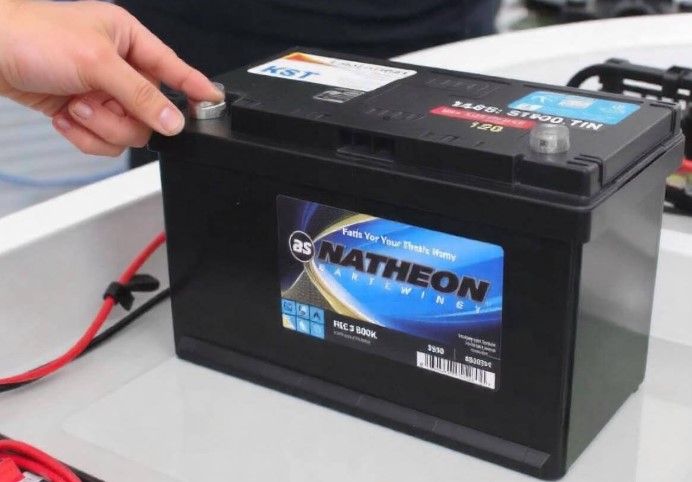
As someone who’s always exploring practical solutions for vehicle maintenance and power systems, I’ve often asked myself: Can you use a marine battery in a car? It’s a question that comes up frequently, especially when dealing with battery replacements or emergency power options.
Yes, you can use a marine battery in a car, but it’s not always the most efficient or recommended choice. Marine batteries are typically 12V and can deliver enough cranking amps to start a car engine.
However, they’re designed for deep-cycle performance. It means they provide steady power over time rather than the quick bursts needed for automotive starting systems. This difference in functionality can affect long-term performance and battery lifespan when used in a car.
Are you still in confusion whether you should use a marine battery in your car or not? Don’t worry! This article will help you to know everything before swapping your car battery with a marine one. From understanding what marine batteries are, how they work, to identifying the risks of using them in vehicles. So, keep reading this article.
What is a Marine Battery?
A marine battery is a specialized power source built to withstand the harsh conditions of aquatic environments. It’s commonly used in boats to start engines and power onboard electronics like GPS, radios, and trolling motors.
It is a deep-cycle or dual-purpose battery designed to deliver consistent power over extended periods. These batteries are built to endure the vibrations, moisture, and temperature changes that occur on open waters.
This battery comes in three types: starting, deep-cycle, and dual-purpose. Starting marine batteries offer high cranking amps, while deep-cycle ones are built for long-duration power delivery.
Marine batteries often use thicker internal plates and tougher outer casing materials to withstand marine conditions. They can also handle deeper discharges without being damaged, which is why they’re considered more durable in the right setting.
How a Marine Battery Works?
Marine batteries are designed to provide reliable power in wet, unstable environments. They’re built with robust materials and internal designs that support both starting and deep-cycle functions.
The working process of a marine battery involves several key steps:
- Energy Storage: The battery stores energy through chemical reactions between lead plates and an electrolyte solution, typically sulfuric acid.
- Discharge Cycle: When connected to a load (like a trolling motor or car starter), the battery releases stored energy as electrical current. Deep-cycle marine batteries can discharge up to 80% of their capacity without damage.
- Recharge Cycle: After use, the battery is recharged via an alternator or external charger. The chemical reaction reverses, restoring the battery’s charge.
- Durability Features: Marine batteries are built with vibration-resistant casings and corrosion-resistant terminals to survive rough waters and frequent movement.
- Maintenance and Monitoring: Some marine batteries require regular electrolyte checks, while sealed AGM or lithium variants are maintenance-free and offer longer lifespans.
Is It Possible to Use a Marine Battery in a Car?
The idea of using a marine battery in a car often arises during emergencies or when repurposing old equipment. But can you use a marine battery in a car?
Yes, it is possible to use a marine battery in a car as it meets the car’s voltage and cranking amp requirements. Most marine batteries are 12V, which aligns with standard car battery specifications. However, marine batteries are optimized for deep-cycle use, not the quick bursts of energy needed to start a car engine.
Compatibility also depends on the battery’s physical size and terminal configuration. Some marine batteries may not fit securely in a car’s battery tray or connect properly to the vehicle’s wiring.
Additionally, marine batteries may not recharge efficiently through a car’s alternator, potentially shortening their lifespan. While marine batteries can serve as temporary replacements, they’re not recommended for long-term automotive use.
Their design prioritizes endurance over high-output performance, which may lead to sluggish starts or electrical strain in colder climates.
What are the Differences Between Car Battery and Marine Battery?

At first glance, car and marine batteries might seem similar. After all, both are lead-acid batteries, both output 12 volts, and both can start engines.
But under the surface, their design, performance, and purpose differ significantly. They are designed for two entirely different environments which are roads and rivers. Here are the major differences between a car battery and a marine battery.
Battery Type
Car batteries are typically starting batteries, designed to deliver a quick, powerful burst of energy to start the engine. Marine batteries, on the other hand, come in three types: starting, deep-cycle, and dual-purpose. Deep-cycle marine batteries are built to provide steady power over long periods, while dual-purpose ones combine both starting and deep-cycle capabilities.
Performance
Car batteries are optimized for Cold Cranking Amps (CCA), which measure the battery’s ability to start an engine in cold temperatures. Marine batteries use Marine Cranking Amps (MCA), tested at slightly warmer conditions (32°F), and may not perform as well in freezing weather. Marine batteries excel in endurance, while car batteries shine in short, high-power bursts.
Build Quality
Marine batteries are built tougher. They feature thicker lead plates, reinforced casings, and corrosion-resistant terminals to withstand moisture, vibration, and saltwater exposure. Car batteries are designed for stable, dry environments and may degrade faster if exposed to harsh conditions.
Maintenance
Most car batteries are sealed and maintenance-free, requiring little attention. Marine batteries are especially flooded types. They often need regular electrolyte checks and water top-ups. However, AGM and lithium marine batteries offer maintenance-free options similar to automotive batteries.
Durability
Marine batteries are engineered for deep discharges and frequent cycling, making them ideal for powering boat electronics over extended periods. Car batteries are not built for deep cycling and can suffer permanent damage if discharged too far or too often.
Cost
When it comes to pricing, car batteries are generally more budget-friendly than marine batteries. A standard lead-acid car battery typically costs between $50 to $200, depending on the brand, capacity, and technology.
On the other hand, marine batteries are built for tougher conditions and dual-purpose functionality, which makes them more expensive. A deep-cycle marine battery usually falls in the range of $100 to $400, while AGM or lithium-ion marine batteries can cost anywhere from $250 to over $1000, depending on capacity and features.
Is Using Marine Battery in a Car Harmful?
Swapping a marine battery into your car might seem like a clever fix, but it’s not without risks. So, is using a marine battery in a car harmful?
Using a marine battery in a car is not inherently harmful, but it can lead to performance issues and long-term wear if not properly matched. Marine batteries may lack the high CCA needed for reliable cold starts, especially in winter. This can strain the starter motor and reduce battery efficiency.
These batteries may not recharge optimally through a car’s alternator, leading to undercharging or sulfation. Their larger size and terminal layout can also pose installation challenges, increasing the risk of loose connections or short circuits.
Inconsistent voltage output from deep-cycle marine batteries may affect sensitive car electronics. Over time, this mismatch can degrade the vehicle’s electrical system and shorten battery life.
Frequently Asked Questions
Can I jumpstart my car with a marine battery?
Yes, if the marine battery has sufficient cranking amps and is 12V, it can jumpstart a car.
Will a marine battery damage my car’s alternator?
Not directly, but it may not charge efficiently, leading to reduced battery life or alternator strain.
Are marine batteries better than car batteries?
Not necessarily. Marine batteries are built for endurance, while car batteries are optimized for quick starts.
Can I use a marine battery for car audio systems?
Yes, deep-cycle marine batteries can support high-demand audio setups, but proper isolation is recommended.
How long will a marine battery last in a car?
A marine battery can last typically 3–6 months with daily use, depending on climate and charging efficiency.
Final Thought
So, can you use a marine battery in a car? Technically “YES”, but it’s not the best long-term solution. Marine batteries can power a car in emergencies or for short-term use, but they’re not designed for the demands of daily driving.
If you’re considering this swap, ensure the battery meets your car’s specs and monitor its performance closely. For optimal results and longevity, stick with a battery built for your vehicle’s needs. Thank you all for reading this article.