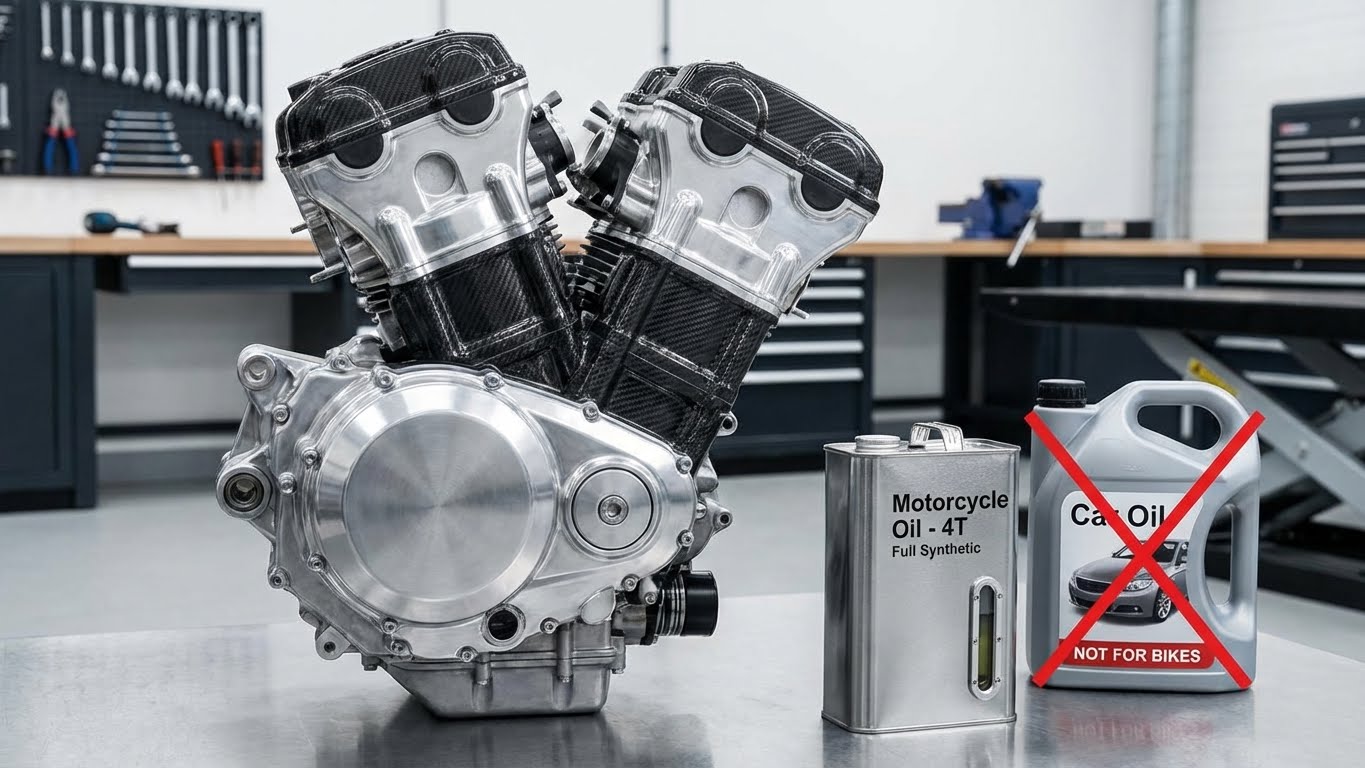
Many motorcycle owners wonder if they can use car engine oil in their bikes. The simple answer is no because car oil lacks the specific additives and formulations needed for motorcycle engines, which can lead to poor performance and engine damage. Motorcycles have different lubrication needs, especially since their oil often also cools and protects the wet clutch and transmission.
Using car oil in a motorcycle can cause the clutch to slip due to its different friction modifiers, reducing engine life and risking safety. While it might seem like a convenient or cheaper choice, it does not meet the durability and protection requirements that motorcycle engines demand. Choosing the right oil is essential to keep a bike running smoothly and avoid costly repairs.
Key Takeaways
- Motorcycle engines require oil with specific formulations not found in car oils.
- Using car oil in a motorcycle can cause clutch problems and increase engine wear.
- Following manufacturer guidelines and using proper motorcycle oil protects engine performance and longevity.
Understanding Car Oil and Motorcycle Oil
Car oil and motorcycle oil serve similar basic purposes but are made differently to match how their engines work. The differences lie in the oil’s makeup, how thick it is at various temperatures, and the additives used to protect moving parts.
Key Differences in Formulation
Motorcycle oil is designed to handle a wet clutch system, where the same oil lubricates the engine, transmission, and clutch. This requires the oil to have friction properties that prevent the clutch from slipping. Car oil, on the other hand, usually does not deal with these conditions.
Motorcycle oils often have stronger anti-wear and higher shear stability components. They must maintain protection under high engine revs and heat. Car oils focus more on engine protection alone and generally lack the necessary friction modifiers for a motorcycle’s wet clutch.
Oil Viscosity Ratings Explained
Viscosity measures how thick or thin an oil is at certain temperatures. Both car and motorcycle oils use ratings like 10W-40 or 5W-30, but the numbers alone don’t tell the full story.
Motorcycle oils tend to have higher viscosity index improvers, which keep the oil stable across a wide temperature range. This stability helps the oil remain protective at both low startup temperatures and high operating heat. Car oils may thin out faster under motorcycle conditions, leading to quicker engine wear.
Roles of Additives in Lubrication
Additives in oil help protect engine parts and improve performance, but they differ between car and motorcycle oils. Motorcycle oils include additives that protect metal parts from wear while also maximizing friction control for the clutch.
Car oils usually emphasize detergents and dispersants for engine cleanliness. They don’t prioritize friction modifiers needed in motorcycle oils, which can lead to clutch slip if used in a bike. Additionally, antioxidants in motorcycle oil are selected to handle the distinct thermal stress from motorcycle engines more effectively.
Engine Design Considerations
Motorcycle and car engines have different needs that affect oil choice. These differences include how the clutch works and how the engine handles heat and stress. Understanding these details helps explain why car oil may not be right for a motorcycle.
Wet Clutch vs Dry Clutch Systems

Many motorcycles use a wet clutch system, where the clutch plates are submerged in engine oil. This oil must provide proper friction to allow smooth clutch engagement and prevent slipping. Car oils often contain friction modifiers that reduce engine friction, which can cause a wet clutch to slip or wear out faster.
In contrast, most cars use a dry clutch system that is separate from the engine oil. This means car oils are not designed to work in direct contact with clutch components. Using car oil in a motorcycle with a wet clutch can harm the clutch’s performance and shorten its life.
Heat Tolerance and Performance Demands
Motorcycle engines usually run hotter than car engines because of their smaller size and higher RPMs. Motorcycle oils are specially formulated to handle these higher temperatures and stresses. They offer durable lubrication and maintain stable viscosity even under heat.
Car oils often focus on longevity to cover longer mileage and lower temperatures. Their additives may break down faster in motorcycles or fail to protect engine parts under high heat. This difference can cause increased engine wear or overheating in motorcycles using car oil.
Potential Effects of Using Car Oil in Motorcycles
Using car oil in a motorcycle can lead to several specific problems. These mainly affect how the clutch works, the protection of the gearbox, and the overall wear and durability of the engine parts. Each of these areas faces unique challenges when car oil is used instead of the recommended motorcycle oil.
Clutch Slippage Risks
Most motorcycles have a wet clutch system where the clutch plates are lubricated by the engine oil. Car oils often contain friction modifiers designed for car engines without wet clutches. These modifiers reduce friction, which can cause the motorcycle’s clutch plates to slip.
Clutch slippage leads to poor performance and can make the bike unsafe to ride. It also causes increased wear on the clutch components over time, potentially leading to costly repairs. The slippery nature of car oil in this system means the clutch won’t engage fully, affecting acceleration and control.
Gearbox Protection Concerns
Motorcycle oil is formulated to lubricate both the engine and the gearbox, which share the same oil supply. Car oil, however, is designed for engines where the gearbox uses a different lubricant or has different demands.
Using car oil can cause insufficient lubrication in the motorcycle gearbox. This creates more friction and heat, which can damage the gears and bearings. Over time, this leads to quicker wear and a higher chance of mechanical failure in the gearbox.
Longevity and Wear Implications
Motorcycle engines operate under different stress conditions compared to car engines. Motorcycle oils include additives that protect against high RPMs and vibrations. Car oils may not have these additives in the right amounts.
Using car oil could cause the oil to break down faster and become too thin under motorcycle engine conditions. This results in less effective protection on engine parts, increasing wear. The engine may suffer from overheating, friction damage, and a shorter overall lifespan if car oil is used regularly.
Manufacturer Recommendations and Warranty Issues
Following the right oil guidelines is critical for motorcycle health and warranty safety. Using the wrong type of oil can affect engine performance and may lead to costly damage. It is important to know what the manufacturer advises and how this relates to warranty protection.
Reviewing Owner’s Manual Guidelines
The owner’s manual is the best source for oil type and viscosity details. Manufacturers design these recommendations to suit the motorcycle’s engine needs, including lubrication and cooling.
Motorcycle engines often require oil formulated for higher heat and different friction levels than car engines. Using car oil may lack necessary additives for wet clutches or transmission components.
Key points usually found in an owner’s manual:
- Exact oil type (e.g., motorcycle-specific 10W-40)
- Viscosity rating for seasonal conditions
- Approval for use with wet clutches
- Recommended oil change intervals
Ignoring these guidelines can reduce engine efficiency and lifespan.
Warranty Coverage and Compliance
Most motorcycle warranties demand the use of approved oil types. If car oil is used instead, this can void the warranty, leaving the owner financially responsible for repairs.
Warranty rules typically require:
- Following manufacturer’s oil specifications exactly
- Keeping service records showing use of specified oil
- Avoiding oils that do not meet certification standards
Using non-approved oil risks damage, especially to the clutch and engine, which the manufacturer will not cover under warranty. Staying compliant protects the bike and the owner’s investment.
When It Might Be Safe to Use Car Oil
Using car oil in a motorcycle can sometimes be acceptable, but only under specific conditions. The type of motorcycle and the duration of use are important factors. Understanding these details helps prevent engine damage and performance issues.
Motorcycle Types With Reduced Risk
Certain motorcycles are less sensitive to the differences between car and motorcycle oils. Air-cooled, single-cylinder bikes that do not use a wet clutch system are more tolerant. These engines run at lower temperatures and pressures, which reduce the risks caused by car oil.
Cruisers and some older motorcycles without a shared engine and transmission oil system may also face fewer problems. However, motorcycles with wet clutches or high-performance engines demand motorcycle-specific oils due to their special additive requirements.
Riders should always check their owner’s manual and consider the bike’s design before using car oil. Even if the bike can handle car oil, regular use is not recommended.
Short-Term Emergency Use Scenarios
Using car oil in an emergency, such as running low on motorcycle oil during a ride, might be necessary. In such cases, car oil can temporarily lubricate the engine to prevent immediate damage.
This short-term use, however, should be limited to getting to a service station or home safely. Once possible, the oil must be drained and replaced with proper motorcycle oil.
Emergency use should avoid multi-passenger or high-revving conditions, as these increase the engine’s stress. This approach is a stopgap, not a long-term solution.
Best Practices for Choosing Motorcycle Oil
Choosing the right oil involves paying attention to the oil’s thickness and quality standards. These factors ensure the oil performs well for the specific demands of a motorcycle engine and its wet clutch system.
Selecting the Right Viscosity
Viscosity refers to how thick or thin the oil is at different temperatures. Motorcycles often need an oil that flows well when cold but stays thick enough to protect the engine at high temperatures. Common viscosities for motorcycles are 10W-40 and 20W-50, where the first number shows cold-temperature flow and the second shows viscosity at engine temperature.
Choosing the right viscosity depends on the climate and the bike’s engine. For warmer areas or high-performance bikes, thicker oil like 20W-50 may be better. In colder climates, thinner oil like 10W-40 helps the engine start smoothly. Using the manufacturer’s recommended viscosity from the owner’s manual is always best.
Recognizing JASO and API Certifications
JASO (Japanese Automotive Standards Organization) and API (American Petroleum Institute) certifications show an oil meets specific quality and performance rules. For motorcycles, the JASO MA or MA2 grade is crucial. This certification ensures the oil will not cause the wet clutch to slip, which is important for bikes where the engine oil also lubricates the clutch.
API ratings like SN or SP indicate the oil’s overall engine protection level. Together, JASO and API certifications help riders pick an oil that protects the engine and clutch properly. Always look for these labels on the oil container before buying.
Environmental Impact and Oil Disposal
Used motor oil has a significant environmental impact if not handled properly. When spilled or dumped, it can contaminate soil and water, harming plants, animals, and ecosystems. Even small amounts can pollute large volumes of water, affecting aquatic life.
Proper disposal and recycling of used oil reduce these risks. Recycling allows oil to be cleaned and re-refined into new motor oil or used as fuel, which saves natural resources and lowers pollution. It also prevents harmful chemicals from entering the environment.
Key facts about oil disposal:
- Never pour used oil down drains or on the ground.
- Collect oil in sealed containers after draining.
- Take the oil to a recycling center or authorized facility.
Recycling programs are widely available and make it easy to dispose of oil responsibly. Some service stations and auto shops accept used oil for recycling. Following these steps helps protect water bodies and soil from hazardous contamination.
By adopting safe disposal methods, individuals contribute to protecting ecosystems and public health. Proper oil management is an important part of reducing the environmental footprint of vehicle maintenance.
Conclusion
Using car oil in a motorcycle is generally not recommended. Motorcycles have specific engine and clutch needs that car oil does not always meet. The friction modifiers in car oil can cause the clutch to slip, which affects performance and safety.
In a pinch, using car oil temporarily might be okay, but it should not be a long-term solution. Riding with the wrong oil can lead to engine wear, reduced performance, and costly repairs. Motorcycle oil is formulated to handle the engine, clutch, and gearbox all at once.
Key differences:
- Motorcycle oil works with wet clutches.
- Car oil often contains additives that affect clutch grip.
- Viscosity and shear stability in motorcycle oil match the bike’s engine demands.
Choosing the right oil promotes engine health and bike reliability. Following manufacturer recommendations is important to keep the motorcycle running well.
If motorcycle oil isn’t available, using car oil briefly is better than running without oil at all. However, switching back to the proper oil as soon as possible helps prevent damage.
Summary of risks using car oil in motorcycles:
- Clutch slippage
- Engine damage
- Decreased performance
- Safety concerns
Proper motorcycle oil keeps the engine, clutch, and transmission working together smoothly. It is the best choice for maintaining a motorcycle’s performance and lifespan.