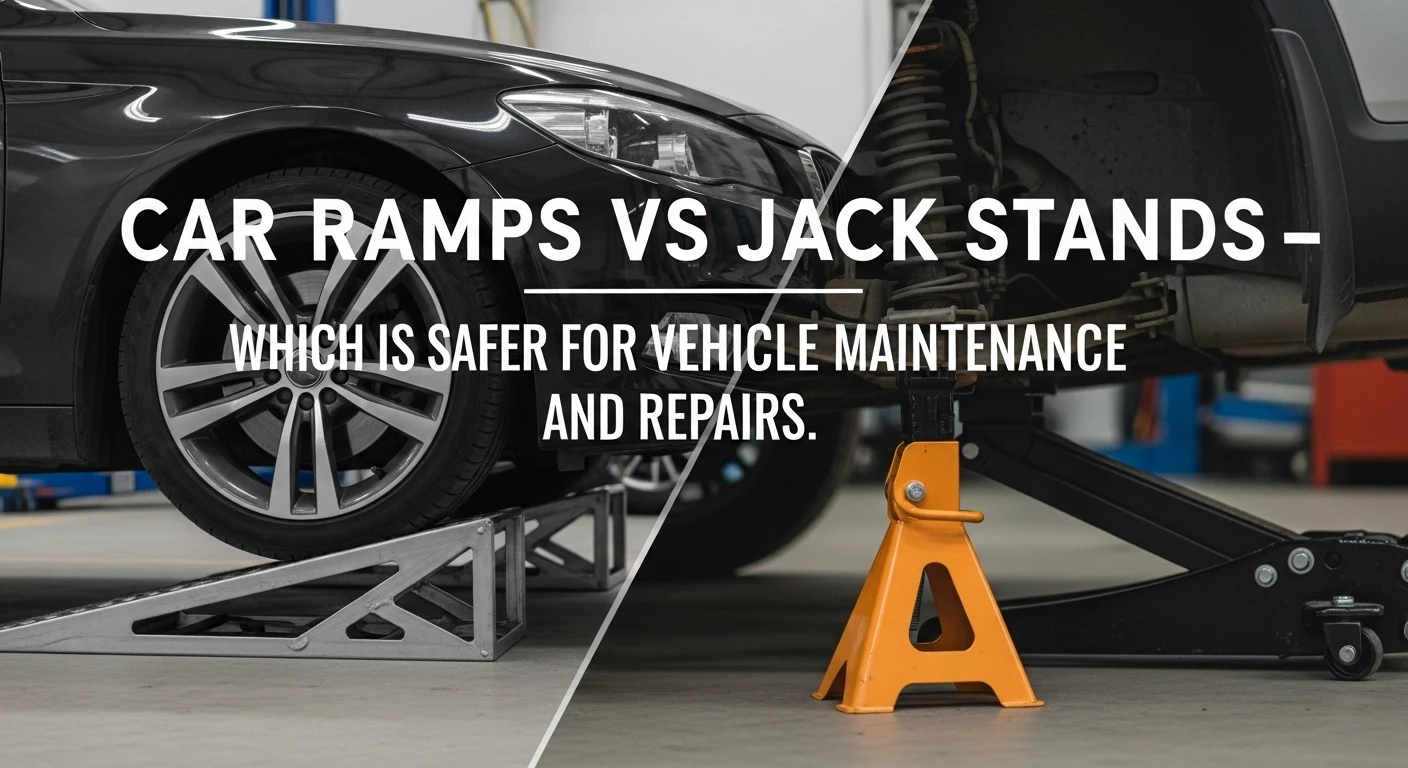
When working under a vehicle, safety is the top priority. Both car ramps and jack stands are popular tools used to lift cars for maintenance, but each has different safety features. Car ramps are generally safer for quick and simple tasks because they provide a stable, gradual incline that supports the whole vehicle.
Jack stands offer more control and stability for detailed repairs that require raising only part of the vehicle. However, they demand careful positioning and a solid, level surface to prevent accidents. Choosing the right tool depends on the specific job, equipment, and experience level of the user.
Understanding the strengths and risks of each option can help ensure safety during car maintenance. This article breaks down the pros and cons of ramps versus jack stands to guide readers to the best choice for their needs.
Key Takeaways
- Car ramps offer quick, stable support for simple jobs like oil changes.
- Jack stands provide better access for complex repairs but need careful setup.
- Safety depends on using the right tool correctly for each type of work.
What Are Car Ramps?

Car ramps are designed to raise the front or rear wheels of a vehicle off the ground. They provide a simple way to lift a car to access the underside for tasks like oil changes or fluid checks. The ramps’ shape, build, and capacity affect their safety and usability for different vehicles.
Design and Functionality
Car ramps usually feature two inclined platforms that a vehicle is driven onto. The ramps have a gentle slope, allowing the wheels to roll up smoothly. At the top, they have a flat section to support the tires securely. This design keeps the vehicle stable once raised.
Most ramps rely on gravity and the car’s weight to hold the vehicle in place. Some include side rails or barriers to prevent wheels from slipping off. The convenience of ramps lies in how quickly a vehicle can be lifted without using a jack or stand.
Materials and Weight Ratings
Car ramps are typically made from metal, heavy-duty plastic, or a blend of materials for durability and strength. Metal ramps offer high weight capacity and long life but can be heavier to move. Plastic ramps are lighter and often built to support smaller vehicles.
Weight ratings vary widely. Most ramps support cars up to 6,000 pounds or more, but it’s crucial to choose ramps rated for the vehicle’s weight. Always check manufacturer specifications to avoid overloading. For more detailed safety standards, sources like the National Highway Traffic Safety Administration provide useful guidelines.
Suitable Vehicle Types
Car ramps work best with vehicles that have enough ground clearance to climb the incline safely. This usually includes sedans, SUVs, and trucks with moderate height. Low-clearance sports cars may struggle or be damaged when driven onto ramps.
Ramps are ideal for routine maintenance tasks that don’t require wheel removal, such as oil changes or undercarriage inspections. They are not the best option for complex repairs or brake work, where raising the entire side or corner of the vehicle higher with jack stands might be necessary.
What Are Jack Stands?
Jack stands are tools designed to hold a vehicle securely in a raised position after it has been lifted. They provide stable support, allowing safe access underneath the vehicle for repairs or maintenance. Understanding their types, weight limits, and correct setup is critical for safe and effective use.
Types and Mechanisms
Jack stands come in mainly two types: ratchet and pinned. Ratchet stands use a toothed bar that locks into place when raised. They allow quick height adjustment but require careful locking to prevent slippage. Pinned stands have holes along the lift arm and use a metal pin through the desired hole to secure the height. They are simpler and generally more secure but take longer to adjust.
Both types rely on a broad base to distribute weight evenly and avoid tipping. The support arms are made of heavy steel to carry high loads. The key is ensuring the vehicle sits firmly on the stands at designated jacking points.
Load Capacity and Range
Jack stands have specific weight limits, often marked in tons or pounds. Common capacities range from 2 to 6 tons per stand. It is important to match the stand capacity to the vehicle’s weight. Using stands rated too low risks collapse, which can be dangerous.
The height range varies by model but generally falls between 7 to 18 inches. Taller stands are useful for larger vehicles or complex repairs needing extra clearance. Smaller stands fit under sports cars or vehicles with low ground clearance. Users should check the maximum lift height to ensure the jack stands fit the vehicle and task.
Setup and Use Cases
Using jack stands involves first lifting the vehicle with a jack, then carefully positioning the stands under strong, flat jacking points. These points are often marked in the vehicle’s manual or on the frame. The vehicle should be slowly lowered onto the stands until weight is fully transferred.
Jack stands are best suited for work that requires high clearance or longer periods under the vehicle. This includes brake work, tire changes, or exhaust repairs. They provide solid, stable support but can get in the way when working directly underneath because of their size and placement.
Proper setup and selecting the right type and height of jack stand are crucial for safe operation.
Safety Comparison: Car Ramps vs Jack Stands
Both car ramps and jack stands offer secure methods to lift a vehicle, but their safety depends on how stable they are, risks of failure, the surface they are used on, and how the user handles them. Each tool has specific strengths and weaknesses that affect safety during maintenance.
Stability During Use
Car ramps provide a broad, solid base that spreads the vehicle’s weight evenly across the surface. This makes ramps very stable for straightforward tasks like oil changes or inspections. The vehicle simply drives onto the ramps, reducing the risk of sudden shifts.
Jack stands require more care to position correctly. They must be placed at the proper lifting points under the vehicle and adjusted to the right height. When used properly on a flat surface, jack stands offer excellent stability and can support higher lifts for more complicated repairs. However, if not set correctly, they can become unstable, especially if the vehicle wobbles.
Common Failure Risks
Car ramps are less likely to fail structurally because they are usually made from heavy-duty steel or reinforced plastic. However, risks arise if the vehicle is driven incorrectly onto the ramps or if the ramps are used for heavier vehicles than their rated capacity.
Jack stands can fail if their locking mechanisms are faulty or if they are overloaded beyond their weight limits. Wear and tear over time also increase the risk. Improper placement can lead to slippage or collapse. Users must inspect jack stands regularly and test their stability before working underneath a vehicle.
Surface and Environment Factors
Both tools need flat, solid ground to work safely. Uneven or soft surfaces can cause ramps to shift or jack stands to sink or tip over. This risk is higher outdoors on dirt or gravel than on a garage floor.
Car ramps are more sensitive to surface slope when driving onto them. Any incline raises the chance of the vehicle slipping off if the driver misses alignment. Jack stands are less sensitive when lifting but must still be on firm ground to maintain balance.
Misuse and Human Error
The biggest safety risks for both ramps and jack stands come from user mistakes. For ramps, driving too fast, missing the ramps, or not using wheel chocks can cause accidents. Not slowing down while backing off ramps may also be dangerous.
With jack stands, common errors include lifting the car without enough support, placing the stands on weak points, or failing to double-check the lock before starting work. Rushing setup or working alone increases the chance of mistakes. Both tools require patience and attention to detail to ensure safety.
When to Use Car Ramps
Car ramps are best for certain types of routine vehicle work where ease and speed matter. They have limits with low-clearance cars and may not fit all repair needs. Using ramps properly means understanding how they fit your vehicle and what tasks they support.
Best Scenarios
Car ramps work well for simple maintenance like oil changes and fluid checks. When the job only needs access to the underside without removing wheels, ramps make lifting the car fast and stable.
They are particularly good for DIY enthusiasts who want quick setup without complicated tools. Since ramps lift both front or rear wheels evenly, they offer steady support. However, they are not suited for complex repairs requiring removal of tires or uneven lifting.
For routine tasks such as changing engine oil or inspecting the exhaust system, ramps provide a secure and easy way to get under the vehicle. More details on ramp use can be found on websites like Autoblog.
Height and Clearance Limitations
Ramps require enough ground clearance to drive the vehicle onto them safely. Low-clearance cars may not fit on ramps without scraping or getting stuck. This makes ramps unsuitable for many sports cars or lowered vehicles.
The height gained is fixed by the ramp’s design, which may not be enough for extensive work or access to the suspension and brakes. Jack stands allow adjustable height, giving more flexibility for different repair jobs.
Before buying ramps, checking your vehicle’s clearance and comparing it with ramp dimensions is essential. Manufacturers’ specs often state the minimum clearance needed, which helps avoid damage.
Speed and Convenience
Ramps are faster to use than jack stands. Instead of lifting the car with a jack and placing stands underneath, ramps only need to be positioned and driven on. This saves time and reduces the chance of mistakes during setup.
They also offer a stable platform for the vehicle as it rests on its wheels. This minimizes wobble and movement while working, which can happen if jack stands are not placed exactly right.
Because ramps rely on the tires for support, they work best on level, solid surfaces like a garage floor or driveway. Soft or uneven surfaces can reduce stability and safety. Resources such as the NSC provide important safety tips for ramp use.
When to Use Jack Stands
Jack stands are best for tasks that need more than just basic lifting. They provide firm support and allow better access under the vehicle. The setup takes more time but offers safety and flexibility, especially for complex repairs.
Ideal Applications
Jack stands are suited for jobs where parts of the vehicle need to be removed or accessed closely. This includes brake repairs, suspension work, tire rotations, and exhaust system maintenance. Tasks that require one side of the car to be lifted clearly benefit from jack stands because they can support a single wheel or corner.
They are not ideal for quick oil changes or simple fluid checks. For those, ramps are faster and more convenient. However, for anything involving detailed undercarriage work or where precise height control is needed, jack stands provide the solid, secure lift necessary to prevent accidents.
Wheel and Suspension Access
Jack stands give clear access to wheels and suspension components. When the vehicle is raised with a jack and supported by stands, the wheels can be fully removed or rotated without obstruction. This is important for maintenance that involves brake pads, shocks, struts, or wheel bearings.
Ramps cannot offer this because the wheels rest on them, limiting access. This makes jack stands the safer and more practical choice for detailed wheel work. They also keep the vehicle stable, reducing the risk of movement during repairs on suspension parts.
Adjustability and Positioning
One of the biggest advantages of jack stands is their adjustable height. They come with locking pins or mechanisms that let the user select the exact lift height needed. This adjustability allows technicians to work comfortably and safely without strain.
Jack stands can be placed under specific jack points or frame areas designed to bear the vehicle’s weight. Proper placement is critical to avoid damage or accidents. This flexibility is not available with ramps, which have a fixed height and position. Jack stands provide tailored support based on the task and vehicle type, increasing overall safety.
Maintenance and Inspection Tips
Regular checks and proper care are key to keeping car ramps and jack stands safe and reliable. Both tools require attention to their condition and structural integrity before each use to prevent accidents.
Examining Ramps for Damage
Ramps should be inspected for cracks, bends, or any signs of wear on their surface. The material, typically metal or heavy-duty plastic, must remain solid without any fractures or weaknesses.
The tread surface where tires rest should be clean and non-slippery. Any worn grip patterns or debris should be removed to ensure tires don’t slip while driving onto the ramps.
Check the ramp’s weight rating label to ensure it matches or exceeds the vehicle’s weight. Damaged or missing labels can lead to unsafe use.
Finally, verify that the ramps sit flat on the ground and have no warped edges. Stability depends on proper contact with the surface.
Inspecting Jack Stands for Wear
Jack stands must be carefully examined for rust, corrosion, or bent parts, especially on the legs and locking mechanisms. These defects can reduce their strength.
The locking pin or ratchet bar needs to engage fully and securely. If it’s loose or jammed, the jack stand should not be used.
Check the base for evenness and any cracks. Uneven or damaged bases can cause instability when holding the vehicle.
Always confirm the rated capacity is clearly marked and suitable for the car. Using jack stands beyond their weight limit increases risk.
Proper lubrication of moving parts can prevent wear and ensure smooth operation. Regular cleaning helps avoid dirt buildup that might interfere with locking.
Choosing the Safer Option for Your Needs
Choosing between car ramps and jack stands depends on vehicle type and the workspace setup. Understanding these factors helps ensure safety when lifting a vehicle for maintenance or repairs.
Assessing Your Vehicle
The size and weight of the vehicle affect which lifting tool is safer. Ramps work best for cars and light trucks with lower clearance since they gently raise the front or rear without needing to position under the car. They are often preferred for quick oil changes and fluid checks.
Jack stands offer more flexibility for larger or heavier vehicles. They support the car at specific points after a jack lifts it. This allows access to the wheels and underside but requires correct placement to avoid damage or instability. Vehicles with uneven weight distribution or damaged lifting points may benefit more from jack stands with careful setup.
Considering vehicle clearance, weight, and maintenance type is crucial. For example, vehicles with low clearance may not drive safely onto ramps, while heavy SUVs might need jack stands for better support.
Evaluating Your Workspace
The surface where the vehicle is lifted plays a crucial role in safety. Ramps require a flat, solid surface like concrete or asphalt to prevent slipping or uneven lifting. Soft or uneven ground can cause ramps to shift, increasing risk.
Jack stands also need a stable, level surface to avoid tipping. The area should be free of debris and wide enough to place the stands securely under recommended lift points.
If working alone, jack stands may offer better control since ramps need careful alignment when driving up. Proper lighting and sufficient space for movement under the vehicle also affect which option is safer.
In cramped or uneven areas, jack stands may be safer due to their adjustable height and stability once positioned securely.
Summary and Final Recommendations
When choosing between car ramps and jack stands, the decision depends on the task and safety needs. Ramps offer a stable, easy-to-use platform, making them suitable for quick jobs like oil changes or fluid checks. They reduce the chance of collapse and work well for beginners or anyone wanting simple access under the vehicle.
Jack stands provide more stability for longer or more complex repairs. They allow lifting the vehicle higher and give better access to areas that ramps might not reach. However, using jack stands requires careful placement at the correct lift points and following safety steps closely.
| Feature | Car Ramps | Jack Stands |
|---|---|---|
| Stability | Good for steady support | Excellent for long jobs |
| Ease of use | Simple, fast | Requires careful setup |
| Lift height | Limited | Adjustable, higher lifts |
| Best for | Routine maintenance | Complex repairs or long periods under car |
Both tools can be safe if used properly. The key is following manufacturer instructions and vehicle guidelines. Checking weight limits and surface stability is important regardless of the tool.
In summary, ramps suit quick and straightforward tasks. Jack stands are better for extended work needing more lift and stability. Users should pick the option that fits their needs and confidence level with vehicle maintenance.