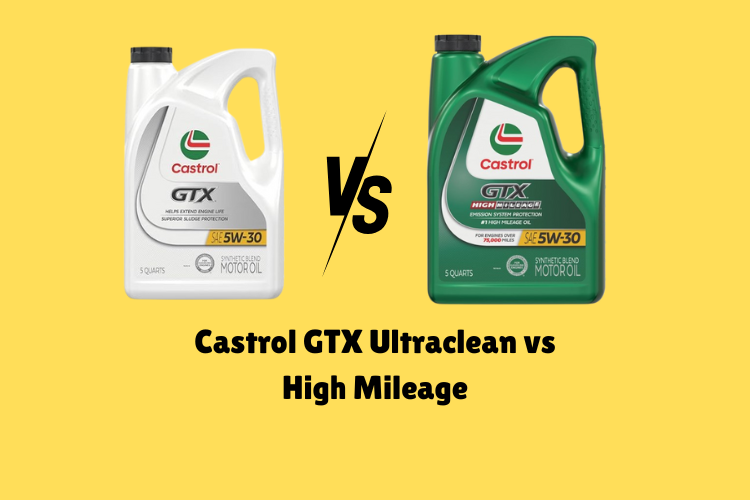
Castrol offers two popular motor oils that target different stages of engine life, and both options deliver strong value for everyday drivers. Castrol GTX Ultraclean focuses on sludge control and crisp engine response, while Castrol High Mileage aims to support older engines that need extra care.
Drivers often compare these two oils because both promise better protection and smoother operation, yet each formula serves a unique purpose.
GTX Ultraclean uses advanced cleaning additives that help engines stay sharp under daily stress, and many cars with moderate mileage perform at their best with this blend.
High Mileage oil takes a different direction by strengthening internal seals, reducing oil burn-off, and boosting lubrication for worn components.
This comparison helps drivers pick the right match based on engine age, performance goals, and long-term maintenance needs so every mile feels confident and controlled.
Castrol GTX Ultraclean vs Castrol GTX High Mileage
Castrol offers two popular synthetic blend oils in the GTX line. GTX Ultraclean focuses on sludge protection and clean engine performance. GTX High Mileage focuses on engines with more than 75,000 miles.
Both serve different stages of engine life. Both carry strong additives. Yet each one targets a different problem. Sludge. Wear. Leaks. Oil burn-off. The difference becomes clear once you look deeper.
The guide below breaks down both oils in simple words. Easy to follow. Easy to compare. Perfect for non-native readers.
Castrol GTX Ultraclean

Product Details
Castrol GTX Ultraclean 5W-30 Synthetic Blend comes as a 5-quart jug or in multi-packs. The oil uses a modern cleaning formula that protects against sludge. Castrol rates it at 1.4 times better sludge protection than standard industry limits.
It also supports stable viscosity under heat. The mix suits cars and trucks used for daily driving. The formula uses premium base oils and anti-wear additives that help extend engine life.
Key Differences
Oil Type
Synthetic blend. Built for strong cleaning power and high-temperature deposit control.
Viscosity Options
Common 5W-30 grade. Offered in many pack sizes.
Additive Packages
Sludge-fighting detergents. Heat-resistant additives. Anti-wear layers that protect metal parts during heavy load.
Recommended Use Cases
Great for engines that need better cleanliness. Good for daily drivers that run in traffic, short trips, or dusty roads. Good for drivers who want to reduce deposit build-up and keep the engine smooth.
Performance Comparison
Engine Protection
Strong anti-wear additives form a protective film. The oil guards against friction in pistons, bearings, and valve parts.
Fuel Efficiency
Stable viscosity helps reduce drag. Engine parts move with less resistance.
Mileage Longevity
Keeps the engine clean. Helps reduce wear over time. Supports stable performance on long intervals set by most car makers.
Cold-Start Performance
Low 5W rating gives fast flow at cold start. Quick circulation. Less wear in the first few seconds.
High-Temperature Stability
Handles hot weather and long trips well. Prevents thickening under heat.
Product Options & Specs
-
Viscosity: 5W-30
-
Volume: 5-quart jug, packs of 2, packs of 3, and 1-quart packs
-
Liquid Volume (pack of 2): 320 fl oz
-
Vehicle Type: Cars, trucks
-
Brand: Castrol
-
Category: Synthetic blend
-
Key Benefit: 1.4x better sludge protection vs API SP test limits
Pros and Cons
Pros
-
Very strong sludge cleaning
-
Smooth flow in hot and cold weather
-
Good value with multi-packs
-
Helps extend engine life with anti-wear additives
Cons
-
Not designed for high-mileage engines
-
Does not include seal conditioners
-
Not focused on oil burn-off control
Castrol GTX High Mileage
Product Details
Castrol GTX High Mileage 5W-30 targets engines with over 75,000 miles. These engines face extra stress. Old seals. Old gaskets. Higher oil burn-off. More deposits.
The High Mileage formula uses seal conditioners to help reduce small leaks. It also uses phosphorus replacement technology to protect emission systems. The blend fits old cars, SUVs, and trucks that need extra care.
Key Differences
Oil Type
Synthetic blend built for older engines. Supports worn seals and high-temperature deposits.
Viscosity Options
Common 5W-30 grade. Offered in multi-packs.
Additive Packages
Seal conditioners. Strong detergents. Wear protection. Burn-off control. Dispersants that keep sludge from forming.
Recommended Use Cases
Best for engines past 75,000 miles. Great for older cars with small leaks. Good for drivers who want better fuel economy and smoother performance in aging engines.
Performance Comparison
Engine Protection
Additives reduce metal contact. Supports old parts that face more wear.
Fuel Efficiency
Improved formula helps reduce resistance inside the engine. Keeps older engines running easier.
Mileage Longevity
Strong detergents keep the engine clean. Seal conditioners slow down oil loss. Burn-off protection helps the oil last longer.
Cold-Start Performance
Fast flow rate supports clean starts. Old engines often need extra help at start-up, and this oil provides it.
High-Temperature Stability
Strong deposit control protects engines on hot days, long drives, and uphill roads.
Product Options & Specs
-
Viscosity: 5W-30
-
Volume: 5-quart jug and multi-packs
-
Fit Type: Universal
-
Vehicle Type: Cars, trucks, SUVs over 75,000 miles
-
Brand: Castrol
-
Key Approvals: API SP/SN PLUS/SN/SM, ILSAC GF-6, Ford WSS-M2C946-B1, Ford WSS-M2C961-A1
-
Key Benefits: Leak control, wear control, emission protection
Pros and Cons
Pros
-
Great for old engines
-
Seal conditioners reduce leaks
-
Strong burn-off control
-
Supports fuel economy
-
Emission-friendly formula
Cons
-
Not ideal for new engines
-
Not focused on deep sludge cleaning
-
Slightly higher cost than basic blends
Detailed Comparison for Castrol GTX Ultraclean vs High Mileage
Castrol GTX Ultraclean and GTX High Mileage share the same synthetic blend foundation. Both clean. Both protect. Both use strong detergents. The difference comes from their targets.
Ultraclean aims at general engines that need strong sludge protection. Engines that face stop-and-go traffic. Short trips. Heavy heat. The formula keeps the engine clean from inside.
High Mileage aims at older engines. Engines with worn seals. Engines with higher oil burn-off. The formula supports leak control and stable performance in long-used parts.
Ultraclean = Clean engine.
High Mileage = Strong old engine care.
Comparison Table
| Feature | Castrol GTX Ultraclean | Castrol GTX High Mileage |
|---|---|---|
| Oil Type | Synthetic blend | Synthetic blend |
| Target Engine | General engines | Engines over 75,000 miles |
| Key Benefit | 1.4x sludge protection | Seal conditioners + burn-off control |
| Viscosity | 5W-30 | 5W-30 |
| Cleaning Strength | Very high | High |
| Leak Control | Low | Strong |
| Best For | Sludge reduction | Old engines and worn seals |
| Cold Start | Strong | Strong |
| Heat Protection | Strong | Strong |
FAQs
Does GTX Ultraclean work in high-mileage engines?
It works, but it may not help with leaks or burn-off. High Mileage fits better for engines with more than 75,000 miles.
Can GTX High Mileage clean sludge well?
It cleans, but not as strongly as Ultraclean.
Does either oil work in trucks?
Yes. Both fit cars, trucks, and SUVs.
Do both oils support cold starts?
Yes. Both have strong cold-flow performance.
Which one helps reduce oil loss?
GTX High Mileage. It uses seal conditioners that reduce leaks.
Which One Should You Choose?
Your engine age decides the winner. GTX Ultraclean fits engines that need top-tier cleanliness. Great for daily drivers and engines that deal with traffic and heat. Clean engine. Smooth performance.
GTX High Mileage fits engines with more than 75,000 miles. Great for older cars that face leaks, burn-off, and wear. Better support for aging parts.