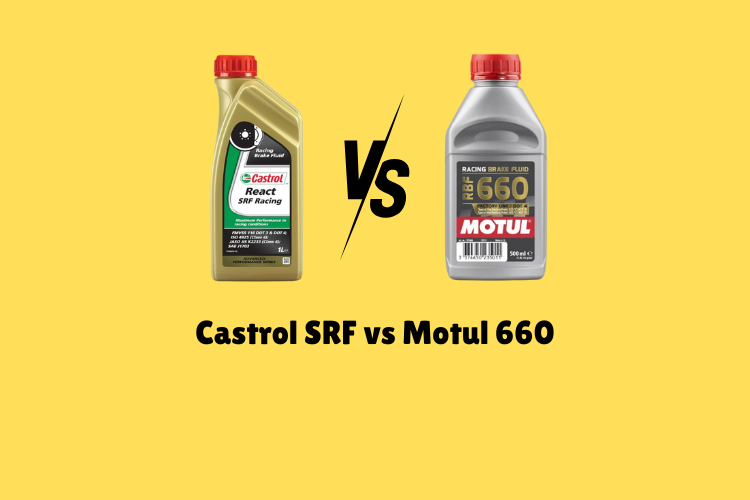
Track drivers and performance enthusiasts often search for brake fluids that deliver rock-solid consistency under brutal heat. Castrol SRF and Motul 660 stand out as two heavy hitters in this category, each offering world-class stability for aggressive braking.
Castrol SRF brings an extremely high wet boiling point that supports long racing sessions without fade. Motul 660 delivers a higher dry boiling point that appeals to drivers who push their brakes to the limit from the first lap.
Both products support intense demands, yet they cater to slightly different priorities in real-world use. Castrol SRF focuses on endurance, while Motul 660 aims for maximum peak performance. Drivers who want predictable feel over long stints often favor SRF.
Drivers who chase sharper response in short aggressive bursts often lean toward 660. A deeper look at both helps you match the right fluid to your driving style and vehicle setup.
Castrol SRF vs Motul 660
Brake fluid plays a major role in stopping power. Strong heat control. Steady pedal feel. Clean and predictable braking. These qualities decide how safe a car handles under stress. Track days create heat. Hard street driving builds pressure.
Long mountain drive? Even tougher. Two products often sit at the top: Castrol SRF and Motul RBF 660. Both serve racing needs, yet each follows a different formula. Here is a clear and deep guide that explains how they compare.
Castrol SRF Racing Brake Fluid

Product Details
Castrol SRF uses a silicone-based European formula. The bottle contains 1000 ml of fluid. The blend stands out for its extremely high boiling point and strong anti-vapor lock performance. Vapor lock creates soft brake pedals, so brake fluid must resist heat to stay safe.
Castrol SRF handles hard racing, rally stages, and long sessions where brakes stay hot. The typical wet boiling point reaches around 270°C, which stands far above standard fluids. This high limit helps the brakes stay firm during long heat cycles.
The fluid supports aggressive driving and repeated heavy stops. Drivers use it for track cars, high-speed road runs, and sports cars with strong braking systems.
Key Differences
Oil Type
Castrol SRF uses a silicone-based brake fluid formula. This design keeps moisture absorption low and gives stable heat resistance.
Viscosity Options
Castrol SRF offers one standard blend designed for extreme braking conditions. It supports many performance brake systems.
Additive Packages
The formula includes anti-vapor lock agents and stabilizers. These additives hold the boiling point high and protect brake feel.
Recommended Use Cases
Strong match for racing, rallying, and repeated high-heat braking. Great for drivers who need reliable pedal feel under long heat cycles.
Performance Comparison
Engine Protection
Brake fluid does not protect engines. It protects brake systems. Castrol SRF protects seals, lines, and brake components from heat and fluid breakdown.
Fuel Efficiency
Brake fluid does not affect fuel economy.
Mileage Longevity
Castrol SRF lasts longer than many racing fluids because the formula absorbs less moisture. Drivers enjoy longer service intervals in many cases.
Cold-Start Performance
Brake systems do not “start cold” like engines. Castrol SRF flows well at low temperatures and keeps pedal feel steady.
High-Temperature Stability
Castrol SRF stands out in this category. The fluid holds a high wet and dry boiling point. The braking system stays stable under extreme heat.
Product Options & Specs
-
Material: Silicone
-
Brand: Castrol
-
Package: Bottle
-
Volume: 1000 ml
-
Weight: 0.92 kg
-
Key Feature: 270°C wet boiling point
-
Use Case: Racing and rally braking systems
Pros and Cons
Pros:
-
Very high boiling point
-
Strong anti-vapor lock strength
-
Long fluid life
-
Great for long racing sessions
Cons:
-
Higher price
-
Overkill for daily driving
Motul 660 Racing Brake Fluid
Product Details
Motul RBF 660 DOT-4 brake fluid uses a full synthetic formula. The bottle holds 500 ml. Motul designs this blend for hydraulic brake and clutch systems in performance cars.
The fluid maintains stable behavior under extreme heat. Drivers use it for track days, canyon runs, and high-speed braking events. Motul lists strong thermal resistance and consistent pedal response.
The viscosity sits between 1.5 and 2.5 cSt at 100°C, which helps quick pressure transfer inside brake lines. Motul RBF 660 meets DOT-4 racing standards and fits many high-performance vehicles.
Key Differences
Oil Type
Motul RBF 660 uses a synthetic DOT-4 performance brake fluid formula with strong high-heat control.
Viscosity Options
Motul RBF 660 comes in a single performance grade that stays stable under heat and fast pressure changes.
Additive Packages
Motul adds heat stabilizers and agents that help the fluid resist oxidation during heavy use.
Recommended Use Cases
Ideal for track days, spirited driving, and hard braking. Great for drivers who want sharp response and stable pedal feel.
Performance Comparison
Engine Protection
Brake fluid does not protect engines. Motul 660 protects brake components during heat cycles.
Fuel Efficiency
Brake fluid does not affect fuel use.
Mileage Longevity
Motul RBF 660 absorbs moisture faster than Castrol SRF, so it may need more frequent replacement. This depends on use.
Cold-Start Performance
Motul 660 flows well at low temperatures. The brakes respond fast during cold mornings.
High-Temperature Stability
RBF 660 stands near the top of the market. It resists fade during heavy stops and keeps pedal feel strong.
Product Options & Specs
-
Brand: Motul
-
Fluid Type: Synthetic DOT-4 racing brake fluid
-
Viscosity: 1.5–2.5 cSt at 100°C
-
Volume: 500 ml
-
Package: Bottle
-
Use Case: Hydraulic brake and clutch systems
-
Special Features: High thermal resistance
Pros and Cons
Pros:
-
Strong high-heat performance
-
Fast pressure response
-
Trusted in racing events
-
Good value for performance use
Cons:
-
Smaller bottle size
-
Moisture absorption rate may require shorter intervals
Detailed Comparison for Castrol SRF vs Motul 660
Castrol SRF and Motul 660 both rank among the best high-performance brake fluids on the market. Castrol SRF leads the field in wet boiling point, which affects real-world driving because moisture enters brake fluid over time.
A higher wet boiling point reduces brake fade and vapor lock risk during long sessions. Motul 660 focuses on sharp pedal feel and race-focused heat control. Track drivers love the fluid for fast response and consistent pressure during heavy braking.
Castrol SRF suits drivers who want long intervals and maximum protection in endurance-style events. Motul 660 suits drivers who want fast response and strong high-heat behavior at a lower cost. Both perform far above standard DOT-4 fluids.
Comparison Table
| Feature | Castrol SRF | Motul RBF 660 |
|---|---|---|
| Fluid Type | Silicone-based racing fluid | Synthetic DOT-4 racing fluid |
| Volume | 1000 ml | 500 ml |
| Wet Boiling Point | About 270°C | Lower than SRF but still high |
| Dry Boiling Point | Very high | Very high |
| Moisture Absorption | Very low | Moderate |
| Pedal Feel | Stable and strong | Sharp and reactive |
| Service Life | Longer | Shorter |
| Best For | Endurance racing | Track days and performance driving |
FAQs
Does Castrol SRF last longer than Motul 660?
Yes. SRF absorbs less moisture, so drivers change it less often.
Is Motul 660 good for daily driving?
Yes. But the fluid shines most during hard braking and track use.
Which brake fluid offers stronger pedal feel?
Motul 660 often gives a sharper feel due to its viscosity and pressure response.
Which fluid handles moisture better?
Castrol SRF handles moisture far better.
Do both fluids work with performance brake systems?
Yes. Both products support high-performance and racing brake setups.
Which One Should You Choose?
Drivers who want the highest wet boiling point and long service life should pick Castrol SRF. The fluid offers stable braking for long racing sessions and endurance events.
Drivers who want quick pedal response and strong high-heat behavior at a more affordable cost may pick Motul RBF 660. The fluid fits track day cars, weekend racers, and fast street builds.
Both choices offer top-tier safety and heat control. The right choice depends on how hard you drive and how long your braking sessions last.