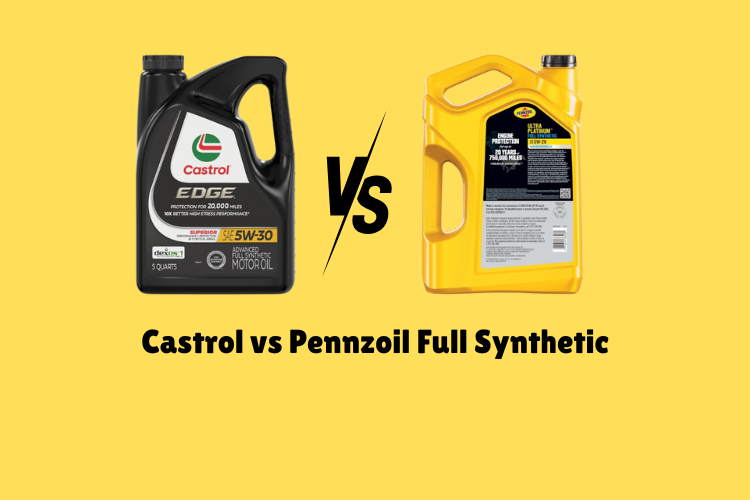
Drivers who expect top-tier engine performance often compare Castrol Full Synthetic and Pennzoil Full Synthetic, two products with strong reputations in the automotive world.
Castrol focuses on heat defense and high-stress durability, while Pennzoil highlights its PurePlus technology that converts natural gas into a crystal-clear synthetic base oil. Each brand targets drivers who want smoother acceleration, longer engine life, and stronger resistance against deposits.
Castrol Full Synthetic offers a formula that tackles intense temperatures and heavy driving conditions with confidence. Pennzoil Full Synthetic brings excellent cleanliness, fast lubrication on cold starts, and a noticeable improvement in overall engine feel.
Both products raise the bar in reliability, yet their strengths differ enough to make the comparison meaningful. This guide explores performance, protection, fuel efficiency, and real-world benefits to help drivers pick a synthetic oil that truly enhances their vehicle’s health and long-term value.
Castrol Full Synthetic vs Pennzoil Full Synthetic
Castrol and Pennzoil sit at the top of the synthetic oil market. Both brands offer strong protection, smooth performance, and long drain intervals. Yet each oil follows a different formula.
Castrol focuses on strength under pressure. Pennzoil focuses on purity and heat stability. Two strong oils. Two different paths.
The right choice depends on how your engine works and how you drive. Below is a step-by-step breakdown with simple words and deep detail.
Castrol Full Synthetic Oil

Product Details
Castrol Edge 5W-30 Advanced Full Synthetic comes in a 5-quart jug. The formula focuses on extreme strength under pressure. Castrol uses fluid titanium technology that helps the oil stay strong during heavy load.
The oil supports long intervals up to 20,000 miles or one year. It fits cars and trucks that face daily traffic, high speed driving, or heavy towing. The oil meets major industry standards such as API SP and GM Dexos1 Gen 3.
Key Differences
Oil Type
Full synthetic built for strength under heavy stress. Castrol bonds titanium polymers to create a tougher oil film.
Viscosity Options
Common grades such as 5W-30. Offered in small and large packs.
Additive Packages
Titanium-based friction modifiers. Strong detergents. Heat-resistant antioxidants. Wear protection at high RPM.
Recommended Use Cases
Great for modern cars and trucks. Good for turbo engines, high-compression engines, and towing. Works well for drivers who want long drain intervals.
Performance Comparison
Engine Protection
Strong film strength protects metal parts during heavy torque. Pistons and bearings keep a smooth surface even under high load.
Fuel Efficiency
Stable viscosity improves movement inside the engine. Less drag. More efficient combustion.
Mileage Longevity
Long drain capability supports up to 20,000 miles. Clean formula keeps deposits away.
Cold-Start Performance
Fast flow during cold mornings. Smooth starts with less friction.
High-Temperature Stability
Strong stability during hot weather and long uphill climbs. Titanium formula holds its thickness under heat.
Product Options & Specs
-
Viscosity: 5W-30
-
Volume: 5-quart jug, eco packs, 1-quart packs
-
Vehicle Type: Cars and trucks
-
Fit Type: Universal
-
Key Standards: API SP, ILSAC GF-7, Dexos1 Gen 3
-
Key Claims: 3x stronger viscosity protection, 10x better high-stress performance
Pros and Cons
Pros
-
Strong protection at high load
-
Long drain interval
-
Great for turbo or high-performance engines
-
Good heat control
Cons
-
Higher price than basic synthetics
-
More strength than some daily drivers may need
Pennzoil Full Synthetic Oil
Product Details
Pennzoil Ultra Platinum 5W-20 uses a formula made from natural gas instead of crude oil. The process creates a very pure base oil. This purity supports better temperature control and smoother flow.
The oil helps protect high-performance engines that run at high RPM. Pennzoil also offers a long engine warranty for qualifying vehicles. The oil fits cars that need strong heat control and excellent wear protection.
Key Differences
Oil Type
Full synthetic made from natural gas. Very clean base oil with fewer impurities.
Viscosity Options
Many choices such as 0W-20, 0W-40, 5W-20, 5W-30, and 10W-30. Offered in single jugs and multi-packs.
Additive Packages
Strong wear additives. Heat-resistant detergents. Low-friction modifiers. Oxidation-control boosters.
Recommended Use Cases
Great for high-performance engines. Good for hot climates. Useful for engines that run at high RPM or long highway trips.
Performance Comparison
Engine Protection
Strong wear control keeps metal surfaces safe. Great support for engines under stress.
Fuel Efficiency
Light and smooth flow helps reduce pumping losses. Pure base oil supports better efficiency.
Mileage Longevity
Stable formula allows long runs. Low deposit formation keeps the engine clean for many miles.
Cold-Start Performance
Fast oil movement during cold starts. Smooth cranking even in winter.
High-Temperature Stability
Excellent thermal resistance. Works well in hot weather and heavy acceleration. Helps prevent loss of power due to heat.
Product Options & Specs
-
Viscosity: 5W-20 (other grades available)
-
Volume: 5-quart bottles, packs of 3 or 6
-
Fit Type: Universal
-
Standards: API SP, ILSAC GF-6A, ACEA A1/B1
-
Vehicle Type: Cars and performance engines
-
Key Claims: High wear protection, clean base stock, fuel-saving performance
Pros and Cons
Pros
-
Very pure base oil made from natural gas
-
Great heat control
-
Good fuel economy support
-
Strong long-term engine protection
Cons
-
Higher price in multi-packs
-
Not focused on extremely long intervals like Castrol
Detailed Comparison for Castrol vs Pennzoil Full Synthetic
Castrol and Pennzoil both offer top-tier synthetic oils, yet their formulas aim at different strengths.
Castrol focuses on pressure strength. The titanium formula keeps the oil film strong even during heavy towing, fast acceleration, or turbo boost. This creates a strong shield against wear. Castrol also supports longer drain intervals. Drivers who want fewer oil changes may prefer this direction.
Pennzoil focuses on purity. The natural-gas base oil creates fewer impurities, which means cleaner pistons and better heat control. This helps engines that deal with extreme temperatures or high RPM. The oil moves smoothly and gives strong fuel efficiency benefits.
Castrol = Strength under pressure.
Pennzoil = Purity and temperature control.
Comparison Table
| Feature | Castrol Full Synthetic | Pennzoil Full Synthetic |
|---|---|---|
| Base Oil | Traditional synthetic with titanium tech | Natural-gas derived synthetic |
| Main Focus | Film strength under pressure | Purity and heat control |
| Viscosity Options | Common grades like 5W-30 | Wide range including 0W and 10W |
| Wear Protection | Very strong | Very strong |
| Fuel Economy | Improved | Often slightly higher |
| High-Temp Stability | Excellent | Excellent |
| Cold Start | Fast flow | Fast flow |
| Best For | Heavy loads, turbo engines | High RPM, hot climates |
| Drain Interval | Up to 20,000 miles | Standard long life |
| Price | Medium to high | Medium to high |
FAQs
Does Castrol or Pennzoil offer better wear protection?
Both offer strong wear control, but Castrol shines under heavy load while Pennzoil shines in heat.
Which oil gives better fuel economy?
Pennzoil often performs better because of its pure base oil.
Is Castrol better for turbo engines?
Yes. Castrol’s titanium formula supports high boost and pressure.
Which oil lasts longer?
Castrol supports up to 20,000 miles. Pennzoil offers a strong lifespan but not as long as Castrol.
Can both oils work in any car?
Most cars accept both. The owner’s manual decides the correct viscosity.
Which One Should You Choose?
Your driving style and engine needs point to the right answer.
Castrol fits engines that face heavy stress. Fast acceleration. Towing. Turbo pressure. Long intervals. Strong metal protection.
Pennzoil fits engines that need clean operation and great heat control. Highway driving. Hot climates. High RPM performance.
Daily driver with heavy load? Castrol.
Performance car or hot-weather driving? Pennzoil.
Both are strong choices, but each oil shines in a different way.