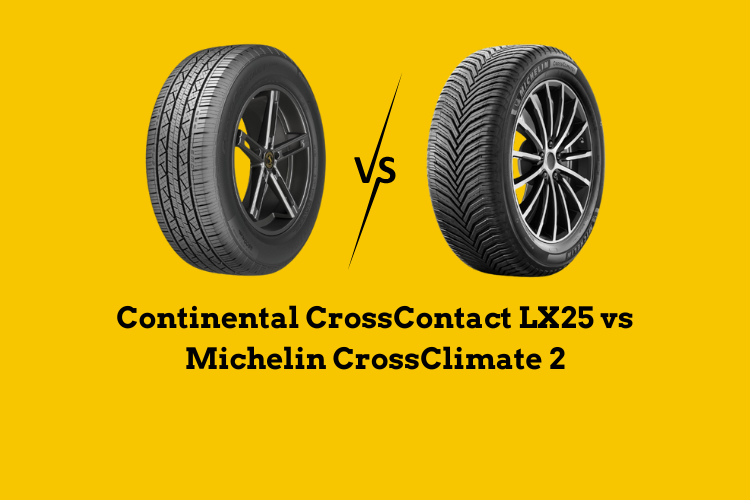
Drivers seeking year-round confidence often narrow their choices to two giants Continental CrossContact LX25 and Michelin CrossClimate 2. Both deliver impressive balance between comfort, handling, and durability, yet their strengths cater to different driving needs.
The CrossContact LX25 focuses on luxury-level smoothness and quiet highway manners, making it a favorite for crossovers and SUVs that prioritize ride comfort. Michelin’s CrossClimate 2 stands out with its remarkable grip on wet and snowy roads, bringing near-all-weather tire performance to daily driving.
Each tire showcases advanced tread technology, refined rubber compounds, and strong mileage warranties, but their road personalities differ sharply. One leans toward serene cruising, while the other thrives on traction and adaptability.
Understanding how these differences translate into real-world performance helps drivers make the smarter investment for long-term satisfaction. This comparison breaks down tread design, ride quality, and seasonal reliability to reveal which tire truly dominates the all-season category.
Continental CrossContact LX25 vs Michelin CrossClimate 2
Finding the right tire for your vehicle can be confusing, especially when comparing two premium all-season options like the Continental CrossContact LX25 and the Michelin CrossClimate 2.
Both deliver year-round traction, comfort, and longevity, but their focus differs slightly. The LX25 is built for refined comfort and long tread life, while the CrossClimate 2 emphasizes superior traction in all weather, including light snow.
This detailed comparison explores their construction, features, performance, pros, and cons to help you decide which one suits your driving needs best.
Continental Cross Contact Lx25

Product Details
The Continental CrossContact LX25 is an all-season touring tire designed for SUVs, crossovers, and light trucks. It measures 235/60R18 with a section width of 235 millimeters, load capacity of 1,929 pounds, and a tread depth of 12/32 inches.
The tire fits 18-inch rims and supports a maximum pressure of 51 PSI. Its non-directional tread pattern allows for flexible rotation patterns, helping extend tread life. The tire’s overall diameter is 29.2 inches, giving it a balanced stance for stability and comfort.
Features
Continental designed the LX25 using its EcoPlus+ Technology, which enhances fuel efficiency, treadwear, and wet grip. The Comfort Ride Technology adds a layer of vibration-absorbing material beneath the tread to reduce road harshness.
Traction Grooves and silica-enhanced compounds improve grip in wet conditions, while siped tread blocks aid traction in light snow. The tire’s stiff center ribs contribute to precise steering and stability at higher speeds.
What Is the Good?
The CrossContact LX25 offers a smooth, quiet ride, ideal for highway cruising and city driving. It provides consistent wet traction, thanks to its silica compound and optimized tread pattern.
The treadwear performance stands out in its class, often lasting up to 70,000 miles or more. Many drivers appreciate its confident cornering response and braking control. Comfort levels are excellent, with minimal cabin noise even on rough pavement.
What Is the Bad?
While the LX25 handles light snow reasonably well, it struggles on deep snow or icy surfaces. It is not designed for severe winter use. Some users also note that the tire’s dry braking could feel slightly longer compared to more performance-oriented all-season models.
Overall Opinion
The Continental CrossContact LX25 is a strong choice for drivers who value comfort, quietness, and longevity. It suits crossovers and SUVs that spend most of their time on paved roads.
The tire balances smooth performance and dependable traction, offering great value for all-season driving in moderate climates.
Michelin CrossClimate 2 Tire
Product Details
The Michelin CrossClimate 2 is an all-season tire that bridges the gap between summer and winter performance. It comes in a 235/65R17 size, with a section width of 235 millimeters, load capacity of 1,984 pounds, and tread depth of 10/32 inches.
It fits 17-inch rims, supports a maximum pressure of 51 PSI, and has a directional tread pattern for optimized water evacuation and snow traction. With a diameter of 29.1 inches, it maintains a stable footprint and excellent contact with the road surface.
Features
Michelin built the CrossClimate 2 with a unique V-shaped directional tread design that enhances water and slush evacuation. The Thermal Adaptive Compound allows the tire to stay flexible across temperature extremes, maintaining grip on both hot asphalt and icy roads.
The 3D SipeLock technology improves tread rigidity while keeping edges sharp for snow and wet traction. It also features a Piano Noise Reduction Tuning that lowers road noise. The tire offers up to one extra year of tread life compared to similar models.
What Is the Good?
The CrossClimate 2 delivers impressive traction on wet, dry, and snowy roads. Its all-weather certification (3PMSF) means it’s safe for winter conditions where standard all-season tires may struggle. Braking performance stands above average in every test, especially on damp or icy surfaces.
Ride quality remains smooth, and noise levels are surprisingly low for a tire with aggressive tread design. Michelin’s reputation for longevity holds true many drivers report high mileage before noticeable wear.
What Is the Bad?
The CrossClimate 2 costs more than most all-season tires, reflecting its advanced materials and design. The directional tread limits rotation patterns, which can slightly affect wear uniformity over time. It also feels firmer over bumps compared to softer touring models like the LX25.
Overall Opinion
Michelin CrossClimate 2 is built for drivers who want true all-weather confidence without changing tires every season. It performs exceptionally in wet, dry, and winter conditions, offering a balance of safety, comfort, and long-lasting tread. This tire suits those who drive in areas with variable weather or occasional snow.
Detailed Comparison for Continental CrossContact LX25 vs Michelin CrossClimate 2
Both the Continental CrossContact LX25 and the Michelin CrossClimate 2 are top choices for all-season versatility, but their personalities differ. The LX25 focuses on comfort, quietness, and fuel efficiency, while the CrossClimate 2 emphasizes traction and safety across every season.
The LX25’s non-directional tread makes rotation easier, extending tread life and maintaining even wear. It’s quieter and softer on the highway, making it ideal for long commutes or family trips.
On the other hand, the CrossClimate 2’s directional V-shaped tread provides stronger wet and snow grip, giving it the edge in poor weather.
In wet braking tests, the Michelin often stops a few feet shorter, especially on slick surfaces. The Continental performs better in dry comfort and low noise levels.
Both tires have similar load capacities, but Michelin’s tread compound allows for better flexibility under temperature changes.
For tread life, both tires are rated for around 70,000–80,000 miles, though Michelin’s compound tends to retain grip longer as it wears. For winter use, the CrossClimate 2 clearly leads, holding a 3-Peak Mountain Snowflake (3PMSF) certification that the LX25 lacks.
If you live in a warm or mild climate with mostly dry conditions, the LX25 fits perfectly. For areas with unpredictable rain or occasional snow, the CrossClimate 2 provides better all-season assurance.
FAQs
Q: Which tire lasts longer, LX25 or CrossClimate 2?
Both offer impressive longevity, but Michelin’s compound maintains performance longer as the tread wears, giving it a small edge.
Q: Are both tires quiet?
Yes, both are engineered for low noise. The LX25 is slightly quieter on highways due to its Comfort Ride Technology.
Q: Can CrossClimate 2 replace winter tires?
Yes, it can handle light to moderate snow thanks to its 3PMSF certification, though dedicated winter tires still perform better in extreme cold.
Q: Which tire is more fuel efficient?
The LX25 uses EcoPlus+ technology to improve rolling resistance, making it a better choice for fuel economy.
Q: Which one is better for SUVs and crossovers?
Both are suitable, but for maximum comfort and long road trips, the LX25 excels. For mixed-weather driving, the CrossClimate 2 is the smarter pick.
Conclusion
The Continental CrossContact LX25 focuses on refined comfort, quiet operation, and long tread life perfect for daily commuting and long drives. The Michelin CrossClimate 2 brings superior grip and control across all weather, especially in rain and snow.
For drivers in mild climates who value comfort and efficiency, the LX25 is a great choice. For those facing wet roads, cold mornings, and occasional snow, the CrossClimate 2 delivers unmatched year-round confidence.
Both are premium tires that live up to their reputation your final choice depends on the weather you drive through and the type of comfort you prefer.