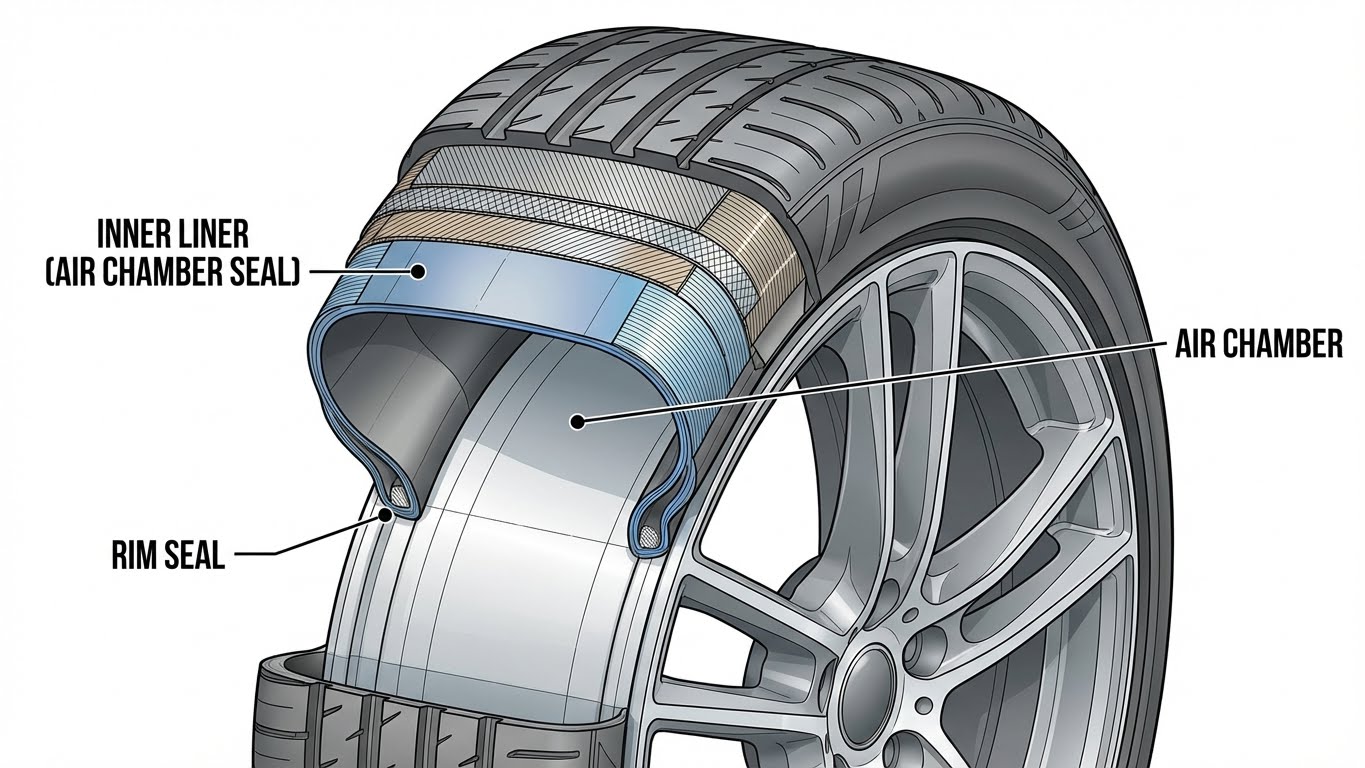
Most modern car tires do not have inner tubes. Instead, they use a tubeless design that holds air directly within the tire structure. This change improves safety, reduces the chance of punctures, and offers better handling on the road.
Inner tubes were once common in car tires, serving as inflatable rubber layers inside the tire to keep air pressure. Over time, tire technology evolved to tubeless tires, which became the standard for most passenger cars, light trucks, and SUVs, while tubes are now more common in bicycles and some specialized vehicles.
Understanding why tubeless tires replaced inner tubes helps explain current car tire designs and their benefits. This shift marks a major improvement in durability and performance for everyday driving.
Key Takeaways
- Most car tires today use a tubeless design without inner tubes.
- Tubeless tires offer increased safety and better performance.
- Inner tubes are now mostly found in bicycles or special vehicles.
Understanding Inner Tubes in Car Tires
Inner tubes played a key role in early tire designs by holding air inside the tire. They were a separate part placed inside the tire to keep it inflated and help maintain pressure for smooth driving.
What Are Inner Tubes?
Inner tubes are inflatable rubber hoses placed inside a tire. They hold the air needed to keep the tire firm. This design was common in older car tires and is still used in some bicycles and smaller vehicles.
The tube sits between the tire casing and the wheel rim. When inflated, it pushes outward, giving the tire its shape. The tube has a valve stem that allows air to be pumped in or released. If the tire is punctured, the inner tube is usually the part that deflates, meaning it can be repaired or replaced separately from the tire.
How Inner Tubes Work in Tires
Inner tubes provide the airtight seal needed for tire inflation. The tire itself offers structure and traction, while the tube keeps the air contained.
When air pressure is inside the tube, it pushes against the tire from the inside. This pressure supports the weight of the vehicle and cushions bumps from the road. The tire casing protects the tube from damage and sharp objects.
Because the tube is a separate piece, tires with tubes can be more prone to punctures and leaks. A small hole in the tire can cause the tube to lose air quickly. This is one reason many modern car tires switched to tubeless designs, which have air sealed directly inside the tire without a tube.
Do Modern Car Tires Have Inner Tubes?

Most modern car tires no longer use inner tubes. Instead, they rely on designs that improve safety, durability, and ease of maintenance. This shift changes how tires hold air and respond to road conditions.
Tubeless Tire Technology
Tubeless tires are made with several layers, including a tough inner lining that holds air without the need for a separate tube. This inner lining is usually made from rubber compounds designed to seal the tire tightly against the wheel rim.
This design reduces the risk of sudden air loss during a puncture. Tubeless tires also generate less heat and weight, which helps with fuel efficiency. The absence of an inner tube means fewer parts that can fail.
For more detailed information, sources like the Tire Industry Association explain tubeless tire design and benefits.
Prevalence of Tubeless Tires in Cars
Almost all passenger cars, light trucks, and SUVs today use tubeless tires. The modern automotive industry has widely adopted this technology because it fits standard wheels better and lowers maintenance needs.
Inner tube tires are now mainly found in bicycles, motorcycles, and some off-road vehicles, where specific demands make tubes useful. But for everyday cars, tubeless tires are the standard.
Their popularity is due to better performance, including improved handling and easier puncture repairs, which can often be done without removing the tire.
Transition From Inner Tubes to Tubeless Tires
In the early days of automobiles, tires with inner tubes were common. These tubes held the air inside the tire and kept it inflated. However, tubes had several drawbacks: they were prone to punctures and difficult to repair quickly.
As tire materials and designs improved, manufacturers introduced tubeless tires. These eliminated the tube altogether by creating a tire and rim seal that could hold air independently.
The transition happened gradually from the 1950s to the 1980s, supported by better rubber compounds and wheel designs. Tubeless tires are now standard because they are lighter, safer, and more durable.
More on this shift can be found at the Rubber Manufacturers Association.
Exceptions: Vehicles That Still Use Inner Tubes
Some vehicles still rely on inner tubes due to specific needs or design requirements. These include older cars that were built before tubeless tires became the norm and certain specialized vehicles that need extra durability or cushioning.
Classic Cars and Vintage Vehicles
Classic cars and vintage vehicles often use tires with inner tubes because that was the standard at the time they were built. These cars have wheels and rims designed specifically for tube-type tires. Using tubeless tires can cause fitment issues or unsafe driving conditions.
Owners of vintage cars usually keep inner-tube tires to maintain authenticity and safety. Finding exact tube replacements is important since the tires and rims are made differently than modern versions. Also, the older rubber and design don’t always match well with new tubeless technology. Restoring or preserving a classic vehicle often means sticking with inner tubes.
Special Use Cases and Niche Applications
Some specialized vehicles still use inner tubes because of their unique demands. Heavy trucks, off-road vehicles, and some farm machinery require tires that can handle rough terrain and carry heavy loads. Inner tubes provide extra cushioning and can help prevent damage in harsh conditions.
In these cases, the extra protection of an inner tube is preferred over tubeless tires. The tube helps prevent rapid air loss from punctures and can be easier to repair in remote areas. Sports vehicles used in extreme conditions, such as motocross bikes or some racing cars, also sometimes use inner tubes for added shock absorption.
Advantages of Tubeless Tires
Tubeless tires offer clear benefits that improve both driving safety and vehicle performance. They reduce the chances of sudden air loss and provide a smoother, more efficient ride. These features make them a better choice compared to traditional tires with inner tubes.
Safety Benefits
Tubeless tires reduce the risk of sudden air loss because they form an airtight seal directly with the rim. This means small punctures cause slow leaks instead of rapid deflation. Drivers get more time to react and safely stop the vehicle.
They also resist overheating better than inner tube tires. Inner tubes can get hot and fail under harsh driving conditions. Tubeless designs lower this risk, making them safer for long trips or high speeds.
Additionally, tubeless tires lower the chance of blowouts, which happen more often with tubes when pressure builds too quickly. This safety advantage is why most modern cars use tubeless tires today. For more details about tire safety, visit the National Highway Traffic Safety Administration.
Improved Performance
Tubeless tires weigh less because they don’t include an inner tube. This decreases rolling resistance, which can lead to better fuel efficiency and easier handling. Vehicles feel more responsive, especially during cornering.
The airtight seal also improves traction. Tire pressure stays more consistent, helping tires grip the road better in both dry and wet conditions. Drivers often notice a smoother ride, with fewer vibrations.
Tubeless setups also tend to have fewer flats. Because there is no tube inside, punctures are less frequent and easier to repair. This lowers maintenance time and costs. Learn more about tire technology upgrades at Tire Rack.
Risks and Limitations of Using Inner Tubes
Inner tubes in car tires come with specific risks and maintenance challenges. They can increase the chance of air leaks and require careful attention to avoid damage. Understanding these factors helps explain why most modern cars use tubeless tires instead.
Potential for Punctures
Inner tubes are more vulnerable to punctures than tubeless tires. When a sharp object penetrates the tire, it can directly pierce the tube inside, leading to rapid air loss. This makes driving on a tubed tire riskier, especially on rough or debris-filled roads.
If the tube is damaged or worn, the risk of blowouts rises. Blowouts happen when the tube suddenly bursts due to pressure changes or an existing weak spot. This can cause loss of control and unsafe driving conditions. Tubed tires also heat up more during use, which may weaken the tube and increase failure chances over time.
Maintenance Considerations
Maintaining tires with inner tubes demands extra care. The tube must be installed correctly to avoid pinching or twisting, which can cause leaks. Regular checks for tube wear, cracks, or punctures are necessary to prevent unexpected air loss.
Repairing a tube can be more time-consuming than fixing a tubeless tire. It often involves removing the tire, patching or replacing the tube, and reinstalling the tire, which takes more effort and skill. Tubed tires also require attention to proper inflation because over- or under-inflation can damage the tube faster than a tubeless tire, reducing tire life and safety.
Recognizing If Your Car Tire Has an Inner Tube
Knowing whether a tire contains an inner tube depends on visual checks and information from the tire maker. These methods give the clearest clues about the tire’s design and type.
Visual Inspection Tips
To spot if a tire has an inner tube, start by closely examining the valve stem. Inner tube tires usually have a thin, metal valve stem with a rubber base that can move slightly. Tubeless tires often have a thicker valve stem that’s firmly attached to the wheel rim.
Next, look at the bead area, where the tire meets the rim. Tubed tires tend to have a more noticeable separation between the tire and rim because the tube sits inside. Also, a tire marked as “tube type” on its sidewall confirms it uses an inner tube. In contrast, “tubeless” is printed on tires made without tubes.
If the tire leaks air slowly when punctured, it might have an inner tube, since tubes can lose air differently than tubeless tires.
Manufacturer Specifications
Checking manufacturer details is a reliable way to know if a tire needs an inner tube. Tire companies list this info in product manuals or online guides. Look for specifications like “tubeless” or “tube type” in the tire description.
Vehicle manufacturers may also recommend specific tire types based on the model and usage. Many modern cars require tubeless tires due to better safety and performance. Off-road or vintage cars may still use tubes, as noted in their documentation.
Using the exact tire model number to search the manufacturer’s database helps confirm if the tire includes an inner tube or not. This ensures that the replacement tires match the vehicle’s needs.
Historical Overview of Car Tire Development
Car tires have evolved from simple designs with inner tubes to complex, tubeless versions that improve safety and performance. This shift was driven by the need to reduce punctures and increase durability. Early tires relied on separate inflatable tubes, but new innovations integrated the air-holding function directly into the tire.
Introduction of Inner Tubes
Early car tires used inner tubes to hold air inside rubber tires. The tube was a separate inflatable part placed inside the tire casing. This design was based on bicycle tires and was common in the early 20th century. Inner tubes helped cars ride smoothly but were fragile and prone to punctures.
Because the tube was separate, a small nail or sharp object could easily poke through and cause a flat. Additionally, inner tubes could overheat during long drives, leading to blowouts. Despite this, inner tubes played an important role in allowing cars to become practical and mobile. For more on the history of early tires, visit the Smithsonian National Museum of American History.
Advent of Tubeless Tire Design
The tubeless tire first appeared in the mid-20th century and marked a major improvement over inner tubes. Instead of a separate tube, the tire itself was built to contain air, thanks to an airtight layer inside the casing. This reduced the chance of sudden flats caused by tube punctures.
Tubeless tires also improved durability because they were less likely to overheat. Their design allowed for stronger sidewalls and better performance at higher speeds. Today, almost all passenger cars use tubeless tires made with steel belts and synthetic fibers for added strength. You can find more about modern tire technology on the Tire Industry Association website.
FAQs
Do modern car tires still have inner tubes?
Most modern cars do not use inner tubes. Instead, they use tubeless tires, which have built-in layers that hold air without needing a separate tube.
Why did car tires change from inner tubes to tubeless?
Tubeless tires are lighter, safer, and more efficient. They last longer and handle heat better than tires with inner tubes. Tubed tires were more likely to get punctures and had weaker performance under pressure.
Are there any cars today that use inner tubes?
Almost all new cars, trucks, and SUVs come with tubeless tires. Older car models might still have tubed tires, but these are rare now.
Do truck tires use inner tubes?
Most trucks and buses in the U.S. also use tubeless tires today. Tubeless designs have become standard across most vehicle types.
Can inner tubes still be useful?
Inner tubes can be helpful for certain types of tires, especially in recreational vehicles or on some older models. They can fix leaks and punctures in a budget-friendly way but are generally not needed for modern car tires.
| Question | Answer |
|---|---|
| Do new cars need inner tubes? | No, they use tubeless tires |
| Are inner tubes safer? | Tubeless tires tend to be safer |
| Can old cars still have tubes? | Yes, but it is uncommon |
| Do trucks use tubes? | Mostly no, they use tubeless tires |
Conclusion
Most modern car tires do not have inner tubes. They use a tubeless design that helps keep air sealed inside the tire without the need for an extra tube. This design is safer and reduces the chances of sudden air loss.
Tubeless tires are made with strong materials and layers, including a carcass made of nylon or polyester fibers. These layers hold the air pressure and give better handling on the road.
Some older or specialty tires, like certain bias-ply tires, may still use inner tubes. However, radial tires, which are common today, are almost always tubeless.
Key points to remember:
- Inner tubes were common in the past but are mostly replaced now.
- Tubeless tires provide better safety and performance.
- Tire construction materials have improved to support tubeless designs.
He or she should know that the switch from tubed to tubeless tires marked an important change in tire technology. It helps make vehicles safer and driving more reliable. Understanding these facts helps when buying or maintaining tires.