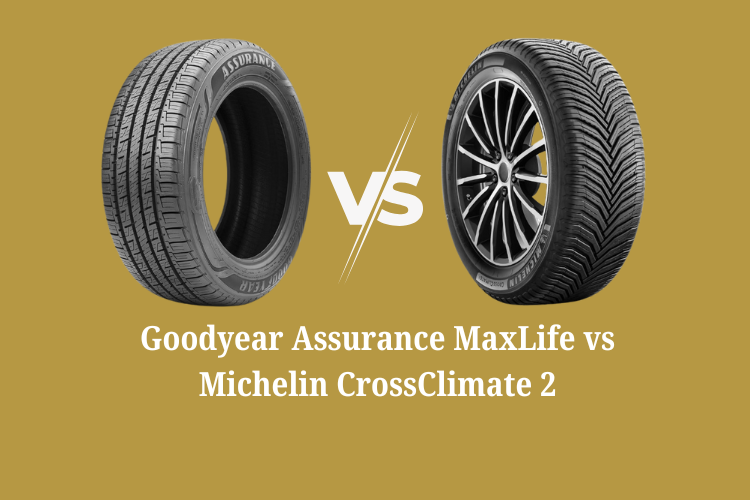

Product Details
-
Brand: Goodyear
-
Size: P235/40R19
-
Section Width: 235 mm
-
Load Capacity: 1,565 lbs
-
Tread Depth: 11/32″
-
Tread Type: Symmetrical
-
Rim Width: 8.5 inches
-
Tire Diameter: 26.4 inches
-
Aspect Ratio: 40
-
Load Index: 96
-
Speed Rating: V
-
Warranty: 85,000 miles / 140,000 km
Features
The MaxLife’s main strength lies in long-lasting tread life. Goodyear built this tire with TredLife Technology, which improves how the rubber resists wear over time. It is designed for drivers who put many miles on their cars each year.
The tread has multiple biting edges, which grab the road in light snow and rain. Wide circumferential grooves run along the tire, moving water out from under the tread to help prevent sliding on wet roads.
Another highlight is the built-in tread wear gauge. This small feature allows drivers to check remaining tread depth without tools. It helps with safety, as drivers can see when the tire is wearing down and needs replacement.
The solid shoulder blocks strengthen the edges of the tire. This gives stable handling when cornering and helps prevent uneven wear.
What is the Good?
-
Long tread life supported by one of the highest warranties in its class.
-
Good grip in rain with wide grooves that move water away.
-
Light snow performance is reliable for an all-season tire.
-
Wear gauge makes it easier to track tire condition.
-
Stable handling at highway speeds.
What is the Bad?
-
Snow and ice performance is limited, not ideal for harsh winter conditions.
-
Steering feel is average, less sharp than premium touring tires.
-
Ride comfort can feel a little stiff on rough surfaces.
Overall Opinion
The Goodyear Assurance MaxLife is ideal for commuters, families, and long-distance drivers. It helps save money by lasting longer than most all-season tires. It handles rain and light snow well but is not built for severe winter weather.
Michelin CrossClimate 2 Tire
Product Details
-
Brand: Michelin
-
Size: 205/55R16 91H
-
Section Width: 205 mm
-
Load Capacity: 1,356 lbs
-
Tread Depth: 10/32″
-
Tread Type: Directional
-
Rim Width: 7.5 inches
-
Tire Diameter: 24.9 inches
-
Aspect Ratio: 55
-
Load Index: 91
-
Speed Rating: H
-
Maximum Pressure: 51 psi
Features
The Michelin CrossClimate 2 is built for true year-round performance. Unlike many all-season tires, it carries the Three Peak Mountain Snowflake (3PMSF) symbol, meaning it meets official standards for winter driving.
The directional tread pattern forms a V-shape that pushes water, slush, and snow away from the tire’s contact patch. This reduces the chance of hydroplaning and improves braking in rain.
Michelin also uses a special rubber compound that stays flexible in cold weather while still handling hot summer roads. This balance makes it safer in climates that experience all four seasons.
The tread shape also spreads weight evenly across the footprint. This helps the tire wear smoothly, maintaining grip throughout its life.
What is the Good?
-
Certified winter performance with the 3PMSF rating.
-
Strong grip on wet, dry, and snowy roads.
-
Short braking distances in many conditions.
-
Comfortable and quiet ride quality.
-
Works well in hot summers and cold winters.
What is the Bad?
-
Shorter tread life compared to the MaxLife.
-
More expensive than many standard all-season tires.
-
Directional tread design limits rotation patterns, which can affect even wear if not rotated correctly.
Overall Opinion
The Michelin CrossClimate 2 is for drivers who live in places with changing seasons, heavy rain, or snowy winters. It provides confidence year-round but costs more and may wear faster than Goodyear’s MaxLife.
Detailed Comparison for Goodyear Assurance MaxLife vs Michelin CrossClimate 2
The Goodyear Assurance MaxLife focuses on longevity. It is the better choice for drivers who want to maximize miles and save money over time.
With an 85,000-mile warranty, it offers one of the longest tread lives in the all-season market. It handles rain and light snow well but is not made for deep winter.
The Michelin CrossClimate 2 is more about all-weather safety. It can perform in hot summers, heavy rain, and snowy winters. Its 3PMSF certification gives it an edge in winter traction compared to the MaxLife. The tradeoff is higher cost and shorter tread life.
Both are all-season tires, but they target different needs:
-
MaxLife: best for long-lasting daily use, high mileage drivers, warmer or mild climates.
-
CrossClimate 2: best for drivers in mixed or cold climates where snow and rain are common.
FAQs
Which tire lasts longer?
The Goodyear Assurance MaxLife lasts longer due to its extended tread life warranty.
Which tire is better in snow?
The Michelin CrossClimate 2 is better because it carries the winter certification.
Which tire is more comfortable?
The Michelin CrossClimate 2 usually gives a softer, smoother ride.
Which tire is cheaper?
The Goodyear MaxLife often costs less upfront than the CrossClimate 2.
Which tire is better for highway driving?
Both are good, but the MaxLife is designed to deliver more miles with stable handling.
Conclusion
The Goodyear Assurance MaxLife and Michelin CrossClimate 2 are both strong all-season tires, but they shine in different areas. The MaxLife is the best choice for drivers who value tread life, warranty, and predictable handling.
The CrossClimate 2 is the better option for drivers in climates with rain, snow, and seasonal changes, where safety in tough weather matters more than mileage. Both tires are reliable, but your final choice depends on what matters most: long life or all-weather safety.