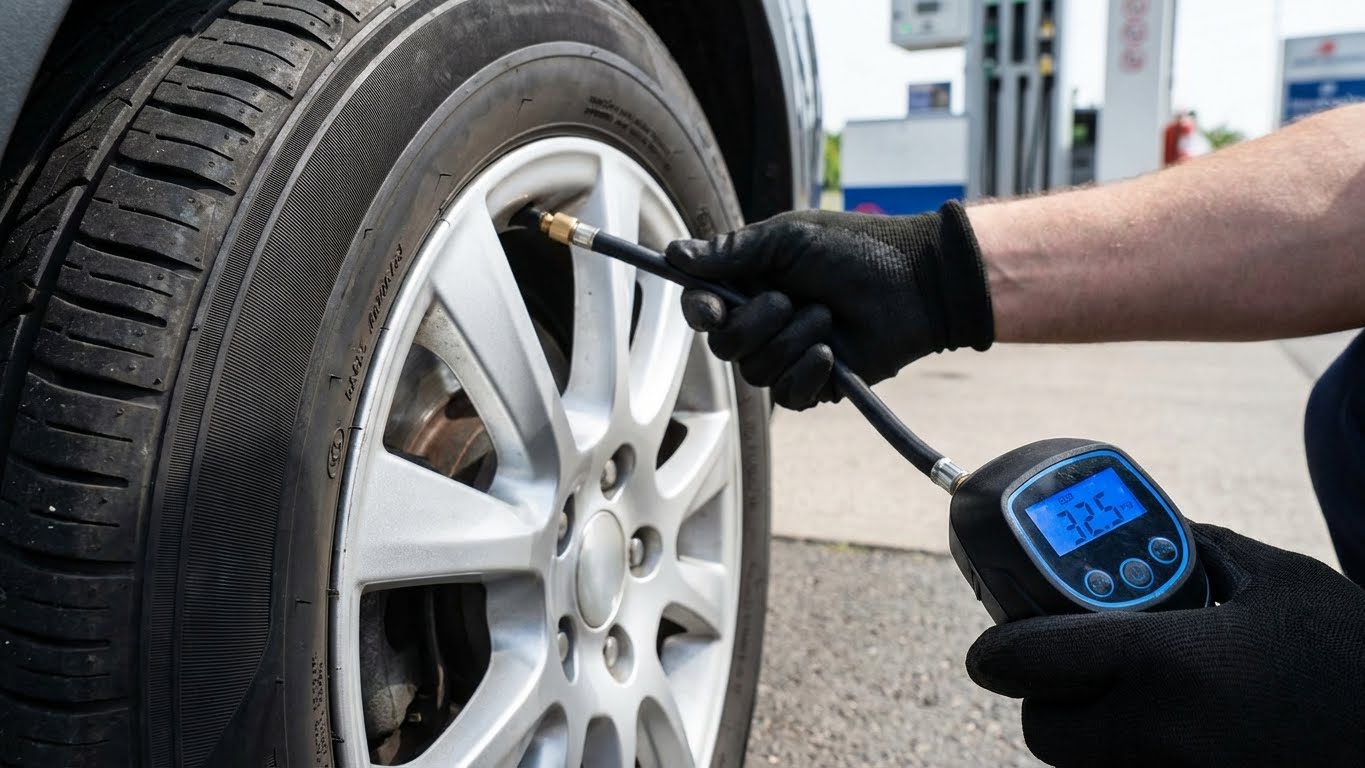
Inflating car tires means adding air into the tire through a valve stem. This air fills the space inside the tire, creating pressure that supports the car’s weight and keeps the tire firm. Proper tire inflation is essential for safety, better fuel efficiency, and longer tire life.
Air is pumped into the tire using an air compressor or a manual pump, which pushes air through the valve stem into the tire chamber. A tire pressure gauge is used to check the pressure and make sure it matches the manufacturer’s recommended level. Maintaining the right pressure helps the vehicle perform as intended and prevents uneven tire wear.
Knowing how car tires inflate helps drivers care for their tires better and avoid common problems like low pressure or overinflation. This process is simple but important for every vehicle owner to understand and practice regularly.
Key Takeaways
- Tires are inflated by pushing air through a valve stem using a pump or compressor.
- Correct tire pressure improves safety, fuel economy, and tire durability.
- Regular pressure checks prevent damage and ensure proper tire performance.
Basic Principles of Tire Inflation
Tire inflation involves adding the right amount of air to a tire to help it work correctly. It affects how the tire grips the road, lasts over time, and how much fuel the vehicle uses. Knowing what tire inflation is and why it matters helps keep the car safe and efficient.
What Is Tire Inflation?
Tire inflation is the process of filling a tire with air to reach a specific pressure level. This pressure is usually measured in pounds per square inch (PSI). The right PSI depends on the vehicle type and is found in the owner’s manual or on a sticker inside the driver’s door.
Inflating a tire means using an air pump or compressor to add air until the correct pressure is reached. Underinflated or overinflated tires do not perform well. It is important to check and adjust tire pressure regularly for safe driving.
Why Proper Tire Pressure Matters
Proper tire pressure helps keep the car safe and comfortable to drive. Tires with correct air pressure provide better control, especially when turning or braking. This reduces the risk of accidents caused by poor tire grip.
Incorrect tire pressure leads to faster tire wear. Underinflated tires wear out on the edges, while overinflated tires wear out in the center. This means the tires may need to be replaced sooner. Properly inflated tires also save fuel because they reduce rolling resistance, making the engine work less.
The Role of Air Pressure in Tire Performance
Air pressure inside a tire supports the vehicle’s weight and maintains the shape of the tire. It affects how the tire touches the road. With the right pressure, the tire tread wears evenly and offers good traction.
Low air pressure causes the tire to flatten against the ground, increasing heat and damaging the tire. High air pressure makes the tire stiff, reducing its contact with the road and affecting the ride quality. Balancing pressure is key for handling, tire life, and fuel efficiency.
Understanding How Air Enters Car Tires
Air enters car tires through a system designed to keep the pressure steady and prevent leaks. This involves specific parts that allow controlled airflow, a valve mechanism that seals the tire, and tools used to add air from the outside.
Components Involved in Tire Inflation

Several key parts play a role in getting air into a car tire. The tire valve stem is the most visible part on the tire’s exterior. It connects the tire’s inner cavity to the outside and allows air to go in or out.
Inside the tire, there’s a sealed chamber that holds the air tightly. The air must stay under pressure to support the weight of the car and keep the tire firm. The valve’s rubber seal prevents air from escaping unless air is intentionally added or released. The rim and tire bead also work together to keep the tire airtight.
Understanding these components helps maintain the correct tire pressure, which is important for safety and performance.
How the Valve System Works
The valve system controls when air enters or exits the tire. Most car tires use a Schrader valve, which has a spring-loaded pin inside. When the air pump nozzle presses against the valve pin, it opens slightly to let air in.
Once the pump nozzle is removed, the spring pushes the pin back, sealing the valve. This prevents air from leaking out under normal conditions. The valve cap adds a second layer of protection by keeping dirt and moisture away from the valve.
Some tires may use other valves, like a Presta valve, but Schrader valves are the most common and simple to use for inflation.
Types of Air Pumps and Compressors
Air pumps come in different styles, but all serve the purpose of pushing air into the tire through the valve. The three main types include:
- Manual hand pumps: Operated by hand, good for emergencies but require effort.
- Electric air compressors: Plug into the car battery or a power source. They fill tires quickly and often have auto-shutoff features.
- Stationary air compressors: Found at gas stations, powered by electricity, and usually come with built-in pressure gauges.
Each type varies in speed and convenience but all connect to the valve stem to force air inside the tire safely and effectively.
The Tire Inflation Process
Inflating car tires involves specific steps to ensure the correct pressure is reached and maintained. Knowing the right pressure for different vehicle types and using a pressure gauge properly are essential parts of the process.
Step-by-Step Inflation Procedure
First, remove the valve cap from the tire’s valve stem. Attach the air hose from an air compressor or pump to the valve stem firmly to prevent leaks. Next, add air in short bursts and check the pressure regularly.
Once the tire reaches the target pressure, remove the hose quickly to avoid air loss. Finally, replace the valve cap tightly to keep dirt and moisture out. It’s best to do this when tires are cold for accurate pressure readings.
Recommended Pressure Levels for Different Vehicles
Tire pressure varies between cars, trucks, and SUVs. Passenger cars typically need between 30 and 35 psi (pounds per square inch). Light trucks and SUVs often require a higher pressure, usually around 35 to 40 psi.
The exact recommendation is found on a sticker inside the driver’s door or in the owner’s manual. Maintaining the correct pressure improves fuel efficiency, tire wear, and safety. Overinflation or underinflation can cause handling issues or faster tire damage.
| Vehicle Type | Recommended Pressure (psi) |
|---|---|
| Small Cars | 30 – 32 |
| Mid-size Cars | 32 – 35 |
| SUVs & Light Trucks | 35 – 40 |
How to Use a Pressure Gauge
To check tire pressure, first remove the valve cap. Press the pressure gauge onto the valve stem firmly until the hissing sound stops. The gauge will show the current tire pressure.
Digital gauges show a clear number, while analog ones have a needle pointing to the psi. Compare the reading with the recommended pressure levels. If air needs to be added, use an air compressor, then recheck with the gauge.
Always check all tires, including the spare if applicable. Keeping a pressure gauge handy helps drivers maintain proper tire inflation between regular maintenance.
Factors Affecting Tire Inflation
Several conditions impact how car tires inflate and maintain pressure. These include changes in temperature, the condition of the tires themselves, and the way the vehicle is driven. Understanding these factors helps drivers keep their tires at the right inflation level for safety and performance.
Temperature and Environmental Impacts
Temperature plays a major role in tire inflation. As air inside the tire warms up, it expands, causing the pressure to rise. Conversely, cooler temperatures cause the air to contract, lowering tire pressure. For example, a drop of 10°F can reduce tire pressure by about 1 PSI. This makes regular pressure checks important, especially during seasonal changes.
Environmental factors like humidity and altitude also affect tire pressure. Higher altitudes have lower air pressure, which can change the tire’s internal pressure slightly. Drivers should adjust inflation based on their location and weather conditions to maintain optimal tire performance. Using a quality tire pressure gauge can help measure accurate pressure regardless of environmental changes. Read more about this on the U.S. Department of Energy website.
Tire Wear and Its Influence on Air Retention
Tire wear directly affects how well tires hold air. As tires age and tread wears down, tiny cracks and holes may develop in the rubber. These can cause slow leaks, reducing the tire’s ability to stay properly inflated. Older tires often need more frequent air checks and may require inflation adjustments to compensate for minor leaks.
Damaged tires or those with uneven wear may not hold pressure uniformly. This uneven pressure can affect handling and fuel efficiency. Maintaining proper tire rotation and alignment helps even out wear and prolongs the ability of tires to retain air. For guidance on tire care, the National Highway Traffic Safety Administration offers detailed resources.
Impact of Driving Habits on Tire Pressure
Driving style influences tire inflation indirectly. High speeds generate heat, which expands the air inside tires. Long trips or aggressive driving raise internal temperature and pressure, sometimes exceeding the recommended levels.
On the other hand, frequent short trips or driving on rough surfaces can increase wear, risking slow leaks or tire damage that lowers pressure. Overloading the vehicle adds strain to tires, causing faster pressure loss and uneven inflation. Properly inflating tires before trips and adjusting pressure for load and speed helps maintain safety and tire lifespan.
Regularly checking tire pressure after different driving conditions ensures the tires remain within the safe range specified by the vehicle manufacturer.
Common Tire Inflation Issues
Properly inflating car tires requires attention to common problems that can cause pressure loss or safety risks. These issues include damage to the tire itself, problems with the valve stem, and dangers from incorrect air pressure. Understanding each helps keep tires safe and efficient.
Leaks and Punctures
Leaks and punctures are the main causes of air loss in tires. Sharp objects like nails, glass, or metal can pierce the tire surface, creating small holes. These allow air to escape slowly or quickly, depending on the damage size.
Even minor punctures can lower tire pressure enough to affect handling and fuel efficiency. Larger leaks may cause sudden flat tires, risking control loss. Regularly checking tires, including the sidewalls and tread, helps detect damage early.
Repair options vary. Small punctures can often be fixed with patches or plugs by a professional. However, sidewall damage might require tire replacement. For more details on tire repair and safety, see the NHTSA guide on tire maintenance.
Valve Stem Problems
The valve stem is where air is added to the tire, but it can also be a weak point. Damage, cracking, or dirt buildup in the valve stem can cause leaks. Broken valve cores inside the stem may prevent air from sealing well.
A faulty valve stem leads to slow pressure loss even if the tire itself is intact. Some signs include needing to inflate tires frequently and finding wet spots or bubbles near the stem.
Valve stems usually last as long as tires but should be inspected or replaced during tire changes. Using valve stem caps can protect the valve from dirt and moisture. For advice on valve stem care, check resources like Tire Rack’s maintenance tips.
Overinflation and Underinflation Risks
Both too much and too little air in tires create safety and performance problems. Overinflated tires become hard, reducing the contact area with the road. This makes steering lighter but lowers traction, which can increase stopping distance and wear the center tread unevenly.
Underinflated tires cause more issues. They flex more while driving, which heats up the tire and leads to faster and uneven tread wear. This increases the chance of tire failure and reduces fuel efficiency.
The ideal tire pressure for most vehicles is usually between 28 and 36 PSI, but it’s crucial to follow the vehicle manufacturer’s recommended pressure. Checking pressure when tires are cold gives an accurate reading. Avoid common mistakes like checking pressure after driving, as heat inflates the air inside tires temporarily. The EPA provides guidelines on tire pressure and its effects on fuel consumption and safety.
Maintenance and Best Practices
Keeping tires properly inflated requires regular checks, using the right tools, and following safety steps. These practices help extend tire life, improve safety, and keep fuel costs down.
How Often to Check Tire Pressure
Tire pressure should be checked at least once a month. It is also important to check before long trips or when carrying heavy loads. Temperature changes can cause pressure to drop or rise, so checking more frequently in cold or hot weather is wise.
Drivers should check pressure when tires are cold, meaning the car hasn’t been driven for at least three hours. This gives an accurate reading. Checking when tires are hot often results in higher pressure than actual.
Choosing the Right Air Source
Using a reliable air source is key to proper tire inflation. Most service stations have air pumps, but it’s best to use one with a built-in gauge for accuracy. Portable tire inflators can also work well and offer convenience.
Avoid filling tires from pumps without gauges or those that only display pressure in PSI without calibration. Digital or dial gauges provide the most precise readings. Overinflating or underinflating tires damages them and impacts safety.
Tire Inflation Safety Tips
Always remove the valve cap before inflating. Inflate tires slowly to avoid overpressure. Use the recommended tire pressure from the vehicle’s owner manual or the sticker inside the driver’s door.
Never stand directly in front of or behind a tire during inflation to avoid injury if the tire bursts. Wear safety glasses if possible. After inflating, replace the valve cap tightly to keep out dirt and moisture.
Regularly inspect tires for signs of damage like cracks or bulges, which inflation alone won’t fix but may require professional help.
Innovations in Tire Inflation Technology
Tire inflation technology has changed a lot, making it easier and safer to keep tires at the right pressure. New systems often include smart features that monitor pressure digitally or even adjust air levels automatically. These advances improve convenience and vehicle performance.
Digital Tire Pressure Monitors
Digital tire pressure monitors use sensors to measure air pressure inside each tire in real time. These devices show exact pressure levels on a small screen or send alerts to the car’s dashboard.
Many modern pumps come with presets, so users can choose the correct pressure, and the pump stops automatically when it reaches that level. This prevents overinflation and saves time.
Some portable inflators have several nozzles, letting users inflate different items like bike tires or sports balls. The digital displays make it easy to track pressure changes during inflation.
Self-Inflating Tire Systems
Self-inflating tires adjust their air pressure automatically using built-in small pumps or valves. Some systems are powered by the tire’s motion, while others use electronic controls.
They are common in commercial vehicles, military use, and some luxury cars. Drivers can inflate or deflate tires at the press of a button in seconds, helping maintain optimal tire pressure under different road conditions.
Benefits include better fuel efficiency from reduced rolling resistance and increased safety by reducing blowouts. These systems reduce the need for manual checks, saving effort and improving tire life.
FAQs
How often should tire pressure be checked?
It is best to check tire pressure at least once a month. Pressure can change due to temperature shifts or normal air loss over time.
What is the recommended tire pressure?
The correct pressure varies by vehicle and tire type. Drivers should find the recommended PSI in the car’s manual or on a sticker inside the driver’s door.
Can overinflating tires cause problems?
Yes. Too much air can reduce tire grip and make the ride uncomfortable. It can also lead to uneven tire wear.
What tools are needed to inflate tires?
A tire pressure gauge and an air compressor or pump are essential. Some gas stations offer air pumps with built-in pressure gauges.
Is it safe to inflate tires at home?
Yes, with the right tools, inflating tires at home is safe and effective. It allows for better control over the pressure.
How long does it take to inflate a tire?
Usually, inflating a single tire takes about two to five minutes, depending on the air source and the amount of air needed.
| Common Mistakes to Avoid | Why It Matters |
|---|---|
| Not checking pressure regularly | Leads to poor safety and higher costs |
| Overinflating or underinflating | Causes tire damage and fuel inefficiency |
| Ignoring temperature effects | Affects tire pressure and performance |
Proper tire inflation ensures safety, saves fuel, and extends tire life. Checking and adjusting pressure regularly is a simple but important step.
Final Verdict
Inflating car tires properly is a basic yet important task every driver should master. It requires the right tools, like a tire pressure gauge and an air compressor, along with following simple steps. These steps include locating the valve stem, removing the cap, attaching the air hose, and inflating to the recommended pressure.
Maintaining correct tire pressure has clear benefits. It improves safety by ensuring better vehicle control. It also helps save fuel and extends the life of the tires by preventing uneven wear. Drivers should check tire pressure regularly, especially before long trips or when weather changes.
Here is a quick checklist for inflating tires:
- Find recommended tire pressure (usually in the car manual or door sticker)
- Use a reliable tire pressure gauge
- Add air until pressure matches the recommended level
- Replace the valve cap securely
Drivers should avoid common mistakes such as overinflating or underinflating tires. Both can cause problems with handling and tire damage. Checking tire pressure when tires are cold gives the most accurate reading.
In summary, knowing how to inflate tires correctly supports vehicle performance and safety. It is a simple skill that prevents issues and helps cars run smoothly. Taking time to do it right makes driving safer and more efficient.