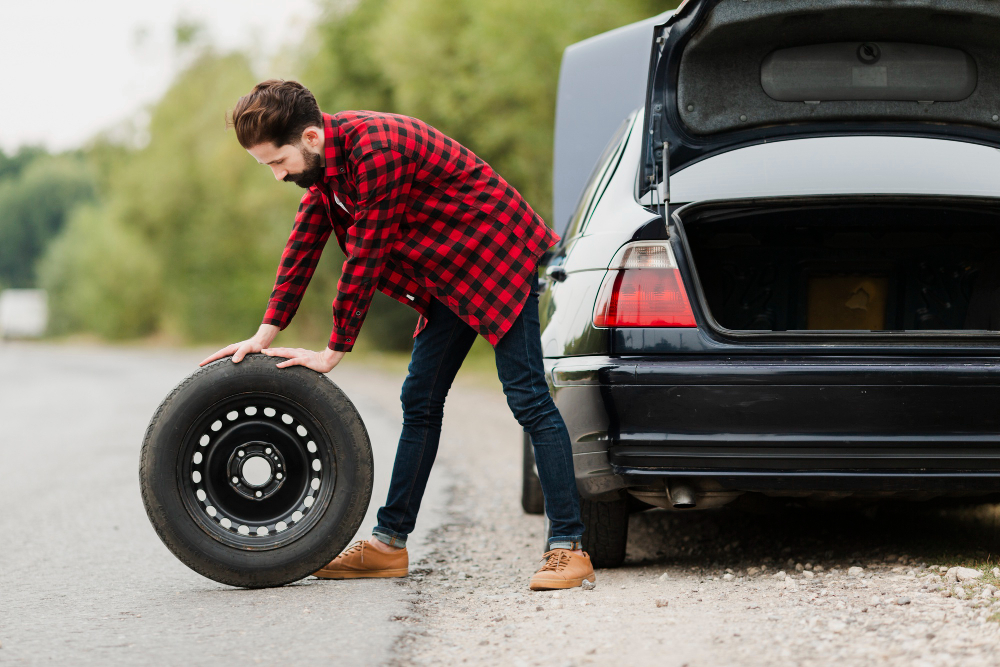
A flat tire can turn any smooth ride into a sudden headache. That’s where the trusty spare tire comes in your quick fix to get back on the road. But that small, temporary tire isn’t built for long-term travel.
Most drivers don’t realize the risks of pushing a spare too far. While it might seem like a reliable backup, it comes with serious limits on speed, distance, and safety. Ignoring those limits can lead to dangerous handling, reduced braking ability, and even damage to your car.
Every spare has its own lifespan, and understanding how much use it can take helps you avoid expensive repairs or accidents.
This article breaks down how far you can really drive on a spare, what type of spare you have, and what to do next. Don’t let a quick fix become a costly mistake know the facts before you roll.
How Long Can You Drive on a Spare Tire?
Flat tires don’t wait for the right moment. They strike without warning. That’s why every car comes with a spare tire. It’s your quick backup that helps you get moving again.
But a spare tire isn’t made for long drives or high speeds. It’s only a temporary solution. So, how far can you really go on it? Let’s break it down in a way that’s easy to understand.
Types of Spare Tires
Not all spares are the same. The type of spare you have affects how far and how fast you can drive.
Donut Spare Tire
Most cars come with this small, narrow tire. It’s light and saves space. But it’s not strong like your regular tires.
-
Can drive up to 50–70 miles
-
Safe speed is under 50 mph
Full-Size Spare Tire
This one looks like your normal tire. Some SUVs and trucks have this type.
-
Can drive longer distances
-
Can go at normal speeds
-
Still not meant for long-term use
Run-Flat Tire
Some modern cars use run-flat tires. These can drive even after getting punctured.
-
Can drive up to 50 miles
-
Speed limit is usually under 50 mph
-
Tire needs to be replaced or repaired soon
Why Spare Tires Have Limits?
Spare tires are only made for short-term help. They are not strong like regular tires. The tread is thin. The rubber is weaker. They don’t give the same grip. Driving too far or too fast on them can be dangerous.
Key Problems:
-
Poor handling on the road
-
Longer stopping distance
-
More risk in rain or snow
-
Can damage your car’s suspension or brakes
How to Stay Safe on a Spare?
Follow these simple tips to avoid damage or accidents.
Check Air Pressure
Even a spare can go flat. Always check the pressure before you drive. Most spares need 60 PSI. It’s written on the tire.
Drive Slower
Stay under 50 mph. Fast driving heats up the tire and wears it out quickly.
Avoid Long Trips
Don’t plan long drives on a spare. Go to a tire shop as soon as possible.
Don’t Use on Rough Roads
Spare tires are not good for off-road or rocky roads. Stick to smooth, paved roads.
How to Know It’s Time to Stop
Some signs tell you it’s time to stop driving on your spare.
-
Car shakes or pulls to one side
-
Tire looks worn or damaged
-
You hear strange sounds
-
You’ve driven over 70 miles
Don’t ignore these signs. Replace the tire or visit a mechanic right away.
FAQs
Can I drive 100 miles on a spare tire?
That’s not safe. Most spares can’t handle more than 70 miles. Stop at a tire shop soon.
Can I drive on the highway with a spare?
Yes, but only for a short distance. Stay in the slow lane and avoid going over 50 mph.
How long can I leave a spare tire on my car?
Use it only for a few days. It’s not made for long-term use. Replace it with a full tire soon.
What happens if I drive too far on a spare?
You may damage your brakes, suspension, or even the spare itself. It can also cause an accident.
Conclusion
Spare tires are only for emergencies. They help you get off the road and reach a tire shop. Don’t treat them like regular tires.
Know your spare’s limits, drive carefully, and fix the problem as soon as possible. A few smart steps can save you from costly repairs and keep you safe on the road.