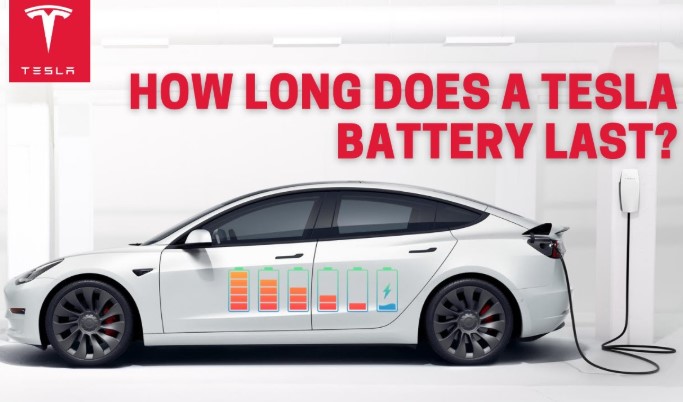
Tesla has built its reputation on performance, innovation, and long-lasting electric power. The question most drivers ask before switching to a Tesla is how long the battery truly lasts.
A Tesla battery typically holds strong for years, offering dependable range and efficiency with minimal degradation. Real-world data shows most Tesla batteries retain about 80–90% of their capacity even after 200,000 miles, which speaks volumes about their durability.
Climate, driving habits, and charging routines all play a role in how the battery ages, but Tesla’s advanced battery management system helps protect it over time. With proper care and smart charging habits, a Tesla battery can easily outlast many traditional vehicle components.
Exploring the real-life numbers behind Tesla’s battery lifespan reveals just how far electric technology has come and how confidently it’s driving the future of clean transportation.
How Long Does the Battery Last on a Tesla?
Tesla stands at the front of the electric car world. The main reason is its strong and smart battery system. The battery gives every Tesla its power, range, and performance. Drivers often ask one big question: how long does the battery actually last?
Tesla batteries are not like normal car batteries. They are large lithium-ion packs designed to last for years, not months.
The company has built them to handle thousands of charging cycles, long trips, and tough weather. Still, battery life can change based on how the car is used and cared for. Understanding these details helps drivers get the most out of their Tesla.
Tesla Battery Lifespan Overview

Tesla batteries usually last 300,000 to 500,000 miles, or around 20 to 25 years for an average driver. That means a Tesla battery often outlives the car itself.
Elon Musk has said Tesla aims for each battery pack to last as long as a gasoline engine—sometimes even longer. Many Tesla owners have already proven this by driving hundreds of thousands of miles with little battery loss.
Average Range and Battery Life by Model
| Tesla Model | Average Range (per charge) | Expected Battery Life | Battery Warranty |
|---|---|---|---|
| Model 3 | 270–350 miles | 300,000–500,000 miles | 8 years / 100,000–120,000 miles |
| Model Y | 300–330 miles | 300,000–500,000 miles | 8 years / 120,000–150,000 miles |
| Model S | 370–405 miles | 400,000–500,000 miles | 8 years / 150,000 miles |
| Model X | 330–350 miles | 400,000–500,000 miles | 8 years / 150,000 miles |
Tesla also guarantees that the battery will keep at least 70% of its capacity during the warranty period. That means you can expect very little drop in range for many years.
How Tesla Batteries Work?
Tesla batteries are made up of lithium-ion cells, similar to what’s used in laptops and smartphones, but much stronger. Each Tesla battery pack contains thousands of these small cells grouped together.
The cells work in unison to store and release electrical energy. They are managed by Tesla’s Battery Management System (BMS). This system balances power between cells, controls temperature, and prevents overcharging or deep discharging.
Tesla also uses liquid cooling to keep the battery at an ideal temperature. This helps extend its life and maintain strong performance even in very hot or cold weather.
Battery Degradation Over Time
All lithium-ion batteries lose capacity slowly with use. Tesla’s battery degradation rate is impressively low.
-
After 50,000 miles, most Tesla batteries lose only about 5% of their original capacity.
-
After 150,000 miles, the average loss is around 8–10%.
-
Many owners have reported keeping over 90% of their range even after 200,000 miles.
The rate of degradation depends on driving habits, climate, and charging style. Still, Tesla’s strong design and active cooling make it one of the slowest-degrading EV batteries on the market.
Factors That Affect Tesla Battery Lifespan
Several things play a big role in how long a Tesla battery lasts.
1. Charging Habits
How you charge your Tesla affects its long-term health. Fast-charging through Superchargers can warm up the battery more than home charging, which slightly increases wear over time.
Tips:
-
Use a home wall charger (Level 2) for daily charging.
-
Save Supercharging for long road trips.
-
Avoid charging to 100% daily. Keep it between 20%–80% most of the time.
2. Driving Style
Aggressive driving quick acceleration and constant high speeds can cause higher battery drain and heat. Smooth, steady driving keeps the battery cooler and healthier.
3. Temperature and Climate
Extreme temperatures affect all lithium batteries. Very hot weather increases internal wear, while freezing conditions reduce range. Tesla’s thermal system protects the pack, but parking indoors or in shaded areas helps extend life.
Tip: Use the “Preconditioning” feature to warm or cool your battery before driving.
4. Storage and Charging Level
Keeping your battery charged at 100% for long periods can strain it. It’s best to keep the charge level around 50% when the car is parked for days. Avoid letting it drop below 10% often.
5. Software Updates
Tesla often releases over-the-air software updates that improve battery management, cooling, and charging efficiency. Keeping your system updated ensures your battery gets the latest optimizations.
Tesla Battery Replacement Cost and Warranty
Replacing a Tesla battery costs between $12,000 and $20,000, depending on the model, battery type, and labor cost.
That said, Tesla’s batteries rarely fail early. Most owners never replace them. The company also provides a solid warranty:
-
Model 3 and Y: 8 years or 100,000–150,000 miles
-
Model S and X: 8 years or 150,000 miles
Tesla promises that the battery will retain at least 70% capacity within that period.
Real-World Examples of Tesla Battery Longevity
Many Tesla drivers have shared impressive results:
-
A Model S owner in California drove over 400,000 miles and still had 88% battery capacity.
-
A Model 3 in Europe reached 320,000 miles with less than 10% degradation.
-
Tesla taxis in Canada and the Netherlands have crossed 500,000 miles using the original battery packs.
These real-world examples show that Tesla batteries can truly last decades if maintained properly.
How to Make Tesla Battery Last Longer?
A few simple habits can make a big difference:
-
Charge slowly at home most of the time.
-
Avoid charging above 90% unless needed for long trips.
-
Keep the car in moderate temperature zones.
-
Drive gently and avoid sudden accelerations.
-
Use Tesla’s “Scheduled Charging” feature to charge during cooler hours.
-
Keep the car’s software up to date.
Environmental Benefits and Recycling
Tesla’s battery packs are not only durable but also recyclable. At the end of their life, Tesla recovers materials like lithium, nickel, and cobalt to use in new batteries. This reduces waste and the need for mining new materials.
Tesla’s battery recycling program helps lower the environmental impact of electric vehicles, making them even more sustainable.
FAQs
1. How many years does a Tesla battery last?
Most Tesla batteries last about 20 to 25 years, depending on use and care.
2. How much range loss can I expect over time?
Most drivers see about 5%–10% range loss after driving 150,000 miles.
3. Does fast charging harm Tesla batteries?
Frequent use of Superchargers can increase wear, but using them occasionally is safe.
4. Can I replace only part of the Tesla battery?
In some cases, yes. Tesla can replace specific battery modules instead of the entire pack.
5. Can Tesla batteries be recycled?
Yes. Tesla recycles old batteries and reuses valuable materials in new ones.
6. What is the cheapest Tesla battery to replace?
The Model 3 battery is usually the most affordable, costing around $12,000–$14,000.
Conclusion
Tesla batteries are among the most durable and advanced in the world. With care, they can last hundreds of thousands of miles and still perform well. Simple habits like moderate charging, gentle driving, and software updates can help you get the most life from your battery.
A Tesla is built not just for today’s roads but for years of electric driving ahead. Long life, low maintenance, and proven reliability make its battery one of the strongest reasons why Tesla stands apart in the EV market.