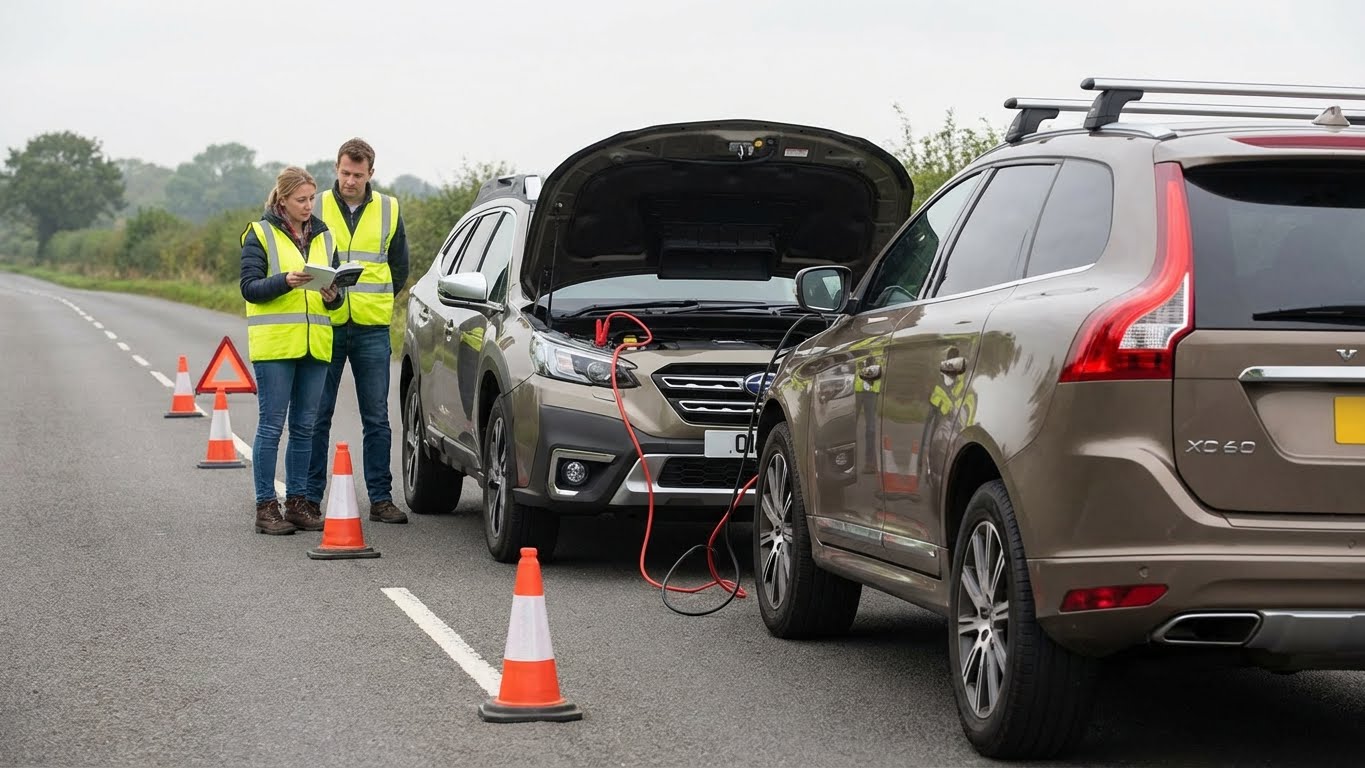
You can jump start a car safely by checking for hazards, using the right gear, and connecting the cables in the correct order while the engines are off. Follow simple safety checks, use jumper cables or a jump pack, and attach clamps so the power flows from the good battery to the dead one. This approach keeps you and your car safe and gives the best chance the engine will start.
Stay calm and move slowly. Inspect both vehicles, wear eye protection if you have it, and make sure metal parts don’t touch the clamps. If anything looks wrong or the battery is cracked or leaking, stop and call for help.
Key Takeaways
- Check safety and vehicle condition before attempting a jump.
- Use proper equipment and attach cables in the right order.
- If the battery or wiring looks damaged, get professional help.
Assessing Safety Before Jump Starting

Check for visible risks, battery condition, and whether the two vehicles and batteries match in voltage and size. Confirm no smoke, leaking fluid, or damaged cables before you connect anything.
Checking for Immediate Dangers
Look for leaking battery acid, smoke, or bulging battery cases. If you see any of these, do not jump start; the battery can explode or emit harmful fumes. Move everyone away and call roadside help.
Park on level ground and set parking brakes. Keep both cars turned off with lights and accessories off. Use wheel chocks or blocks if available to prevent rolling.
Wear safety glasses and gloves. Keep metal tools and jewelry away from the battery tops. Make sure bystanders stand clear and that children and pets are far from the cars.
Identifying Electrical Hazards
Inspect cables and clamps for frayed insulation, exposed wire, or rusted clamps. Damaged cables can short and cause sparks. Replace worn cables before attempting a jump.
Check both batteries for corrosion on the terminals. Light corrosion can be cleaned with a wire brush and baking soda solution, but heavy corrosion or loose terminals mean you should not proceed. Corrosion can block current flow and cause overheating.
Be careful with modern cars that have electronic systems. If you see aftermarket electronics, airbag warning lights, or a trunk-mounted battery, refer to the owner’s manual. Incorrect connections can damage control modules and sensors.
Understanding Vehicle Compatibility
Confirm both vehicles use the same nominal voltage—usually 12 volts in most cars and light trucks. Do not attempt to jump a 12V car with a 24V system or with a hybrid/EV high-voltage system unless the manual explicitly allows it.
Compare battery types if possible. Start-stop batteries, AGM, and gel batteries may need special jump procedures. When in doubt, use a portable jump starter rated for your vehicle or consult the vehicle manual.
Note engine sizes and positioning. A compact car and a heavy-duty truck can produce different current flows; position the booster vehicle close enough for cables without the cars touching. Keep cable routing clear of moving parts and hot surfaces.
Essential Equipment for Jump Starting
Have heavy-duty jumper cables, a reliable power source, and basic safety gear ready before you start. Know cable gauge, power options, and the correct use of a portable starter.
Choosing the Right Jumper Cables
Pick cables with a low gauge number for better current flow. Aim for 4–6 gauge for most cars and light trucks; 2–4 gauge for larger engines. Longer cables (12–20 feet) add reach but can reduce current slightly.
Look for solid copper or copper-clad clamps and fully insulated, heavy-duty handles. Strong clamps with good teeth give a secure connection to battery terminals and prevent slipping.
Store cables coiled in a labeled bag inside your trunk. Check them monthly for cracks, exposed wire, or corroded clamps. Replace damaged cables — a failed cable can leave you stranded or damage electronics.
Selecting a Reliable Power Source
You can use another vehicle or a charged donor battery. If using a car, park so cables reach both batteries without pulling or crossing them. Keep both cars off until connections are complete.
Match voltages: almost all passenger cars use 12V systems. Avoid using a donor with a different voltage or a hybrid/electric car unless the owner’s manual approves. Turn off all accessories (lights, radio, heater) in both cars.
Wear eye protection and gloves. Keep metal objects away from terminals. Attach and remove cables in the correct order to avoid sparks: positive-to-positive first, then negative to a grounded metal point away from the battery.
Using Portable Jump Starters
Choose a unit with at least 400–600 peak amps for small cars; 800+ amps for larger engines or diesel vehicles. Check the amp rating, battery capacity (Ah or Wh), and safety features like reverse-polarity protection and spark-free clamps.
Keep the jump starter charged between uses. Store it in the car’s trunk or glove box and check its charge every 1–3 months. Many models include USB ports and air compressors, which can add value but don’t replace proper maintenance.
Follow the manufacturer’s hookup steps exactly. Connect positive clamp to positive terminal first, then negative clamp to a metal ground point. Start your car per the device instructions and disconnect clamps in reverse order once the engine runs.
Preparing Both Vehicles
Make sure both cars sit safely, all power is off, and you can reach the batteries and their terminals without stretching or touching hot engine parts.
Positioning the Vehicles Securely
Park the donor vehicle so the hoods face each other or side-by-side, with batteries as close as jumper cables allow. Leave about 12–24 inches between bumpers so cables reach but the cars do not touch. Vehicles must not touch to avoid grounding and sparks.
Set both parking brakes and put automatic transmissions in Park or manuals in Neutral. Turn off engines, lights, heaters, and radios. Keep both hoods open and use hood props if needed.
Place wheel chocks or use the parking brake on slopes. Keep people and loose clothing away from belts and fans. Wear gloves and eye protection if you have them.
Turning Off Electrical Components
Turn off every electrical device in both cars before you connect cables. That includes headlights, interior lights, climate controls, stereo, phone chargers, and any aftermarket accessories.
Remove keys from both ignitions. If a car has a remote start or accessory position, make sure it’s fully off. This reduces the chance of voltage spikes that can damage electronics.
If the donor car has a battery disconnect switch or complex electronics, consult the owner’s manual before jumping. Newer cars sometimes recommend professional assistance.
Locating the Battery and Terminals
Open the hood and find the battery; it usually sits near a front corner but can be under trim, a seat, or in the trunk on some models. Look for the large red cover or cable for the positive terminal marked “+” and the black cable for negative marked “−.”
Clean any heavy corrosion with a wire brush or a damp cloth if safe to do so. If terminals are loose, do not attempt to jump the car—call for help.
Identify a clean, unpainted metal ground point on the dead car (engine block or chassis) for the negative clamp. Avoid attaching the negative clamp to the battery’s negative terminal on the dead car to reduce spark risk.
Step-By-Step Guide to Jump Starting a Car
You will use jumper cables or a portable jump starter, find a working donor vehicle or charged unit, and follow a strict connection and removal order to avoid sparks or damage. Keep metal away from battery tops and wear eye protection if available.
Connecting Jumper Cables in the Correct Order
Position both cars so they do not touch, engines off, parking brakes set, and lights off. Open both hoods and locate the positive (+) and negative (–) terminals; clean heavy corrosion with a wire brush if needed.
Attach the red (positive) clamp to the dead battery’s positive terminal first. Then attach the other red clamp to the donor battery’s positive terminal. Next, attach the black (negative) clamp to the donor battery’s negative terminal. Finally, attach the remaining black clamp to an unpainted metal surface on the dead car’s engine block or chassis — not the dead battery’s negative terminal. This last ground reduces spark risk and helps protect electronics.
Keep clamps clear of moving parts and cables untangled. Double-check clamps are secure and not touching each other or fan blades. If you see smoke, sparks, or smell strong sulfur, stop immediately and disconnect in reverse order.
Starting the Dead Vehicle
Start the donor vehicle and let it run at a moderate idle for 2–5 minutes to charge the dead battery. If using a portable jump starter, follow the device instructions and ensure it has enough charge.
Try starting the dead vehicle. If it doesn’t start, wait another 2–3 minutes and try again. Avoid cranking more than 10–15 seconds at a time; wait about 30 seconds between attempts to prevent starter damage. If the engine still won’t turn over after three tries, the battery or starter may be faulty; call roadside assistance.
Once the dead vehicle starts, keep both engines running for at least 5 minutes to stabilize voltage. Turn on the headlights or heater briefly to help charge the battery faster. Monitor the donor vehicle for any unusual noises or lights while both cars run.
Removing Cables Safely
With both engines still running, remove the clamps in the exact reverse order of connection. First take off the black clamp from the grounded metal point on the formerly dead car. Then remove the black clamp from the donor battery’s negative terminal.
Next remove the red clamp from the donor battery’s positive terminal, and finally remove the red clamp from the previously dead battery’s positive terminal. Keep clamps from touching each other or falling into the engine bay.
After removal, let the revived car run for at least 15–30 minutes or drive it to recharge the battery. If the car dies again soon after, have the battery and charging system tested, since the battery may not hold charge or the alternator might be failing.
Post-Jump Procedure and Troubleshooting
Keep the engine running long enough to recharge the battery and check for warning lights or odd noises. Inspect the battery, cables, and alternator connections, and be ready to handle common issues like a battery that won’t hold charge or repeated stalls.
Letting the Engine Run
Start the jumped car and let it idle for at least 20–30 minutes if you can drive it. Driving at moderate speed (30–50 mph) charges the battery faster than idling and helps the alternator restore a stronger charge.
Watch the dash for the battery or ALT light. If the light stays on, the alternator may not be charging. Turn off extra electrical loads (AC, radio, lights) to reduce drain while you drive to a safe place or a shop.
If the car dies again soon after disconnecting the cables, do not try repeated jumps in a parking lot. That indicates the battery or charging system is likely faulty and needs testing or replacement.
Inspecting Battery Health
After you disconnect the cables, check the battery for cracks, bulging, or heavy corrosion around the terminals. Use a wire brush to clean terminals if corrosion is light; wear gloves and eye protection when you do.
Measure voltage with a multimeter: a healthy, charged battery reads about 12.6 V at rest. With the engine running, voltage should be about 13.7–14.7 V if the alternator is working. Write these numbers down so you can tell a mechanic exactly what you observed.
If the battery is older than 3–5 years, weak tests, or shows damage, replace it. Batteries that leak or bulge are unsafe and must be swapped immediately.
Addressing Common Issues
If the engine starts but stalls, check for loose battery cables, blown fuses, or a failing alternator. Tighten cable clamps, inspect the main fusible links, and listen for grinding or whining from the alternator area.
If electronics behave oddly (dim lights, radio resets), recheck grounds and cable connections. Clean and tighten the negative ground at the engine block and the battery negative terminal.
If the car won’t start again after jumping and your cables and connections are good, get a professional battery and charging system test. Many auto shops offer free battery tests; bring the voltage and alternator readings you took to speed diagnosis.
Precautions and Safety Tips
Work on a flat, stable surface with the parking brake set and both ignitions off. Keep sparks, flames, and metal tools away from the battery, and wear eye protection and gloves.
Avoiding Damage to Electrical Systems
Connect cables in the correct order: positive to positive, then negative to a grounded metal point on the dead car — not directly to the dead battery’s negative terminal. This reduces the risk of sparks near the battery and protects sensitive electronics.
Use jumper cables with insulated clamps and heavy-gauge wire (at least 4–6 gauge for most cars). If you use a portable jump starter, match the voltage and follow the device instructions to avoid overvoltage. Do not try to jump a hybrid or electric vehicle unless the manual specifically allows it.
Turn off all accessories (radio, lights, climate control) in both cars before you start. After the engine starts, disconnect cables in reverse order and avoid contact between clamps. If your car’s dashboard shows error lights after a jump, shut down and get a mechanic to check the electrical system.
Protecting Yourself During the Process
Stand clear of the battery when you make the final connections and when the helper starts their engine. Batteries can release hydrogen gas and may vent or explode if shorted or overheated.
Wear eye protection and gloves to guard against acid splashes and accidental sparks. Keep clothing and jewelry away from clamps; metal can cause a short if it touches both terminals.
If you see smoke, a cracked or swollen battery, or a strong rotten-egg smell, stop immediately. Step back, disconnect the clamps (negative first if safe), and call roadside assistance or a professional.
When to Call for Professional Help
If you see damaged battery terminals, cracked casing, or fluid leaking, stop and call a pro. These signs mean the battery is unsafe to handle and could cause injury or damage to your car.
Call for help if your vehicle has complex electronics, hybrid or electric drive systems, or an unfamiliar battery setup. Modern cars can be sensitive to incorrect jump procedures and a technician will protect your vehicle’s electronics.
If the dead battery happens after repeated jump-starts or the car dies again soon after starting, you likely have a deeper problem. A mechanic can test the battery, starter, and charging system to find the real issue.
Avoid jumping a battery in extreme weather if you feel unsafe, or if you lack proper tools and protective gear. Roadside assistance or towing services can get you help fast and reduce risk.
Use professional services when you’re blocked on a busy road, in a remote area, or at night and feel uneasy. A trained technician can work quickly and keep you safe.
Quick checklist to call a pro:
- Visible battery damage or leaks
- Hybrid/electric or complex modern electronics
- Repeated failures after jump-starts
- Unsafe location, severe weather, or lack of tools
Calling a professional can prevent harm to you and costly damage to your vehicle.
Preventing Future Battery Problems
Keep your battery healthy with regular checks, clean connections, and avoiding short trips that drain charge. Watch for slow cranking, dashboard warning lights, or dim headlights so you can replace the battery before it leaves you stranded.
Regular Maintenance Tips
Check battery terminals every month. Remove corrosion with a 1:1 baking soda and water paste, scrub with a wire brush, rinse, and dry. Tighten loose clamps to ensure a solid connection.
Test battery voltage with a multimeter. A healthy battery reads about 12.6 volts at rest. If voltage falls below 12.4 volts, charge it or have it tested at a shop.
Keep the battery and engine bay clean and dry. Secure the battery so it does not shift. If you use the car for short trips often, add a trickle charger or drive longer routes weekly to maintain charge.
Replace old batteries proactively. Most car batteries last 3–5 years. Note the purchase or install date and plan replacement before winter or extreme heat.
Recognizing Signs of Battery Failure
Listen for slow cranking when you start the engine. A single slow turn of the starter, repeated clicking, or a long crank time often mean low battery charge or weak cells.
Watch for dim or flickering headlights and interior lights. These electrical symptoms show the battery can’t hold voltage under load.
Notice dashboard warning lights, especially the battery or charging system icon. Also watch for a strong rotten-egg smell near the battery, which can mean a failing cell or overcharging.
Pay attention to electronic quirks: losing radio presets, power windows moving slowly, or erratic gauge behavior. If you spot two or more signs, test the battery and charging system right away.