Using jack stands is the safest way to support a vehicle when performing repairs or maintenance underneath. The key to using jack stands safely is placing them on the proper lift points and ensuring they are stable before working under the car. This simple step helps prevent accidents that can cause serious injury or damage.
Many people start by lifting the vehicle with a car jack but rely solely on it, which is risky because car jacks can fail or slip. Jack stands provide a solid, steady base designed to hold the vehicle’s weight for extended periods. Understanding how to select the right jack stands and position them correctly is essential for safe work.
Following careful preparation and stability checks before starting ensures the vehicle won’t move or fall. Learning proper use helps anyone work on their vehicle with confidence and safety.
Key Takeaways
- Always place jack stands on the designated lift points of the vehicle.
- Check stability thoroughly before working under the vehicle.
- Use jack stands instead of relying only on a car jack for support.
Understanding Jack Stands
Jack stands are tools designed to hold a vehicle securely off the ground during repairs or maintenance. Their strength, design, and proper use are critical to keeping anyone safe under a lifted vehicle. Knowing what jack stands are, the types available, and how they operate is essential for working safely.
What Are Jack Stands?
Jack stands are support devices used to hold a vehicle in a raised position after it has been lifted by a jack. They prevent the vehicle from falling once the jack is removed or lowered. Typically made of steel or heavy-duty metal, they provide a stable base under a car’s frame or lift points.
They are rated for different weight capacities, so users must choose the right stands for their vehicle’s weight. Incorrect weight ratings can lead to failure and accidents. They are not lifting tools themselves but safety supports placed after lifting the vehicle.
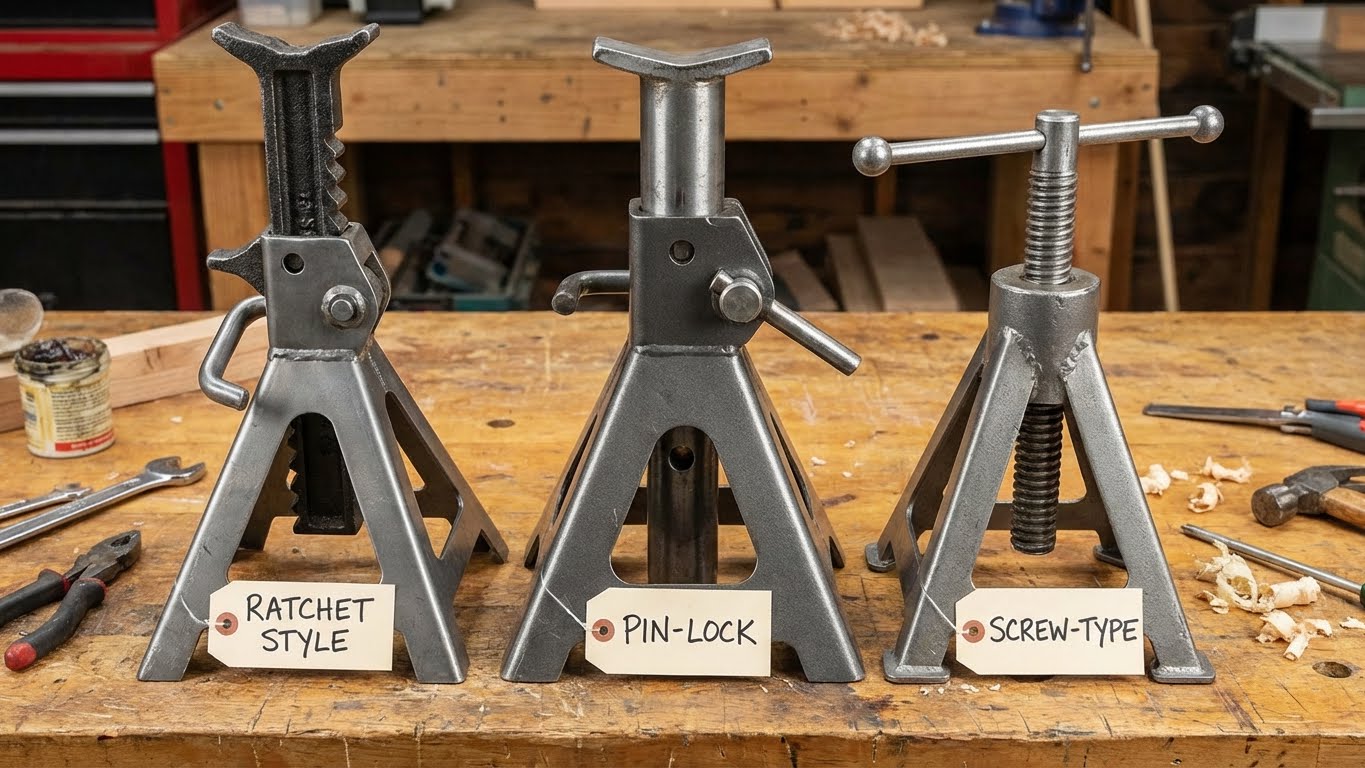
Types of Jack Stands

There are several types of jack stands, each with unique features:
- Ratchet stands: Use a toothed bar that clicks into different height positions. They are simple to adjust but must be securely locked.
- Pin lock stands: Use a removable pin to secure the adjustable bar. This offers solid locking but requires careful pin placement.
- Screw type stands: Adjust height by twisting a threaded shaft. They allow fine height adjustment but can wear out over time.
Most stands have a wide base for stability and a saddle or cradle at the top to fit the vehicle’s lift points. Choosing the right type depends on the user’s preference and the specific vehicle being serviced.
How Jack Stands Work
Jack stands work by distributing the weight of the vehicle safely to the ground. After a floor or hydraulic jack lifts the car, the jack stands are placed under the vehicle’s frame or designated lift points. The vehicle’s weight then rests entirely on the stands, not the jack.
Their design includes a broad base and strong vertical supports to prevent tipping or collapsing. Locking mechanisms keep the stands at the chosen height to avoid sudden drops. Users must ensure jack stands are on solid, level ground and properly positioned under sturdy parts of the vehicle.
Proper use involves raising the vehicle slightly off the jack stands with the jack after placement to make sure the weight is fully on the stands before removing the jack. This prevents sudden movement and keeps the workspace safe.
Selecting the Right Jack Stands
Choosing jack stands involves considering factors that ensure safety and proper support for the vehicle. Key elements include the stand’s load capacity to match the vehicle weight, the strength of the materials used, and the stand’s size to fit under the car correctly.
Weight Capacity Ratings
The weight capacity of jack stands must meet or exceed the vehicle’s gross weight to prevent failure during use. This rating is usually stamped on the stand and should be checked against the vehicle’s Gross Vehicle Weight Rating (GVWR), which is often found on a sticker inside the driver’s door or the owner’s manual.
It is important to use stands with a capacity higher than the vehicle weight for an added safety margin. For example, if a vehicle weighs 4,000 pounds, stands rated for at least 4,000 pounds each, or combined if using two, are necessary. Avoid using jack stands with unknown or insufficient weight ratings.
For more details, the National Institute for Occupational Safety and Health (NIOSH) provides safety guidelines on lifting and support equipment.
Material and Build Quality
Jack stands are usually made from steel or aluminum. Steel stands tend to be heavier but offer strong, durable support. Aluminum stands are lighter, which makes them easier to move but sometimes less resistant to heavy wear.
Look for stands with a sturdy, stable base to prevent tipping. Quality welds and solid construction reduce the risk of structural failure. Powder-coated or rust-resistant finishes also extend the stand’s lifespan by protecting against corrosion.
Users should avoid cheap or counterfeit stands that don’t meet safety certifications. Certified stands often have marks like ANSI or OSHA compliance to confirm they meet safety standards.
Size Compatibility
Selecting the right size includes considering the height range and footprint of the jack stands. The stands must fit under the vehicle’s designated lift points without blocking access to important components.
Height adjustment is critical. Taller stands suit trucks or SUVs with higher clearance. Low-profile stands are best for sports cars or vehicles with low ground clearance. The adjustable saddle or top of the stand should be designed to securely contact the vehicle’s frame or pinch points.
A stand that is too tall or too short can be unstable or unsafe. Size guides available from manufacturers help match jack stands to specific vehicles. More information on vehicle lifting points and proper stand sizing can be found on sites like Safety Tips for Using Jack Stands.
Preparing for Safe Use
Proper preparation is essential for using jack stands safely. This involves checking the condition of all tools, choosing the right surface to work on, and securing the vehicle before lifting. These steps prevent accidents and help ensure stable support.
Inspecting Equipment for Damage
Before using jack stands, it is important to inspect them carefully. Check for cracks, rust, bent parts, or worn components. Any damage can weaken the stand and cause it to fail under the vehicle’s weight.
Ensure the locking mechanism works smoothly and holds the stand at the desired height. Test the stability by placing the jack stand on a firm surface and giving it a slight push. If it wobbles or slips, do not use it.
He should also inspect the jack used to lift the vehicle. Look for leaks, damaged seals, or bent parts that might cause the lift to fail. Using reliable equipment reduces the risk of accidents. For detailed safety checks, resources like the National Highway Traffic Safety Administration provide useful guidelines.
Choosing a Suitable Surface
Jack stands must be placed on a hard, level surface to hold the vehicle safely. Avoid soft ground, gravel, or uneven surfaces where the stands can sink or tip over.
Concrete or asphalt driveway edges work best because they provide a solid base. If working indoors, a garage floor is ideal. If only softer surfaces are available, lay down a plywood board under the stands to create a flat, stable area.
Working on a flat surface also makes lifting and lowering the vehicle more controlled and safe. This reduces the chance that the stands will slip from beneath the car, which could cause serious injury or damage.
Parking Precautions
To prevent the car from moving while lifted, always engage the parking brake firmly. It’s also helpful to block the wheels that remain on the ground using sturdy wheel chocks.
Place the chocks in front of and behind at least one tire to stop any rolling. For extra safety, put the vehicle in gear or in park for automatic transmissions.
These precautions stop the car from rolling or shifting, which is crucial during maintenance under the vehicle. Proper parking setup ensures the jack stands stay in place, supporting the vehicle securely during the work. Guidance on proper wheel chocking can be found at the Occupational Safety and Health Administration (OSHA).
Lifting the Vehicle
Lifting a vehicle safely requires careful preparation and attention to detail. The jack must be positioned correctly, the right lifting points identified, and the vehicle raised evenly to maintain stability. These steps help prevent accidents and damage to the car.
Positioning the Floor Jack
The floor jack should always be placed on a flat, solid surface to prevent slipping or sinking. Before lifting, the jack’s saddle must align precisely under a designated lifting point on the vehicle. This alignment ensures the weight is supported properly.
When positioning, avoid soft ground like gravel or grass. Use a garage floor or paved driveway if possible. The jack handle should be clear of obstacles and within reach, allowing smooth operation. Raising the jack slowly helps maintain control.
Identifying Safe Lifting Points
Safe lifting points are specific areas designed to hold the vehicle’s weight during a lift. These points are usually reinforced parts of the frame or pinch welds.
Consult the vehicle’s manual to find exact locations. Placing the jack or jack stands anywhere else can cause damage or create unstable support. Look for marks or notches along the frame that indicate these points.
Correct placement protects both the vehicle and the person working underneath it.
Raising the Vehicle Evenly
Raising the vehicle evenly is essential to keep it balanced. The jack should lift straight up without tilting.
As the vehicle lifts, pause frequently to check stability. Ensure the car remains level by watching all four wheels and the frame. If it begins to lean, lower it and reposition the jack.
Once the vehicle is high enough to place jack stands, lift slightly beyond this height to securely set the stands before lowering the jack slowly. This method avoids sudden shifts or drops.
Placing Jack Stands Properly
Proper placement of jack stands is crucial for safety when lifting a vehicle. It involves positioning the stands at the right spots and adjusting their height to ensure stability. Correct setup prevents slips and supports the vehicle’s weight securely.
Aligning with Support Points
Jack stands must be placed directly under the vehicle’s designated support or pinch points. These points are usually found on the frame or reinforced areas designed to bear weight. Using these spots avoids damage and reduces the risk of the stands slipping out.
Before lowering the vehicle onto the stands, the saddle of each jack stand should be centered under these structural components. This ensures the load is evenly distributed. It is important to double-check the manual or vehicle guide for exact locations.
The surface under the jack stands should be flat and solid. Soft or uneven ground can cause instability, so using wood or a similar firm base is recommended if necessary.
Adjusting Height Securely
Once aligned, the jack stands’ height must be adjusted to fit snugly under the vehicle. Most stands have a ratchet or pin system to lock the height in place. The stands should be raised so the vehicle sits just above wheel level or the intended working height.
After lifting the vehicle with a hydraulic jack, the jack should be slowly lowered so the car rests fully on the stands. It is essential to listen for any shifting sounds and watch carefully to ensure the vehicle settles evenly.
Before starting work, shake the car gently to confirm the stands are secure and stable. If there is any movement, the height or placement should be corrected immediately. Always lock the ratchet or pin firmly to prevent accidental lowering.
Checking Stability and Safety
Properly setting up jack stands means focusing on their exact placement and making sure the vehicle is steady. These steps are essential to avoid accidents and ensure the vehicle stays secure while work is done underneath it.
Double-Checking Stand Placement
The jack stands must be placed under the vehicle at the manufacturer’s designated jack points. These points are specifically designed to handle the weight safely. Using other areas can cause damage or failure.
The surface beneath the stands should be flat, solid, and level. Avoid soft ground or slopes, as these increase the risk of the stands shifting or sinking.
Before lowering the vehicle, verify that each stand is locked in position and fully extended. The top of the jack stands should securely contact the vehicle frame or support area without gaps.
Testing for Firmness
Once the vehicle rests on the jack stands, the weight should be evenly spread across all stands. The vehicle must sit level without tilting or leaning.
Give the car a gentle shake to test its stability. If it wobbles or moves, raise it again and reposition the stands.
It is important to confirm the vehicle remains steady by doing this test before starting any work underneath. Any movement increases the chance of an accident.
Working Under the Vehicle
When working under a vehicle supported by jack stands, safety depends on awareness of physical risks and careful body positioning. Avoiding danger zones and minimizing sudden movements help prevent injury and ensure the vehicle remains stable.
Staying Clear of Pinch Points
Pinch points occur when parts of the vehicle or tools can trap fingers, hands, or limbs. These are often found near suspension components, moving linkages, and the areas where the jack stands contact the car frame.
Workers should keep hands clear when adjusting or moving components near these points. It is important to use tools that allow for precise control and to work deliberately to avoid slipping. Gloves that fit well can provide some protection but should not hinder tactile feedback.
Before starting work, a visual check for pinch points helps identify risks. If necessary, ask for assistance when dealing with tight spaces or heavy parts. Never place any body part between the vehicle and a solid surface unless the vehicle is fully supported and immobile.
Avoiding Unnecessary Movement
Unnecessary movement under the vehicle can cause the jack stands to shift or become unstable. Workers should position themselves comfortably to limit repositioning during the task.
It is crucial to distribute weight evenly and avoid leaning on or pushing against the vehicle. Sudden shifts of weight can tilt the jack stands or cause the car to slip.
If reaching for tools or parts, movements should be slow and deliberate. Having all needed items within easy reach before starting reduces the need to move excessively. Remaining calm and steady helps maintain a safe workspace.
Removing Jack Stands Safely
Removing jack stands requires careful steps to avoid sudden shifts or accidents. The vehicle must be lifted properly before taking the stands away, and the stands should be stored in a safe, dry place after use to keep them in good condition.
Lowering the Vehicle Carefully
First, the jack must be repositioned under the vehicle at a secure lifting point. The vehicle should then be lifted just enough to take the weight off the jack stands. This ensures the stands can be safely removed without bearing the load.
Once the stands are clear, the vehicle can be lowered slowly. The person should control the jack release carefully to avoid sudden drops. Lowering the vehicle gradually prevents damage to the car and reduces risk of injury.
During this process, it is important to watch for any slipping or unstable movement of the vehicle. Ensuring the vehicle is stable makes the removal safer for everyone involved.
Storing Stands After Use
After removal, jack stands must be inspected for any damage, such as cracks or bent parts. Only stands in good condition should be kept for future use.
They should be stored in a dry, clean area to avoid rust and corrosion. Keeping them off the ground on a shelf or in a toolbox helps maintain their functionality.
Organizing jack stands properly also prevents accidents during storage. Making sure they are upright and secure protects both the tool and the workshop space.
Additional Safety Tips
Proper support and personal protection are key to working safely with jack stands. Using extra measures to keep the vehicle from moving and protecting the body helps prevent accidents and injuries.
Using Wheel Chocks
Wheel chocks are blocks placed against the wheels that remain on the ground. They stop the vehicle from rolling while it is lifted on jack stands. Always put chocks on both sides of at least one wheel, preferably on the opposite end of the car from where it is lifted.
Use heavy-duty rubber or plastic chocks designed for vehicles. Avoid makeshift items like bricks or wood that can slip or break.
Place chocks on hard, flat ground for stability. Make sure they fit snugly against the tires, especially on inclined or uneven surfaces.
Even if the parking brake is on, never rely on it alone. Wheel chocks add an important extra layer of safety.
Wearing Personal Protective Equipment
Wearing proper protective gear reduces risks of injury when working under or around a lifted vehicle.
Essential equipment includes:
- Safety glasses to protect eyes from dirt, rust, or fluids.
- Gloves that provide grip and protect hands from cuts or burns.
- Closed-toe shoes with non-slip soles to avoid slipping or dropping heavy tools on feet.
Clothing should be close-fitting to prevent getting caught on parts. Avoid loose jewelry or accessories.
A hard hat can be useful if working in a tight space with low clearance or overhead hazards. Always keep a flashlight or headlamp handy to ensure clear visibility under the vehicle.
FAQs
What is the main purpose of jack stands?
Jack stands provide stable support when a vehicle is lifted. They keep the car secure and prevent it from falling during repairs or maintenance. Using only a car jack is not safe for extended work under the vehicle.
Where should jack stands be placed?
They must be positioned under strong parts of the vehicle like the frame or designated pinch points. This prevents slipping and ensures the car remains steady. Always check the vehicle’s manual for recommended jacking points.
Can you use jack stands on any surface?
No, jack stands should be used on flat, solid ground. Soft or uneven surfaces can cause instability and increase the risk of accidents. Concrete or asphalt driveways are ideal.
Is it safe to work under a car supported only by a hydraulic jack?
No. Hydraulic jacks can fail or lower unexpectedly. Jack stands are essential as they provide a fixed and reliable support system.
How does one safely remove jack stands?
First, place the hydraulic jack under the original lifting point and raise the vehicle slightly. This releases the weight off the jack stands. Then, remove the stands and slowly lower the vehicle.
Are there weight limits for jack stands?
Yes, every jack stand has a maximum weight rating. It’s important to choose stands that can support at least the full weight of the vehicle. Exceeding this limit can cause failure and injury.
Conclusion
Using jack stands safely is key to preventing injury while working under a vehicle. They must be placed on a flat, level surface to avoid shifting or tipping. Proper positioning under the vehicle’s frame or designated support points is critical for stability.
Before use, it is important to inspect the jack stands for any signs of damage or wear. Damaged equipment should never be used. A hydraulic jack should be used first to lift the vehicle to the correct height, followed by carefully placing the stands.
Key safety points to remember:
- Always use jack stands rated for the vehicle’s weight.
- Place stands under sturdy parts like the frame or axle.
- Never rely on a jack alone to hold a vehicle.
- Double-check that stands are locked in position before working.
By following these steps, a safe and secure work environment is created. This reduces the risk of accidents during automotive repairs or maintenance. Jack stands are an essential tool but must be used with care and respect for their limits.