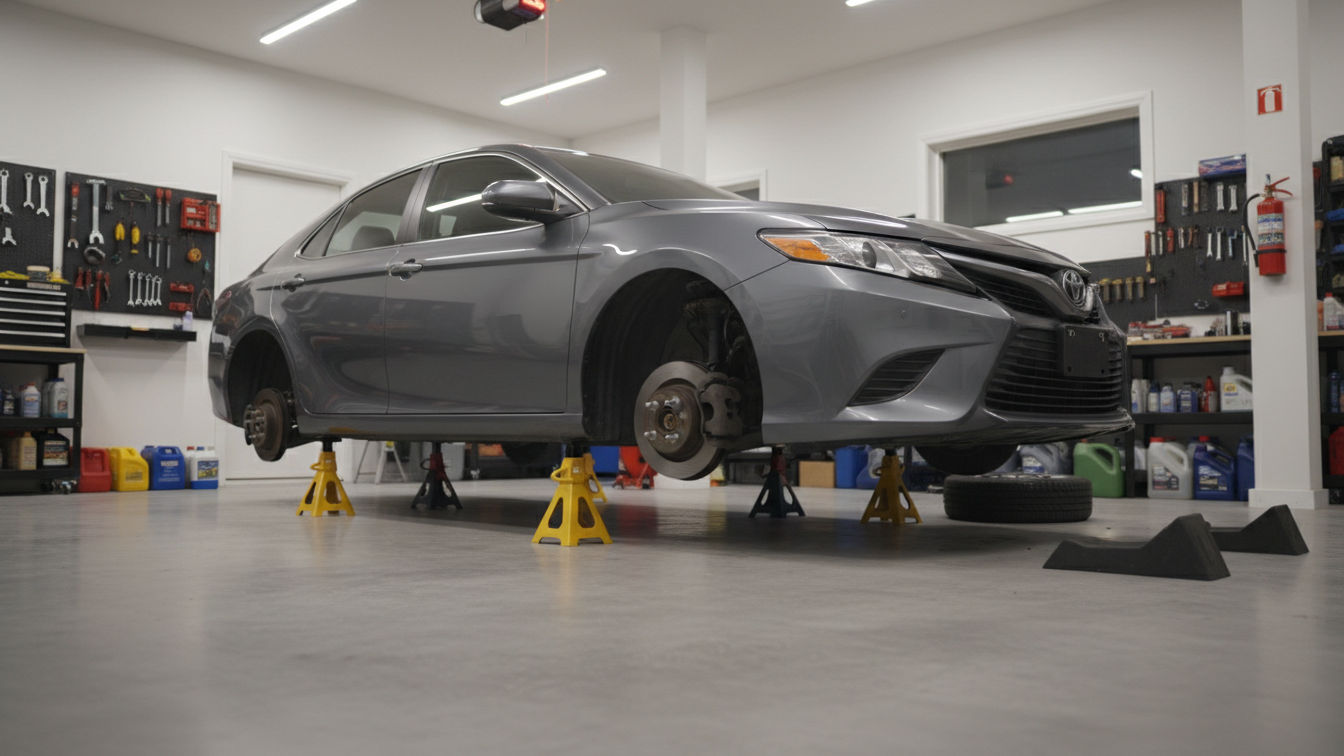
You can work under your car without fear when you set jack stands correctly and check stability before crawling underneath. Place the stands under the vehicle’s designated lift points, lower the car onto them, and never rely on the jack alone for support.
You’ll learn which spots to use, how to position the stands so they won’t slip, and quick safety checks to do every time. Follow simple steps and you’ll protect yourself and finish jobs faster.
Key Takeaways
- Use vehicle lift points and solid stands for support.
- Verify stability with small pushes before going under.
- Store and inspect stands to keep them safe and reliable.
Understanding Jack Stands
Jack stands support your vehicle after you lift it. You need to know what they are, which type fits your work, and how weight ratings and materials affect safety.
What Are Jack Stands
Jack stands are mechanical supports that hold a lifted vehicle in place while you work. Each stand has a wide base, a vertical post, and a saddle or cradle that contacts the vehicle. You use a hydraulic jack or mechanical jack to raise the car, then lower the vehicle onto the stands.
You must always place stands under factory lift points or sturdy frame sections. Never rely on a jack alone; jacks can fail or lose pressure. Inspect stands for cracks, bent parts, or corrosion before each use.
Types of Jack Stands
There are three common types: ratchet, pin-style, and screw-thread stands. Ratchet stands use a toothed post that clicks into place. Pin-style stands use a steel pin through holes in the post for a secure lock. Screw-thread stands adjust by turning a threaded post and often allow finer height control.
Choose stands with a saddle shape that matches the contact point. Use a pair of stands for one end of the vehicle and match height between them. For heavy trucks, use stands designed for higher clearance and capacity.
Weight Ratings and Materials
Weight ratings appear as capacity per stand, such as 2 tons (4,000 lb) each. Add the front and rear axle loads separately and choose stands rated above the heavier axle. Never exceed a stand’s rated capacity.
Common materials are stamped steel, cast iron, and welded steel. Cast and thick welded steel offer better durability and resistance to bending. Check labels or user manuals for load rating, manufacturing standard, and date of manufacture. Replace stands that show deformation, rust through, or missing locking parts.
Preparing for Safe Use
Check the jack stand rating, make sure the stands and jack are in good shape, and pick a flat, solid spot with room to work. These steps set you up to lift and support your vehicle safely.
Choosing the Right Jack Stands
Pick jack stands that match or exceed your vehicle’s weight. Look for a clear load rating stamped on each stand (for example, 3 tons per pair). Use at least two stands for one end of the vehicle and match capacity to the axle weight—not the vehicle’s gross weight.
Choose stands with a wide base and a positive locking mechanism, such as a pin or ratchet with a safety catch. Avoid screw-only stands that can unwind under load. If you work on SUVs or trucks, use stands rated for heavier loads and higher lift heights.
Inspecting Your Equipment
Check each stand for cracks, bent legs, rust, or stripped threads before use. Test the locking mechanism by raising and lowering the stand off the ground; it should lock solidly and not slip. Inspect the hydraulic or scissor jack too; look for oil leaks, damaged handles, or worn pads.
Keep a small checklist: rating present, leg integrity, lock function, and clean saddle. Replace any stand that shows damage. Never improvise with cinder blocks, bricks, or unstable supports.
Selecting a Suitable Work Location
Work on a level, hard surface like concrete or asphalt. Avoid soft ground, gravel, dirt, or slopes. If you must work on a slight slope, chock the wheels on the low side and park in gear (or use Park on automatics).
Clear the area around the vehicle so you can move freely. Position stands at the vehicle’s manufacturer-recommended lift points—usually pinch welds or reinforced frame areas—and keep a flashlight and wheel chocks within reach.
Correct Placement and Setup
Place the vehicle on firm, level ground, engage the parking brake, and chock the wheels you leave on the ground. Confirm the jack and stands match your vehicle’s weight rating before you lift.
Lifting the Vehicle Safely
Park on a flat, hard surface. Avoid soft ground or slopes. Put the transmission in park (or in gear for a manual) and set the parking brake. Chock the wheels on the opposite end of the car to stop rolling.
Use a jack rated for your vehicle’s Gross Vehicle Weight Rating (GVWR). Center the jack under the vehicle’s designated lift point, not under plastic trim or the oil pan. Pump the jack slowly and watch for any lean or shift. Lift the vehicle high enough to place the stands, keeping the jack handle under control and clear of moving parts.
Keep your body clear while lifting. Never crawl under the car supported only by the jack. Once the stands are in place and supporting the load, lower the jack so the car rests fully on the stands.
Identifying Proper Jack Points

Consult your owner’s manual to find the exact jacking and support points for your make and model. These points are usually reinforced sections of the frame, pinch welds with reinforcement, or solid axle tubes. Using the wrong spot can bend body panels or damage the drivetrain.
Look for stamped or raised areas labeled as jacking points. If your car has pinch welds, use a jack pad or a short section of steel to avoid crushing the seam. For independent suspension cars, avoid lifting on control arms, subframe bushings, or engine mounts unless the manual lists them as support points.
When in doubt, search the manufacturer’s service guide online or check reputable sources like the NHTSA or the vehicle manufacturer site for diagrams and instructions.
Positioning the Jack Stands
Set the jack stands under solid frame members or the specified support points. Adjust the stand height so the stand saddle contacts the vehicle evenly and vertically. Avoid contact with body panels, fuel tanks, brake lines, or wiring.
Place stands in pairs on each side of the vehicle, matching height exactly. After lowering the car onto the stands, give the car a firm push at the bumper to test stability. If you detect any shift, raise the car again, reposition the stands, and recheck.
Use wheel chocks and leave the jack in place as a backup only if the jack is rated for long-term load; otherwise remove the jack once the vehicle rests securely on the stands. For additional guidance, see manufacturer instructions or trusted safety resources like OSHA.
Double-Checking Stability
Make sure each jack stand sits squarely on its pad and that the vehicle’s weight rests fully on the stands. Then test the setup by gently moving the vehicle to confirm there is no shifting or wobble.
Confirming Secure Contact
Place the jack stands under the manufacturer’s recommended lift points. Check that the stand’s saddle or pad matches the contact area on the frame, axle, or pinch weld. If you use a pad adapter, ensure it seats cleanly and does not rock.
Visually inspect for gaps between the stand and vehicle. Use a flashlight if needed. The load should sit evenly on the stand’s load-bearing surface, not on bolts, sheet metal, or loose parts.
Verify both stands are set to the same height and the base sits flat on the ground. If the ground is soft or uneven, move to a firmer spot or use a steel plate under the stand feet. Tighten any stand locking pins or collars before lowering the vehicle.
Testing Vehicle Security
After lowering the vehicle onto the stands, keep the hydraulic jack in place but lower it until the jack no longer bears load, so the stands carry the full weight. Then, gently push the vehicle from one corner with a few light taps.
Look and feel for any movement, tilt, or creak. If you see wobble or hear shifting, raise the vehicle slightly with the jack, reposition the stands, and repeat the test. Never rely on a single stand unless its rating and placement are explicitly recommended by the vehicle maker.
Use wheel chocks on remaining wheels and engage the parking brake. Re-check stability after removing or repositioning any tools or parts under the car.
Operating Around Jack Stands
Keep the vehicle stable before you move. Check stand placement, wheel chocks, and jack position so nothing shifts while you enter, exit, or work under the car.
Entering and Exiting the Vehicle
Before you open the door, make sure the jack stands sit on firm, level ground and match the vehicle’s jacking points. Push the parking brake and place wheel chocks on the opposite end wheels to stop rolling.
Open and close doors gently. Avoid slamming or sudden weight shifts that could tip the vehicle. If you must sit inside, get in and out slowly; keep one hand on the roof or frame and step in with the foot closest to the ground first.
If you need to start the engine while on stands (rare), use extreme caution. Verify the parking brake, chocks, and that the transmission is in park or neutral with wheels blocked. Never rely on the jack alone when entering or exiting.
Working Safely Beneath the Car
Always use at least two jack stands rated above your vehicle’s weight and place them on the manufacturer-specified support points. Center the stand saddle under solid frame or pinch weld; avoid body panels and suspension arms.
Test stability before sliding under. Gently push the car from the side and on the same plane as the stands; if the vehicle rocks or shifts, lower it, reposition stands, and retest. Keep the floor jack in place as a secondary backup only if it does not contact moving parts.
Keep a clear escape path and avoid lying fully beneath unsupported areas. Use proper lighting and a creeper to move quickly. Wear eye protection, gloves, and avoid loose clothing that can catch on tools or components.
Removing Jack Stands Safely
Remove stands only after the vehicle is secure and supported by the jack. Work slowly, keep clear of pinch points, and check that the ground and tools stay stable.
Lowering the Vehicle Correctly
Position the floor jack under the same safe jacking point you used before. Pump the jack just enough to take the vehicle’s weight off the stand saddle; you only need a few millimeters of lift. Do not attempt to lift the car higher than needed.
Stand to the side of the stand, not under the vehicle, and pull the stand straight out from its base. Keep your fingers and hands away from the contact surfaces as you withdraw the stand. If the stand sticks, rock it slightly free; never use leverage that could slip.
Slowly open the jack release valve to lower the vehicle. Release pressure in small, even turns so the car descends smoothly onto the jack. Once the vehicle rests on the jack, move it clear of the stands, then finish lowering the car fully to the ground.
Post-Use Inspection
After the vehicle sits on the ground, inspect each jack stand for damage. Look for bent legs, cracked welds, or deformed saddles. Replace any stand that shows wear or rust that could compromise strength.
Clean dirt and grease from the stands and apply a light coat of rust inhibitor if metal surfaces are bare. Store stands upright on a dry surface and keep the locking pawl or pin engaged. For guidance on proper tool care and standards, refer to resources like the OSHA equipment guidelines and a trusted automotive site such as the National Highway Traffic Safety Administration (NHTSA).
Maintenance and Storage
Keep jack stands clean, dry, and checked for damage before each use. Store them off the ground and away from corrosive chemicals to preserve their strength.
Cleaning After Use
Remove dirt, oil, and grease from the stand legs and ratchet/mechanism after every job. Use a stiff brush to knock off loose debris, then wipe metal surfaces with a rag and a mild degreaser. Rinse and dry thoroughly to prevent rust.
Inspect the ratchet teeth, pawl, and welds while cleaning. Look for bent parts, cracks, deep pitting, or stripped teeth. If you find any of these, take the stand out of service immediately.
Lubricate moving parts lightly with a dry or light machine oil. Avoid heavy grease that traps dirt. Reapply lubrication sparingly after cleaning and before storage.
Proper Storage Practices
Store jack stands upright on a sturdy shelf or in a closed cabinet, not directly on a damp floor. Use a pegboard or labeled bins so you can access the correct size quickly.
Keep stands in a dry area where temperature and humidity are controlled if possible. Avoid storing near battery acid, solvents, or salt that can accelerate corrosion.
Mark each stand with load capacity and the last inspection date using a durable tag. Routinely check that paint, labels, and safety markings remain legible, and retire any stand that shows structural damage or compromised markings.
Common Mistakes and How to Avoid Them
You need to spot and fix the big errors that cause jack stand failures: putting too much weight on the stands and placing them on unstable ground. Fixing these two things keeps your work area steady and reduces the chance of a collapse.
Overloading Jack Stands
Never guess the weight your vehicle puts on each stand. Check the vehicle’s curb weight and the jack stand’s rated capacity. If the vehicle weighs 3,500 lb and you support it on two stands, each stand must be rated for at least half that weight plus a safety margin. Use stands with a rating higher than the load they will carry.
Inspect the stands for rust, bent parts, or missing pins before use. Use matching sets from the same manufacturer if possible. If you need extra support, add more stands under other solid lift points—do not stack stands or use blocks to increase height.
Quick checklist:
- Know your vehicle’s weight.
- Use stands rated above the required load.
- Inspect stands for damage.
- Never stack stands or use improvised supports.
Using on Uneven Surfaces
Place jack stands only on hard, level surfaces like concrete. Soft ground, packed dirt, or inclined driveways let stands shift or sink. If you must work on a slope, find a level area or use heavy-duty vehicle ramps on a flat surface.
Use plywood pads under each stand on thin or slightly soft surfaces to spread the load. Confirm each stand sits squarely with no rocking. After lowering the vehicle onto the stands, push on the car at different points to check stability before you slide under it.
Key checks:
- Surface is level and solid.
- Plywood pads for load spreading if needed.
- No rocking after lowering the vehicle.
FAQs
What should you check before using jack stands?
Inspect the jack stands for cracks, rust, and a stable ratchet or pin. Verify the vehicle’s lift points in the owner’s manual so you place stands on strong metal, not plastic or pinch welds.
Can you rely on the hydraulic jack alone?
No. A hydraulic jack can fail or lose pressure. Always use jack stands to support the vehicle before you work under it.
How many jack stands should you use?
Use at least two stands on a stable surface. Balance the car by placing stands at recommended points and avoid supporting one end only at the jack.
Are wheel chocks necessary?
Yes. Chock the wheels that stay on the ground to stop movement. Use tire chocks or blocks and set the parking brake for extra security.
What height should the stands be set at?
Set the stands so the vehicle sits level and you have enough room to work safely. Lock the stand at its rated height and test stability by gently rocking the car.
How do you remove the stands safely?
Remove tools and lower the vehicle slowly with the jack, supporting the weight while you retract the stand. Never crawl under until the jack and stands are both removed and the car rests on the ground.
What if a stand slips or tilts?
If that happens, get out and clear the area before lowering the vehicle. Do not attempt to fix a slipping stand while underneath the car.
How do you choose the right stand capacity?
Match stand capacity to your vehicle’s weight per lift point. Use stands with a combined capacity greater than the vehicle weight and follow the manufacturer’s limits.
Conclusion
You must treat jack stands as essential safety gear every time you work under a vehicle. Use a rated jack, pick firm jacking points, and always place stands on level ground before you start any work.
Inspect your stands for cracks, bent parts, or missing pins before each use. If anything looks compromised, replace the stand—do not improvise or rely on a single support.
Raise the vehicle slowly and set the stands at the correct height. Slightly lift the car with the jack to take weight off the stands when you remove the jack later.
Keep a clear work area and use wheel chocks to stop movement. Never crawl under a car supported only by a jack, and avoid leaning or pushing on the vehicle while it rests on stands.
Quick checklist:
- Rated stands for your vehicle weight
- Firm jacking points and level surface
- Stands locked and secure
- Wheel chocks and a spare support if needed
Following these steps will reduce risk and let you work with more confidence and control.