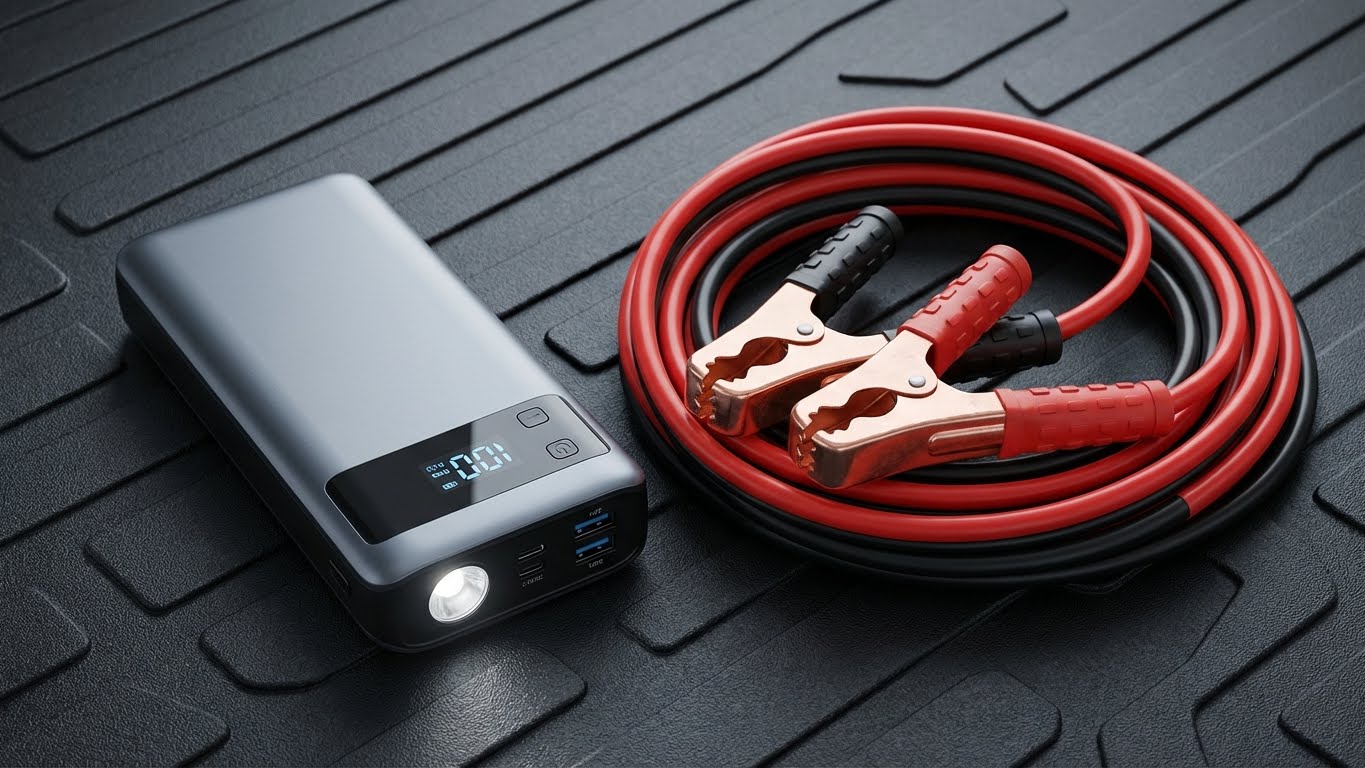
You want a fast, safe way to get moving when your car battery dies. If you often travel alone, drive in cold weather, or want a simple grab-and-go tool, a portable jump starter gives you independence and safety without asking another driver for help. If you mostly drive near others and want the cheapest option, jumper cables work fine; if you value convenience, speed, and extra features, choose a jump starter.
This post breaks down how each tool performs, how easy each one is to carry and use, and which fits different driving habits and budgets. You’ll get clear guidance so you can pick the option that keeps you moving with the least hassle.
Key Takeaways
- Jumper cables are the low-cost, no-maintenance choice for occasional use.
- Portable jump starters give fast, solo starts and extra safety features.
- Choose based on how often you travel alone, cold-weather needs, and budget.
Understanding Jumper Cables
Jumper cables connect a dead battery to a live one and let you use another vehicle to start your car. They come in different lengths and gauges, and you must follow safety steps to avoid sparks, damage, or injury.
How Jumper Cables Work

Jumper cables carry current from a working battery to your dead battery so the starter can turn the engine. You clamp the positive (red) cable to the positive terminals on both batteries, then clamp the negative (black) cable to the negative terminal on the working battery and a metal ground on the dead vehicle. That completes the circuit and lets the alternator recharge the dead battery once the engine runs.
The engine on the donor car must run while you try to start your car. Most small car batteries restart within a minute or two. If your car doesn’t start after several attempts, stop and check connections, battery condition, and whether the battery holds charge.
Types of Jumper Cables
Jumper cables vary by gauge, length, and clamp quality. Lower gauge numbers (like 2 or 4) mean thicker wire and higher current capacity; choose 2–4 gauge for trucks or cold climates and 6–8 gauge for most small cars. Lengths commonly range from 8 to 20 feet; longer cables offer more flexibility but add resistance.
Clamps differ by jaw size and insulation. Heavy-duty clamps give a stronger grip and better contact. Some cables have copper or copper-coated cores; pure copper conducts best but costs more. Match cable specs to your vehicle size and how far you usually park from help.
Essential Safety Precautions
Always wear eye protection and avoid loose clothing near engines. Park both cars in neutral or park with parking brakes on and engines off before connecting cables. Do not let clamps touch each other once connected to a battery.
Connect in this order: red to dead positive, red to donor positive, black to donor negative, black to an unpainted metal ground on the dead car. This reduces spark near the battery. Never smoke or work near open flames. If you see cracking, swelling, or leaking from a battery, do not jump it—call roadside assistance.
Exploring Jump Starters
Jump starters give you a self-contained power boost. They start your vehicle without a second car, often include USB ports and lights, and add safety features that reduce user error.
How Jump Starters Work
A jump starter stores electrical energy in an internal battery, usually lithium-ion or lead-acid. When you connect the clamps to your car battery, the device delivers a high current surge to spin the starter motor and get the engine running.
Most modern units include a built-in voltage regulator and internal circuitry that control the current and prevent overload. You normally connect positive clamp to positive terminal and negative clamp to a metal ground on the engine, then turn the jump starter on. After the engine starts, let the car run for a few minutes so the alternator recharges the vehicle battery.
Follow the manufacturer’s instructions on charge level and maximum cranking amps. Using the wrong settings or a weak unit can result in failed starts or stress on your car’s electrical system.
Types of Jump Starters
Portable jump starters come in a few common types: compact lithium-ion packs, heavy-duty lithium units, and older lead-acid booster packs.
- Compact lithium-ion packs: Small, light, and easy to store. Good for cars, motorcycles, and occasional use.
- Heavy-duty lithium units: Higher cranking amps and larger capacity for trucks, diesel engines, or frequent use.
- Lead-acid booster packs: Bulkier and heavier, but often cheaper and rugged for infrequent roadside use.
Many models add features like USB charging ports, built-in air compressors, and LED work lights. Pay attention to peak/cranking amps, reserve capacity, and cold-cranking performance if you live in cold climates.
Built-In Safety Features
Manufacturers add several safety features to prevent sparks, reverse polarity, and short circuits.
- Reverse polarity protection: Stops the unit if clamps are attached incorrectly.
- Spark-proof clamps: Reduce ignition risk when connecting to a battery.
- Overcurrent and overvoltage protection: Prevents damage to the car’s electronics.
- Automatic shutoff and thermal protection: Turns the unit off if it overheats or reaches unsafe current.
Some jump starters include status LEDs or a digital display showing battery voltage and charge level. These indicators help you confirm the unit is ready and that the vehicle battery is receiving power before you attempt to start the engine.
Performance Comparison
This section compares how each tool works when your car won’t start, how easy they are to use, and how fast and reliable they perform. You’ll see which option gives you independence, safety features, and consistent results.
Effectiveness in Emergencies
A portable jump starter lets you start your vehicle without another car. Most models deliver high peak amps and can handle vehicles from small cars to mid-size SUVs. If you often drive alone or in remote areas, a jump starter gives you independence and reduces wait time.
Jumper cables depend on a second vehicle and a willing helper. They work well if another car is nearby and both batteries are in good condition. In cases of a deeply discharged or damaged battery, cables may not help and can risk electrical issues if used incorrectly.
Always match the jump starter’s amp rating to your engine size. With cables, choose heavy-gauge wires (like 2–4 gauge) for better current flow. Both tools won’t fix a dead battery permanently; they only get the engine running so you can drive to a repair source.
Ease of Use
Jump starters are generally simple. You connect the clamps to the battery, follow a few indicator lights or a digital guide, and crank the engine. Many units include built-in safety features like reverse-polarity protection and short-circuit protection, which reduce user error.
Jumper cables require more care and knowledge. You must park two cars correctly, turn off electrical systems, and attach clamps in the right order. Mistakes like reversing polarity can damage electronics. You also rely on another driver who may not know proper procedure.
If you value one-person operation and fewer steps, a jump starter is easier. If you already know how to use cables and want a low-cost, maintenance-free option, jumper cables remain serviceable.
Speed and Reliability
A charged jump starter gives you a fast response: connect clamps, start the car within minutes, and you’re ready to go. Reliability depends on the unit’s charge level and quality. Keep the jump starter charged and stored in a temperate place for best performance.
Jumper cables can be fast if another vehicle is immediately available. Actual start time matches the helper’s battery condition. In cold weather, cables are less reliable because both batteries may struggle to deliver needed current.
For consistent, single-person starts, a high-quality jump starter beats cables. For predictable outcomes with minimal gear upkeep, cables work but depend on external help and battery health.
Portability and Convenience
You want gear that fits your trunk, is quick to use, and works with the vehicles you drive. This section compares how easy each option is to store, how fast you can get going, and which vehicles each suits best.
Storage and Handling
Jumper cables are simple: a single coiled bundle that usually fits in a small bag or under a seat. A good 4–6 foot set weighs 2–4 pounds and takes little space, but heavy-gauge cables can be bulky. Keep them in a labeled pouch to avoid tangles and corrosion.
Portable jump starters vary by capacity. Compact units (around 1–3 pounds) fit into glove compartments or center consoles. Larger models with air compressors or higher cranking amps need trunk space and a rigid case. Check battery charge monthly and store in a cool, dry spot to preserve performance.
Both options benefit from clear labeling and quick-access placement. Put cables where you can grab them in low light. Put a jump starter where you can also reach the unit’s cables and clamp storage without digging through boxes.
Setup Time
Jumper cables require another vehicle and some setup steps: position cars, pop hoods, connect four clamps in the correct order, and wait for the donor vehicle to run. Expect 5–15 minutes if the other driver is ready and you know the clamp order. Mistakes with clamp order or poor contact add more time.
A portable jump starter cuts setup steps. You park, open the hood, attach two clamps, and start—often in under 2 minutes if the unit is charged and clamps are accessible. Many units include clear LED or color codes that speed correct connections and reduce errors.
If you need time to find a willing helper or to move vehicles, a jump starter saves you those minutes. But if your jump starter is discharged or its clamps are stowed away, you face delays similar to cables.
Suitability for Different Vehicles
Jumper cables work for nearly all vehicles because they rely on the donor car’s battery and alternator output. They handle a wide range of engine sizes, including large diesel trucks, provided the donor vehicle has enough capacity. You must ensure the donor car is compatible with your vehicle’s battery type.
Portable jump starters list peak cranking amps and recommended engine size. Small 400–600 A units suit most cars and small SUVs. For heavy trucks, diesel engines, or cold-weather starts, choose a higher-capacity model (800–2000 A) designed for those engines. Always check the jump starter’s manual for engine-size limits.
For mixed fleets or frequent long trips, a high-capacity jump starter gives consistency. If you mostly drive in urban areas with other cars around, cables remain a low-cost, broadly compatible option.
Cost Considerations
You will weigh upfront price, ongoing costs, and small extra expenses when choosing between jumper cables and a jump starter. Each option has clear trade-offs that affect your wallet over time.
Initial Investment
Jumper cables cost much less up front. A decent 12‑foot, heavy‑gauge set suitable for cars typically runs $20–$50. You can buy heavy‑duty, commercial‑grade cables for $60–$100 if you want longer life and better clamps.
A portable jump starter costs more at first. Basic models start around $50–$80. Reliable units with 800–2000 peak amps and safety features usually fall in the $100–$250 range. Premium brands and multi‑function units (air compressor, USB power) can go above $300.
Think about how often you travel alone or in remote areas. If you rarely need a jump and want the cheapest option, cables save money now. If you want independence and quicker restarts, expect to pay more up front for a jump starter.
Long-Term Value
Jumper cables last many years with no batteries to replace if you store them dry and use them properly. They remain useful as long as clamps and insulation stay intact. Replacement cost is low if they wear out: $20–$60.
Jump starters lose value over time because the internal battery ages. Most lithium units hold peak performance for 2–5 years depending on use and storage. You may need to replace the unit or its battery pack after several years, which can cost as much as a new starter.
If you count reliability and convenience on solo trips, a jump starter can deliver higher practical value despite the higher price. For budget-conscious drivers who can access help, cables often offer better long-term dollar value.
Maintenance Expenses
Jumper cables require almost no maintenance. Wipe clamps clean after use and store cables dry. Occasional replacement of worn insulation or clamps is inexpensive.
Jump starters require periodic charging to maintain the internal battery. Expect to plug the unit in every 1–6 months depending on the model and storage temperature. If you neglect this, the unit can fail when you need it. Some models have a small standby power draw that might need monitoring.
If the jump starter battery fails outside warranty, repair is rarely cost effective; replacement costs match the initial price range. Factor in a small annual charge cost (a few dollars in electricity) and possible early replacement when comparing total maintenance expenses.
Safety and Risks
Know the biggest risks and the safer option. Jumper cables can cause sparks, reverse polarity, and battery damage if you connect them wrong or use a weak donor vehicle. Portable jump starters cut most of those risks but still need correct use and good battery condition.
Potential Dangers of Jumper Cables
Jumper cables can spark and cause burns or fires if clamps touch or if you connect the cables incorrectly. A common mistake is reversing polarity (red to negative, black to positive), which can fry electronics and damage the alternator.
Using a donor vehicle with a weak or different-voltage system raises risk. Heavy gauge cables reduce resistance, but thin cables can overheat. You also depend on another person and safe parking space; working in traffic or on a slope increases danger.
Follow steps to lower risk:
- Park both cars off the road and in gear or park with parking brakes on.
- Turn off both ignitions and all electronics.
- Attach clamps to clean metal battery posts and a grounded chassis point, not fuel lines.
- Keep clamps from touching each other while connected.
Safety Advantages of Jump Starters
Portable jump starters remove the need for a donor vehicle, so you avoid traffic hazards and relying on strangers. Most modern units include reverse-polarity protection, short-circuit protection, and spark protection, which reduce user error risks.
You still must match the jump starter to your vehicle’s requirements. Check cold cranking amps (CCA) and follow the manufacturer’s directions for clamp order and connection time. Keep the unit charged and store it at moderate temperatures to avoid performance loss.
Benefits at a glance:
- Independent use in remote locations
- Built-in safety circuits to prevent damage
- Faster, safer single-person operation
Suitability for Specific Scenarios
Choose based on how you travel, the typical weather you face, and whether you work with many vehicles. Each option has clear pros and cons that match specific needs like solo travel, cold climates, or daily fleet use.
Best Option for Solo Drivers
If you usually drive alone, a portable jump starter is the stronger choice. It lets you restart your car without waiting for another vehicle or a helper. Models with flashlight and USB ports add useful backup features when you’re stuck at night.
Jumper cables can work if you expect help nearby or park in busy areas. They are cheaper but depend on another vehicle and someone willing to assist. You also need to know safe hook-up order and grounding to avoid sparks or damage.
Carry a compact jump starter if you value independence and quick restarts. Keep the jump starter charged and store the cables and clamps in an organized bag. If you prefer low cost and rarely face isolation, buy quality heavy-gauge cables and learn proper technique.
Best Choice for Cold Weather
Cold weather reduces battery output and raises the risk of a no-start. A high-capacity jump starter performs better in freezing temperatures because it supplies consistent cranking amps right away. Look for units rated for cold conditions and with at least 400–800 peak amps for most cars.
Jumper cables still work in winter, but success depends on finding a warm, running donor car. Cables offer no power of their own, so you must get another vehicle close and manage cables in cold, slippery conditions. This adds time and risk.
In winter, prioritize reliability and speed. Keep a jump starter in the trunk and a set of insulated gloves and a flashlight. For long trips in cold regions, carry both a jump starter and heavy-duty cables as a backup.
Fleet and Professional Use
If you manage or work with many vehicles, choose tools that save time and reduce liability. Portable jump starters let technicians start vehicles quickly without relying on other drivers. Models with safety protections (reverse-polarity, spark-proof clamps) lower the chance of mistakes.
Jumper cables remain useful on-site when multiple vehicles are available and budgets are tight. For fleets, use professional-grade, long-length cables and a clear protocol for safe use. Train staff on correct hookup order and battery testing before attempting a jump.
Combine both for best coverage: supply crews with industrial jump starters for solo or remote starts, and keep heavy-duty cables on bay chargers for roadside assistance when multiple vehicles are present. Track maintenance and charging cycles to ensure devices stay ready.
Choosing the Right Solution
Decide based on how often you drive, where you travel, and how comfortable you are using another vehicle. Think about cost, safety, and the chance you’ll be alone when a battery dies.
Factors to Consider
Look at power and compatibility first. For most cars, a portable jump starter rated 400–1000 peak amps works; heavy trucks need higher amperage. Jumper cables need a healthy donor vehicle and proper cable gauge (4–6 gauge is common for cars).
Consider safety features. Jump starters often include reverse-polarity protection and spark-proof clamps. Jumper cables offer no built-in electronics, so you must connect correctly every time.
Think about portability and storage. A compact jump starter fits in the trunk and weighs 3–10 pounds. Good cables take more trunk space but weigh less. Finally, compare cost: basic cables cost $20–40; reliable jump starters range $70–200 or more.
Personal Preferences
Decide how much risk and effort you’ll accept. If you frequently drive alone at night or in remote areas, a jump starter gives independence—you don’t need another car. If you drive mostly around town with friends nearby, cables may be fine and cheaper.
Assess your mechanical comfort. If you avoid car work, a jump starter reduces steps and wiring mistakes. If you know how to clamp cables safely, cables remain a straightforward backup.
Check extra features you value. Some jump starters double as power banks, air compressors, or LED work lights. Cables have no extras but rarely fail and require no recharging.
Recommendations
If you want the safest, easiest single tool, buy a portable jump starter with at least 600 peak amps for most sedans and clear safety features like spark-proof and reverse polarity protection. Keep its battery charged and test it every 3–6 months.
If you prefer low cost and already have friends or roadside help accessible, choose heavy-gauge jumper cables (4–6 gauge) with long leads (12–20 feet). Store them in a labeled bag and practice proper clamping order: positive to positive, then negative to grounded metal on the dead car.
For balanced needs, carry both: a mid-range jump starter plus a set of quality cables. That covers solo breakdowns and situations where a dead jump starter or a depleted unit won’t work.
Conclusion
You can pick jumper cables if you want the cheapest, lowest-maintenance option. They work well when another driver is available and you know how to use them safely.
You should choose a portable jump starter if you want independence and ease of use. It lets you start a dead battery alone, often adds safety features, and can power other devices.
Think about where and how you drive. For long trips, remote areas, or winter conditions, a jump starter gives more reliability. For city driving or occasional use near other vehicles, good cables may be enough.
If budget matters, jumper cables win on price. If convenience and safety matter more, invest in a jump starter. You can also keep both: cables for low cost and a jump starter for backup.
Quick decision guide:
- Jumper cables: low cost, requires another car, simple.
- Jump starter: more expensive, solo use, extra features.
Choose what fits your needs, location, and comfort level. Keep gear in good condition and learn safe jump-start steps so you can act quickly and safely when a battery dies.