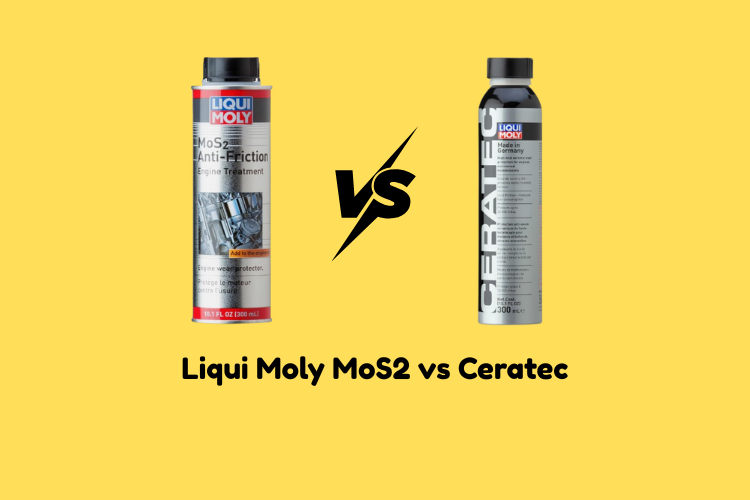
Drivers often search for engine additives that deliver smoother performance, quieter operation, and better long-term protection. Liqui Moly offers two standout options MoS2 and Ceratec and both promise impressive benefits through completely different technologies.
MoS2 relies on a solid lubricant that forms a protective layer on metal surfaces, while Ceratec uses advanced ceramic particles for high-pressure defense and long-term durability.
Each additive suits different driving styles, maintenance habits, and engine conditions, so the better choice depends on how your engine behaves and what you expect from it.
Daily commuters often notice faster improvements with MoS2 because its friction-reducing layer starts forming quickly. Enthusiasts and highway drivers often prefer Ceratec for its long treatment life and strong protection under extreme loads.
A clear breakdown of their performance traits, application advantages, and ideal use cases helps you decide which formula fits your goals and gives your engine the upgrade it truly deserves.
Liqui Moly MoS2 vs Liqui Moly Ceratec
Engine wear grows with every start. Metal rubs on metal. Heat rises. Oil loses strength. Drivers look for additives that help the engine run smoother and last longer.
Liqui Moly MoS2 and Ceratec sit among the most trusted formulas. Both improve lubrication. Both protect the internal parts. Yet both work in different ways, use different materials, and target different problems.
This deep guide explains each product in simple language. It covers performance, use cases, tech details, pros, cons, and the final choice.
Liqui Moly MoS2

Product Details
Liqui Moly MoS2 Anti-Friction Engine Treatment uses Molybdenum Disulfide as the main protective ingredient. MoS2 acts like millions of tiny plates stacked on each other. These plates slide easily under pressure. This sliding effect lowers friction between metal parts inside the engine.
The product forms a dark lubricating film on the cylinder walls, bearings, camshafts, lifters, and many moving parts. This film stays present during startup, idling, acceleration, and highway driving. The formula suits gasoline and diesel engines.
It blends with synthetic and conventional oils. It also works well in engines with slight noise or early wear. MoS2 helps older engines that already lost some smoothness. Many drivers report a quieter idle and faster throttle response after use.
The product handles high heat because the MoS2 particles stay stable at temperatures far above normal engine levels. The flash point of 181°C shows reliable strength under hard driving.
Product Details
Oil Type
MoS2 works with a wide range of oil types. It blends smoothly with synthetic oils, semi-synthetic oils, and conventional oils. The mineral-based composition supports stable behavior with thick and thin oils.
Viscosity Options
MoS2 adapts to many viscosities. Drivers use it with 0W-20, 5W-30, 10W-30, 10W-40, and similar grades. The additive does not thicken the oil. It keeps the original flow rate steady.
Additive Packages
The main active ingredient is Molybdenum Disulfide. MoS2 is known for its layered crystal structure. These layers slide over one another under pressure. This reduces metal contact.The dark gray particles bond to moving surfaces and create a heavy-duty barrier.
This barrier stays strong under load, high RPM, and harsh driving. MoS2 also contains small stabilizers that help it stay evenly mixed inside the oil. This prevents clumping and keeps the film uniform.
Recommended Use Cases
• Engines with light wear.
• Older engines with tapping or valve noise.
• High-mileage cars that need smoother operation.
• Engines that face heavy traffic, long idling, or hot climates.
• Cars used for long-distance travel.
Performance Comparison
Engine Protection
MoS2 forms a strong contact layer. This layer reduces direct metal grinding. This protects pistons, bearings, lifters, and other friction-heavy parts. Drivers often feel smoother engine revs. MoS2 also lowers vibration during idle.
Fuel Efficiency
Reduced friction allows the engine to spin easier. This lowers the workload on the crankshaft and pistons. Fuel savings stay small but steady. Many users notice fewer stops at the fuel pump during long trips.
Mileage Longevity
MoS2 slows down wear. This benefits engines with many miles. The additive also helps older engines push through stressful driving without losing performance.
Cold-Start Performance
Oil drains down overnight. MoS2 stays bonded to the metal. That film protects the engine before the oil fully circulates. This reduces start-up wear, which is one of the biggest causes of long-term engine damage.
High-Temperature Stability
The MoS2 particles stay stable under heavy heat. Highway driving, towing, or long uphill driving raise engine temperatures. MoS2 survives these conditions and keeps the engine smooth.
Product Options & Specs
• Size: 300 ml
• Formula: MoS2 mineral-based friction film
• Flash Point: 181°C
• Fit: Gasoline and diesel engines
• Oil Compatibility: Wide range
• Target: Noise reduction, friction control, older engines
• Price: Budget level
Pros and Cons
Pros
• Affordable for most drivers.
• Fast results in engine sound.
• Strong friction reduction.
• Great for older engines.
• Stable at high RPM.
Cons
• Shorter lasting protection than Ceratec.
• Dark film changes oil color.
• Less advanced technology.
Liqui Moly Ceratec
Product Details
Liqui Moly Ceratec stands at the top of Liqui Moly’s additive line. It uses micro-ceramic particles along with strong chemical friction modifiers. These particles settle deep into the tiny pores on the metal.
This creates a long-lasting ceramic shield that reduces contact between surfaces. The ceramic layer handles intense pressure. It also stays stable at temperatures far beyond normal engine conditions. Ceratec works with gasoline and diesel engines.
It mixes well with all API-approved oil types. Many drivers see long-term improvement in engine smoothness. Ceratec often stays effective for up to 30,000 miles per application.
The formula does not create deposits and stays filter-safe because the ceramic particles are extremely fine. Ceratec fits modern engines, turbo engines, sports cars, and daily-use vehicles that need long-term reliability.
Product Details
Oil Type
Ceratec works with all common motor oils. It blends with full synthetic, semi-synthetic, and mineral oils. This makes it flexible for both new and old vehicles.
Viscosity Options
Ceratec supports 0W grades, thin oils, and thicker oils equally. It does not change oil flow or thickness. Drivers use it with 0W-16 up to 10W-60 without issues.
Additive Packages
Ceratec uses two layers of protection:
-
Micro-ceramic particles that bond to metal.
-
Chemical friction modifiers that further reduce contact.
This dual layer helps the engine stay protected during cold starts, heavy acceleration, towing, racing, or long-distance travel. The ceramic coating lasts far longer than MoS2 because it embeds into the metal structure.
Recommended Use Cases
• New engines that need long-term care.
• Turbocharged engines that produce high heat.
• High-performance cars with stressed components.
• Drivers who want long intervals between additive treatments.
• Engines used in extreme cold or extreme heat.
Performance Comparison
Engine Protection
Ceratec offers very strong wear control. The ceramic shield prevents direct metal contact even under heavy load. This brings smoother acceleration, stronger idle stability, and more confidence during long trips.
Fuel Efficiency
Lower metal drag leads to better fuel use. The gains grow over time. Many drivers see consistent improvement in long-distance fuel economy.
Mileage Longevity
Ceratec supports long engine life. The product works well for engines with moderate wear and new engines that need early protection.
Cold-Start Performance
The ceramic layer stays on the metal even after long rest. Engines start with less friction. This reduces internal stress and helps maintain compression.
High-Temperature Stability
Ceratec thrives under extreme heat. This makes it ideal for turbo engines, towing, racing, or long highway trips during hot weather.
Product Options & Specs
• Size: 300 ml
• Formula: Micro-ceramic + chemical friction modifiers
• Long-Term Use: Up to 30,000 miles
• Fit: Gasoline and diesel
• Filter Safe: Yes
• Temperature Range: Extreme high and low
• Price: Higher cost
Pros and Cons
Pros
• Very strong wear protection.
• Long-lasting effect.
• Works in extreme heat and cold.
• Ideal for new and performance engines.
• Helps fuel efficiency over time.
Cons
• Higher price.
• Results appear slowly at first.
• Not ideal for engines with sludge.
Comparison Table for Liqui Moly MoS2 vs Liqui Moly Ceratec
| Feature | Liqui Moly MoS2 | Liqui Moly Ceratec |
|---|---|---|
| Base Material | MoS2 mineral lubricant | Ceramic + chemical modifiers |
| Price | Low | High |
| Noise Reduction Speed | Fast | Slow but stronger |
| Protection Duration | Short-Medium | Very Long |
| Best Engine Type | Older engines | New, turbo, performance |
| Heat Resistance | High | Very High |
| Cold Start Strength | Good | Excellent |
| Wear Control | Medium-High | Very High |
| Oil Compatibility | Wide | Very Wide |
| Long Trip Support | Good | Excellent |
MoS2 uses a classic solid-lubricant method. It shows fast changes. It cuts noise quickly. It works great on old engines or engines that already feel rough. The price stays low, so many drivers use it often.
Ceratec uses advanced ceramic technology. It offers stronger protection. It lasts much longer. It fits modern engines, turbo engines, and heavy-use driving. It costs more but offers deeper, long-term results.
FAQs
Does MoS2 change oil color?
Yes. The MoS2 particles make the oil look darker. This is normal.
Does Ceratec last longer than MoS2?
Yes. Ceratec stays effective for up to 30,000 miles.
Is Ceratec safe for turbo engines?
Yes. The ceramic shield handles extreme heat and high pressure.
Should both products be mixed together?
No. Mixing reduces the effect of both.
Which gives faster results?
MoS2. Ceratec works slower but lasts longer.
Which One Should You Choose?
Drivers with older engines, slight noise, or budget limits may choose MoS2. It gives fast relief. It lowers friction quickly. It helps engines that already feel tired.
Drivers with new engines, turbo engines, or long-distance needs may choose Ceratec. The ceramic shield gives deeper protection. It lasts for a long time. It keeps the engine stable in both heat and cold.
Both help the engine. The right choice depends on engine age, driving style, and long-term goals.