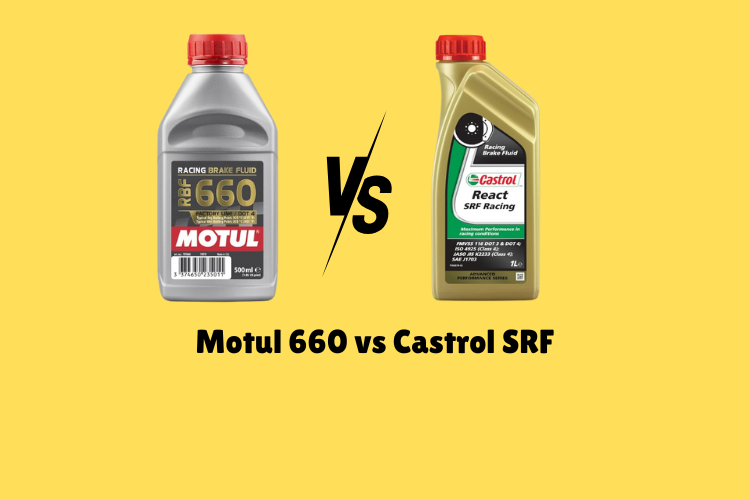
Track days demand absolute confidence, and brake fluid performance often decides how long that confidence lasts. Motul RBF 660 and Castrol SRF sit at the top of the performance chart, yet each one delivers a very different feel and endurance profile.
Drivers who push their cars hard want a fluid that resists fade, handles extreme heat, and keeps the pedal firm lap after lap. Motul RBF 660 brings a crisp, direct braking response that suits aggressive driving and lighter racing platforms.
Castrol SRF offers unmatched wet boiling performance, long service intervals, and remarkable stability under relentless heat cycles. Enthusiasts who compare them notice clear strengths on both sides.
Track-focused builds favor the sharp bite from RBF 660, while endurance racers appreciate the consistency and longevity of SRF. This match-up highlights two premium options designed for drivers who refuse to compromise on braking performance.
Motul 660 vs Castrol SRF
High heat. Hard braking. Fast laps. Tough roads. Brake fluid faces more stress than most drivers realize. Motul RBF 660 and Castrol SRF often come up as two top choices for racing, track days, and high-performance braking. Both products target extreme conditions, but they do it in different ways.
The details matter. Every number matters. Every weakness matters. This guide breaks each fluid down in a simple and clear format so you can pick the right one with full confidence.
Motul RBF 660 Racing Brake Fluid

Product Details
Motul RBF 660 is a synthetic DOT-4 racing brake fluid. It targets drivers who push brakes to the limit. It shows strong stability under repeated hard stops. It also resists boiling under extreme heat.
Many track drivers prefer it because it gives a firm pedal and solid fade resistance. A small bottle size keeps it easy to flush and bleed systems with low waste.
Motul markets this fluid toward hydraulic brake and clutch systems that face harsh temperatures. The 500 ml bottle size also makes it easy to carry as a spare during events.
Key Differences
Oil Type
Motul RBF 660 uses a full synthetic glycol-based DOT-4 formula. It focuses on higher dry boiling points for racing stress.
Viscosity Options
Motul provides one viscosity option. This keeps performance consistent for all users.
Additive Packages
The additives aim for thermal stability and better fluid motion under high pressure. They slow vapor formation. They also protect the system from temperature swings during heavy braking.
Recommended Use Cases
Great for track days. Great for spirited driving. Useful for heavy cars. Useful for aggressive pads and big brake kits. Ideal for drivers who bleed fluids often.
Performance Comparison
Engine Protection
Brake fluid does not protect engines, but it protects brake systems. Motul gives solid resistance to moisture. This slows corrosion and protects seals.
Fuel Efficiency
Brake fluid does not change fuel economy. But a stable pedal gives better control. That control leads to smoother driving.
Mileage Longevity
Motul RBF 660 does not last long in the system. High-performance glycol fluids absorb moisture fast. This means frequent replacement. Many track users change it every event.
Cold-Start Performance
Motul flows well in cold weather. Pedal feel stays firm. No lag. No mushy response.
High-Temperature Stability
This is Motul’s strength. Dry boiling point stays high. Vapor lock risk stays low. Pedal feel stays strong even after repeated hard stops.
Product Options & Specs
-
Brand: Motul
-
Type: Synthetic DOT-4 racing brake fluid
-
Size: 500 ml
-
Dry boiling point (approx.): 617°F (325°C)
-
Wet boiling point (approx.): 400°F range (varies with moisture content)
-
Ideal for: Track use, racing, heavy braking loads
Pros and Cons
Pros
-
Very high dry boiling point
-
Strong thermal stability
-
Sharp pedal feel
-
Great for track events
-
Good cold flow
Cons
-
Higher moisture absorption
-
Shorter service life
-
Frequent flush needed
-
Smaller bottle size for some users
Castrol SRF Racing Brake Fluid
Product Details
Castrol SRF Racing Brake Fluid is a premium silicone-based fluid with a very high wet boiling point. It aims at professional motorsport. It provides stable braking even with moisture buildup.
This makes it unique because most high-performance fluids drop in performance once moisture enters. SRF comes in a larger 1-liter bottle. It serves vehicles that need large amounts of fluid or long service intervals.
Key Differences
Oil Type
Castrol SRF uses a silicone-based formula with proprietary chemistry. It targets long-lasting performance under extreme heat.
Viscosity Options
SRF comes in one standard viscosity. This ensures stable feel across all brake systems.
Additive Packages
Castrol uses advanced anti-vapor additives. These additives stay stable under racing heat. They reduce vapor lock. They also fight moisture impact.
Recommended Use Cases
Perfect for racing teams. Perfect for repeated track abuse. Good for drivers who want longer service life. Also useful for rally racing where brakes hit high heat again and again.
Performance Comparison
Engine Protection
Brake systems stay safe under heavy stress. SRF shields seals from vapor formation. This prevents pedal loss.
Fuel Efficiency
No major change. Stable brakes may help smoother driving.
Mileage Longevity
SRF lasts much longer than Motul RBF 660. Its wet boiling point stays high even after moisture enters. This gives longer intervals between flushes.
Cold-Start Performance
SRF stays consistent in cold conditions. Pedal feel stays firm with no delay.
High-Temperature Stability
SRF shows one of the highest wet boiling points in the world of brake fluids. This gives safe braking during long track sessions. Vapor lock becomes almost impossible.
Product Options & Specs
-
Brand: Castrol
-
Type: Silicone-based racing brake fluid
-
Size: 1 Liter
-
Dry boiling point (approx.): 590°F (310°C)
-
Wet boiling point: 518°F (270°C)
-
Ideal for: Racing, rallying, long high-heat sessions, extended service
Pros and Cons
Pros
-
Highest wet boiling point in the industry
-
Long fluid life
-
Strong vapor lock resistance
-
Excellent for long sessions
-
Very stable under extreme heat
Cons
-
High price
-
Thick bottle may be more than hobby drivers need
-
Harder to find in small shops
Detailed Comparison for Motul RBF 660 vs Castrol SRF
Both fluids target extreme braking heat. Motul RBF 660 shines in raw dry boiling point numbers. This helps during the first few cycles. Castrol SRF focuses on long-term heat stability, especially after moisture enters.
This is where SRF stays ahead of almost every other fluid. Motul works best for drivers who flush often and want strong instant performance.
Castrol works best for those who want strong performance without constant fluid changes. Motul costs less but needs more maintenance. Castrol costs more but lasts longer.
Comparison Table
| Feature | Motul RBF 660 | Castrol SRF |
|---|---|---|
| Base Type | Synthetic glycol DOT-4 | Silicone-based racing fluid |
| Dry Boiling Point | Higher (approx. 325°C) | Slightly lower (approx. 310°C) |
| Wet Boiling Point | Much lower than SRF | Highest in industry (270°C) |
| Price | Lower | Higher |
| Best For | Track days, short events | Professional racing, long sessions |
| Service Life | Short | Very long |
| Pedal Feel | Sharp | Very consistent |
| Bottle Size | 500 ml | 1000 ml |
FAQs
Is Motul RBF 660 safe for daily driving?
Yes, but it needs frequent flushes, so most daily drivers skip it.
Does Castrol SRF absorb less moisture?
Yes. That is why its wet boiling point stays high.
Which one gives a firmer pedal?
Both give strong feel, but Motul may feel slightly sharper early on.
Which fluid lasts longer?
Castrol SRF lasts much longer.
Can both fluids mix with DOT-4?
Both can mix with DOT-4, but mixing reduces performance.
Which One Should You Choose?
Pick Motul RBF 660 if you want strong performance at a lower cost. It works great for weekend track events. It gives sharp response. You just need frequent flushes.
Pick Castrol SRF if you want the most stable performance over long periods. It excels in professional racing. It holds its boiling point even after moisture enters. The higher price brings longer life and more stability.
Both fluids perform well under heat. Your choice depends on your driving style, your budget, and how often you bleed your brakes.
If you want raw value and short events, Motul RBF 660 fits well.
If you want long endurance and top reliability, Castrol SRF stands at the top.