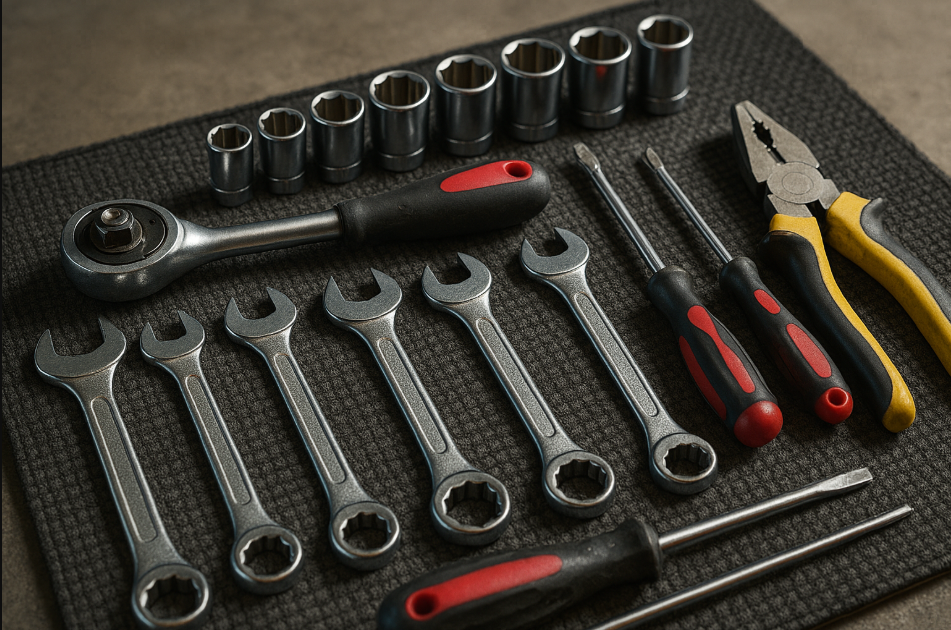
Basic car repairs can save time and money, especially when the right tools are close at hand. Whether changing a tire, checking the battery, or doing small maintenance work, having a set of essential tools makes the job easier and safer. The must-have tools for basic car repairs include hand tools like wrenches and screwdrivers, diagnostic devices, and safety gear.
These tools allow anyone to handle common car troubles without waiting for help or spending extra at the shop. Simple tools such as a socket set, tire pressure gauge, and jumper cables cover most everyday repairs. Being prepared with these basics gives a driver confidence on the road and helps avoid bigger issues later.
Understanding what tools to keep in the garage or car is key to quick and effective repairs. This guide focuses on the essential tools that every car owner should have for common fixes and maintenance tasks.
Key Takeways
- Basic hand tools are needed for most simple repairs.
- Safety and diagnostic tools help avoid costly mistakes.
- Tire and battery equipment are vital for common roadside issues.
Essential Hand Tools for Car Repairs
A basic car repair toolkit must include tools that allow easy access to bolts, screws, and small parts. These tools should fit tightly, provide good leverage, and be durable enough for repeated use. Proper hand tools help avoid damage and make repairs faster.
Socket Set and Ratchet
A socket set with a ratchet is key for removing bolts and nuts quickly and efficiently. Sockets come in metric and standard sizes, so having both types covers most vehicles. The ratchet allows turning without removing the tool from the fastener, saving time in tight spaces.
Deep and shallow sockets increase versatility. Deep sockets reach bolts on longer studs, while shallow sockets work well for general tasks. A good ratchet will have a comfortable grip and a quick-release feature to change sockets fast. Ratchets with a fine-tooth mechanism provide better control in small turns.
Wrenches (Open-End and Box-End)
Wrenches are essential for loosening and tightening bolts that sockets can’t fit around. Open-end wrenches slide onto fasteners from the side, useful in tight spots. Box-end wrenches fully encircle the bolt, providing better grip and reducing rounding risk.
Combination wrenches, with open-end on one side and box-end on the other, offer flexibility. It’s important to have a set that covers common sizes from about 8mm to 19mm for most passenger cars. Steel wrenches with polished or black oxide finishes resist rust and last longer.
Screwdrivers
Screwdrivers are needed for handling screws and prying small parts during repairs. A good toolkit includes different types: flathead (slotted) and Phillips head are the most common.
Flathead screwdrivers vary in blade width and are useful for prying or adjusting. Phillips head screwdrivers fit cross-shaped screws and provide better torque. Screwdrivers with magnetic tips hold screws in place, preventing drops in tight areas.
Having handles with non-slip grips improves safety and precision. A set of various sizes ensures working with small dashboard screws and larger engine components.
Pliers and Cutters
Pliers help hold, twist, and cut wires or small components during repairs. Needle-nose pliers reach narrow spaces and provide fine control for tasks like pulling fuses or bending wires.
Locking pliers clamp firmly and lock in place, useful for gripping stubborn parts without hand strain. Side cutters (diagonal cutters) cut wires cleanly, essential for electrical work or trimming cables.
Durable, insulated handles protect from shocks during electrical repairs. A variety of pliers, including slip-joint, needle-nose, and locking types, covers most basic car maintenance jobs.
Diagnostic and Safety Tools

Basic car repairs require tools that help identify problems accurately and protect the user from injury. Proper lighting, measurement devices, and safety equipment make repairs easier and safer. These items improve diagnostic accuracy and reduce risks during maintenance.
OBD-II Scanner
An OBD-II scanner is essential for reading error codes from a car’s computer. It connects to the vehicle’s OBD-II port, usually located under the dashboard. This tool helps identify issues like engine problems and emissions faults by displaying diagnostic trouble codes (DTCs).
Using an OBD-II scanner saves time and money by pinpointing the problem instead of guessing. Many models also offer live data streaming and freeze frame information, which shows vehicle conditions at the time a fault occurred. It’s a practical choice for anyone who wants to perform more accurate diagnostics at home.
For detailed info on OBD-II standards and use, the SAE International website is a reliable resource.
Multimeter
A multimeter is a versatile tool used to measure voltage, current, and resistance in a vehicle’s electrical system. It is vital for diagnosing electrical faults such as dead batteries, blown fuses, or faulty wiring.
This tool helps test circuits, check battery voltage, and confirm the functionality of electrical components. A digital multimeter with clear displays and auto-ranging is best for beginners. It provides quick and precise readings, helping avoid unnecessary part replacements.
Proper use of a multimeter reduces guesswork and improves repair efficiency by ensuring the electrical system is working correctly.
Work Light
Good lighting is crucial during car repairs. A reliable work light ensures all parts are visible, especially when working under the car or in poorly lit areas.
LED work lights are preferred because they offer bright, energy-efficient illumination and last longer than traditional bulbs. Many models feature magnetic bases or hooks, allowing hands-free use. Adjustable brightness settings help avoid glare that can strain the eyes.
Consistent lighting prevents mistakes and speeds up the repair process. For safety, choose lights with durable housings and waterproof ratings if working outdoors.
Protective Gloves and Safety Glasses
Wearing protective gloves and safety glasses is critical to avoid injuries during car repairs. Gloves protect hands from cuts, burns, chemicals, and dirt. Nitrile gloves are a good choice due to their resistance to oils and chemicals while offering flexibility.
Safety glasses shield the eyes from debris, dust, and fluids that may splash during repairs. Look for glasses with impact-resistant lenses and side protection for maximum safety.
Using proper protective gear reduces the risk of injury and helps maintain a safer work environment. For guidance on selecting personal protective equipment, the Occupational Safety and Health Administration (OSHA) provides useful information.
Tire and Wheel Maintenance Tools
Proper tire and wheel care requires specific tools that help maintain safety and performance. Knowing how to check tire pressure, remove lug nuts, and safely lift the vehicle is essential for any car owner.
Tire Pressure Gauge
A tire pressure gauge measures the air pressure inside a tire. Keeping tires at the correct pressure improves fuel efficiency, extends tire life, and ensures better handling.
There are three main types: digital, dial, and stick gauges. Digital gauges are easy to read and more accurate, while dial and stick gauges are simple and reliable. It’s important to check tire pressure when tires are cold for the most accurate reading.
Using a tire pressure gauge regularly helps detect slow leaks early. It should measure pressure in pounds per square inch (PSI) and match the tire manufacturer’s recommended PSI, usually found on the door frame or manual.
Lug Wrench
A lug wrench is essential for removing and tightening lug nuts when changing or rotating tires. Most lug wrenches are cross-shaped or L-shaped, providing the leverage needed to loosen tight nuts.
A common size for lug nuts is 19mm or 21mm, so the wrench must fit securely to avoid stripping the nuts. Some lug wrenches come with sockets for different sizes, which adds versatility.
Using proper technique, such as loosening lug nuts slightly before lifting the car, ensures safety. After the tire is replaced, nuts need to be tightened in a star pattern to evenly distribute pressure and secure the wheel firmly.
Jack and Jack Stands
A car jack lifts the vehicle off the ground, allowing tire changes or other repairs. Hydraulic jacks and scissor jacks are the two common types, with hydraulic jacks being easier and faster to use.
Jack stands provide stable support once the car is lifted. Never work under a vehicle supported only by a jack, as it can fail.
Positioning the jack correctly under the car’s frame or designated lifting points is key to avoiding damage. Jack stands should be placed on solid, level ground and adjusted to fit securely under the vehicle frame before beginning any work.
Battery and Electrical Maintenance Tools
Keeping a vehicle’s electrical system in good shape requires specific tools. These allow safe cleaning of battery parts, quick recovery from a dead battery, and proper upkeep of electrical connections. The right tools help avoid damage and keep the car reliable.
Battery Terminal Cleaner
A battery terminal cleaner is essential for removing corrosion and buildup on battery posts. Corrosion can lower the battery’s performance and lead to starting problems. These cleaners often come as wire brushes with a handle designed to fit both the battery terminal and post.
Using this tool regularly ensures a good electrical connection. When cleaning, it’s important to wear gloves and remove the battery cables first to avoid shorts. Detailed guidance on battery care can be found on sites like the Battery University.
Jumper Cables
Jumper cables are crucial for emergencies when the battery dies. They allow you to connect a flat battery to another vehicle’s battery for a jump start. A good set of cables should have thick, insulated wires and strong clamps for safety and efficiency.
Knowing how to connect jumper cables properly is important. Connecting them incorrectly can cause sparks or damage either vehicle’s electrical system. The process includes attaching cables in the correct order to the positive and negative terminals. More detailed instructions are available at the American Automobile Association (AAA) website.
Wire Brush
A wire brush is a versatile tool for electrical maintenance beyond just battery terminals. It cleans electrical connectors, fuse boxes, and wiring terminals. This prevents poor connections that cause electrical faults or dim lights.
Wire brushes come in different sizes and shapes. A small, handheld wire brush works well for tight spots. Using it carefully helps avoid damaging wires or connectors. Regular cleaning helps keep the wiring system healthy and cuts down on electrical problems over time.
Fluids and Filters Tools
Keeping fluids clean and correctly filled is essential for the health of a car’s engine and systems. The right tools make changing oil and adding fluids easier, faster, and less messy.
Oil Filter Wrench
An oil filter wrench is designed to remove and install oil filters safely without damaging them. Oil filters are often tightly fitted, so hand removal can be difficult or impossible. The wrench fits around the filter, providing extra grip and leverage, which helps avoid spills and ensures the filter is properly seated.
There are several types of oil filter wrenches:
- Band wrenches, which tighten around the filter.
- Socket-style wrenches, which fit over the end of the filter.
- Cap wrenches, designed for specific filter sizes.
Choosing the right wrench depends on the filter size and space available under the hood. Using an oil filter wrench helps prevent damage to the filter or engine parts and speeds up oil changes. For detailed guidance, resources like AutoZone’s oil filter guide provide useful tips.
Fluid Funnel
A fluid funnel is a simple but important tool for pouring fluids without spilling. It helps direct fluids—such as engine oil, coolant, brake fluid, or transmission fluid—into the correct reservoir or tank with minimal waste or mess.
Funnels come in various shapes and sizes, but some features make them more useful for car maintenance:
- Long, narrow spout to reach tight or deep openings.
- Wide mouth for easy pouring.
- Built-in strainer to catch debris.
Using a fluid funnel reduces the risk of spillage that can cause damage or create a hazardous work area. It also saves time by avoiding cleanup and helps prevent overfilling. For more information on fluid maintenance, the EPA offers reliable advice on safe fluid disposal at EPA’s automotive fluids page.
Storage and Organization Solutions
Keeping tools and small parts organized is essential for quick repairs and an efficient workspace. Proper storage prevents lost items and reduces clutter, making it easier to find what’s needed.
Toolbox
A sturdy toolbox is critical for anyone working on basic car repairs. It should have multiple compartments or drawers to separate different tool types, such as wrenches, screwdrivers, and pliers. Portability is important, so a toolbox with a solid handle or wheels helps transport tools around the garage or to a vehicle.
Look for a toolbox made from durable materials like heavy-duty plastic or metal to withstand regular use. A secure latch or lock keeps tools safe and prevents spills when moving. Organizing tools inside with foam inserts or removable trays can further improve access and protect delicate items.
Magnetic Parts Tray
A magnetic parts tray is a simple yet effective tool for holding small metal parts. Nuts, bolts, screws, and washers stay in one place and are less likely to roll away or get lost during repairs. The tray’s magnet strong enough to hold several metal pieces but won’t damage tools or parts.
This tray works well when working on engines, brake jobs, or electrical connections where many tiny parts are involved. It’s small and portable, easily placed on a workbench or vehicle surface. Some trays come with non-slip bases or handles for added convenience during use.
Specialty Tools for Common Car Repairs
Certain car repairs require tools designed for specific tasks. These tools ensure precision and safety, helping mechanics and DIYers avoid damage to parts.
Torque Wrench
A torque wrench measures and applies a specific amount of force to nuts and bolts. This is essential when tightening parts like wheel lug nuts or engine components. Using the wrong torque can cause parts to be too loose or overly tight, leading to damage or failure.
Torque wrenches come in different styles: click, beam, or digital. The click type signals when the preset torque is reached, which is popular for accuracy and ease of use. It’s important to always check the vehicle’s manual for the correct torque setting before use.
Proper care includes storing the wrench at the lowest setting and calibrating it periodically to maintain accuracy.
Brake Bleeder Kit
A brake bleeder kit is necessary to remove air bubbles from brake lines after brake repairs or fluid changes. Air trapped in brake lines reduces braking efficiency and safety.
The kit usually includes a container and a hose that connects to the brake bleeder valve. Some kits use vacuum pressure, while others rely on hand pumping or gravity. Vacuum kits are preferred for consistent results and ease of use.
Using a brake bleeder kit requires caution to avoid introducing dirt or contaminating the brake fluid. Following manufacturer instructions carefully during the bleeding process is critical for safe brakes.
FAQs
What tools are absolutely necessary for basic car repairs?
A socket wrench set, screwdrivers, pliers, a tire pressure gauge, and a car jack are often enough to handle common tasks like changing tires, tightening bolts, or checking fluid caps. These tools cover many typical repairs.
Is it important to have special tools for certain repairs?
Yes. Some jobs may require torx bits, breaker bars, or a multimeter for electrical work. It’s best to start with basic tools and add more as needed, depending on the type of repairs planned.
How should tools be maintained?
Keeping tools clean and dry prevents rust. Proper storage in a toolbox protects them from damage. Occasionally lubricating moving parts, like wrenches, keeps tools working smoothly.
Can someone without experience use these tools safely?
Safety gear like gloves and eye protection should always be used. It’s important to understand each tool’s purpose and to avoid working under an unstable vehicle. Following instructions carefully reduces the risk of injury.
Are brand and quality important?
Yes. Choosing tools from reputable brands helps ensure durability and proper function. Cheap tools can break or cause damage, leading to higher costs over time. Investing smartly saves money in the long run.
Conclusion
Having the right tools makes basic car repairs easier and safer. A good toolkit should include a socket wrench set, screwdrivers, pliers, and a torque wrench. These tools cover most common tasks like changing brake pads, replacing filters, and topping up fluids.
Investing in quality tools from trusted brands helps ensure durability and accurate work. Following safety rules, such as wearing gloves and securing the car properly, prevents injuries. Proper storage and care of tools also extend their life.
A mix of basic hand tools and a few specialty items, like breaker bars and extenders, can handle a wide range of repairs. A factory service manual or detailed guides help users understand what tools to use and how to perform repairs correctly.
Essential Tools Checklist:
| Tool | Purpose |
|---|---|
| Socket wrench set | Loosening/tightening bolts |
| Screwdrivers | Removing and installing screws |
| Pliers | Gripping and bending parts |
| Torque wrench | Applying correct bolt tension |
| Breaker bar | Extra leverage on tight bolts |
| Extenders | Reaching deep screws/bolts |
This basic toolkit prepares car owners for many DIY repairs. It saves time, avoids costly labor, and builds confidence in vehicle maintenance.