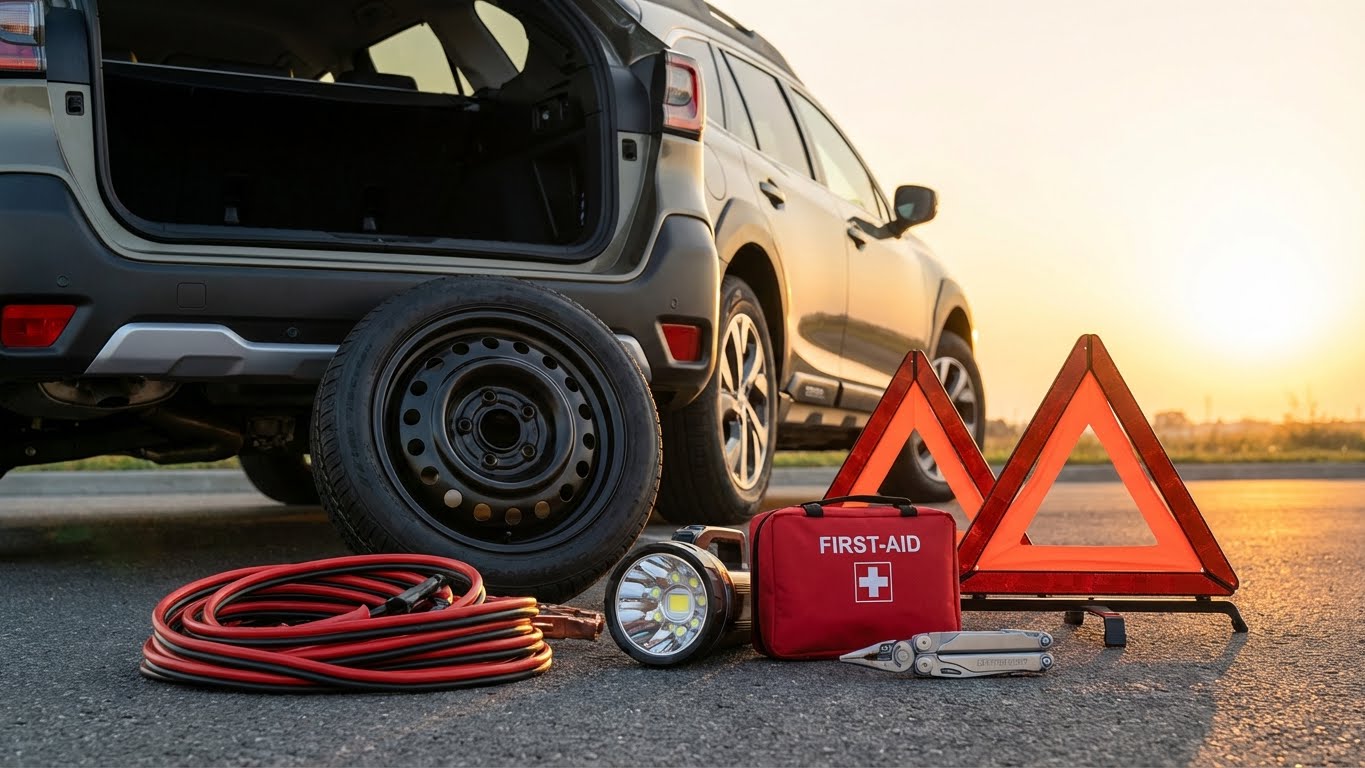
You can avoid being stranded if you carry a compact, well-chosen set of roadside emergency tools in your car. A small kit with a first-aid kit, jumper cables or a portable jump starter, a multi-tool, basic tire tools, a flashlight, and high-visibility warning devices covers most common breakdowns. Pack items you can use yourself and keep them organized so you can reach them fast.
Think about what usually stops you on the road—flat tires, dead batteries, minor injuries, or low light—and pack tools that solve those problems quickly. You’ll also want a way to call for help, stay visible, and stay warm or dry while you wait.
Key Takeaways
- Pack tools that fix common issues quickly and you can use yourself.
- Include lighting and warning devices to stay seen and safe.
- Keep power, basic repair items, and emergency supplies within easy reach.
Essential Roadside Emergency Tools
Keep a few reliable tools that let you fix common problems fast: a spare tire and jack, jumper cables, a tire pressure gauge, and a multipurpose tool. Each item below tells you what to carry, how to use it safely, and what to check before you need it.
Spare Tire and Jack

Carry a full-size spare if your vehicle allows it; a compact “donut” is okay but limits speed and distance. Verify the spare’s air pressure at least monthly and keep the valve cap tight. Store the jack and lug wrench in the same place so you can access both quickly.
When changing a tire, park on level ground, engage the parking brake, and use wheel chocks if you have them. Loosen lug nuts slightly before raising the car with the jack, then raise the vehicle until the flat clears the ground. Tighten lug nuts in a star pattern after lowering the vehicle to ensure even seating.
Pick a jack rated for your vehicle weight—check the owner’s manual for capacity. A scissor jack or hydraulic bottle jack works, but a bigger vehicle needs a heavier-duty jack. Replace rusted or bent tools and practice the steps at home so you can change a tire confidently.
Jumper Cables
Buy cables at least 10–12 feet long and with heavy-gauge wire (4–6 gauge) for safer, faster starts. Store them in a weatherproof bag and include insulated clamps to reduce shock risk. Test them occasionally by jump-starting a healthy vehicle to make sure clamps move freely.
To use: turn off both vehicles, connect red clamp to the dead battery’s positive terminal, then to the good battery’s positive terminal. Attach black clamp to the good battery’s negative terminal and the final black clamp to an unpainted metal ground on the dead car, away from the battery. Start the working car, then start the dead car. Remove clamps in reverse order.
If your battery shows swelling, heavy corrosion, or a cracked case, do not attempt a jump. Carry a portable jump starter as an alternative; it avoids needing another vehicle and works well for short-term emergencies.
Tire Pressure Gauge
Keep a reliable digital or dial gauge in the glove box; built-in cap gauges give rough readings but are less accurate. Know your vehicle’s recommended pressures (driver’s door placard or owner’s manual) and check cold tire pressure weekly or before long trips.
Using the gauge is quick: remove the valve cap, press the gauge straight onto the valve stem, and read the pressure. Add air if the reading is below the recommended number, then recheck. If you find a slow leak, carry a tire repair kit or get the tire inspected and repaired professionally.
Store a small portable air compressor in the trunk. A compact 12V compressor plugs into your car outlet and inflates tires on the spot. Choose one with an auto shutoff and an integrated pressure gauge for easier use.
Multipurpose Tool
Pick a sturdy multipurpose tool that includes pliers, a knife, screwdriver bits, and wire cutters. A compact multitool helps with quick fixes like tightening battery terminals, cutting seat belts in an emergency, or trimming zip ties. Keep it in a labeled pouch so you can find it fast.
Also include a dedicated set: a pair of locking pliers, a basic screwdriver set, and a small adjustable wrench. These let you handle stripped bolts, tighten clamps, or remove interior panels. Inspect tools for rust and oil moving parts occasionally.
Prioritize quality over price—solid construction reduces the chance of failure when you need the tool. Practice opening and closing the multitool at home so you can deploy it smoothly under stress.
Visibility and Warning Devices
Keep items that make your car and yourself easy to see from a distance. Choose durable, bright tools that work at night and in bad weather.
Reflective Triangles
Reflective triangles help drivers see your stopped vehicle from far away, especially on highways. Place them about 10 feet, 100 feet, and 200 feet behind your car on a two-lane road. On a multilane highway, put one 10 feet behind, one 100 feet behind, and one 300 feet or more back if you can safely walk that far.
Look for triangles with a sturdy base that won’t tip in wind. Triangles that fold into a compact case are easier to store.
Check the reflective surface regularly. Replace faded or cracked triangles so headlights still bounce back light clearly. Keep them accessible, not buried under the trunk, so you can deploy them quickly.
LED Warning Flares
LED warning flares give continuous, bright light without heat or fire risk. They work well on wet roads and won’t spark, unlike traditional pyrotechnic flares. Pick rechargeable or battery-powered flares with multiple modes: steady, flashing, and SOS.
Place an LED flare where oncoming drivers will see it first — usually in the lane approaching your car and another behind it. Aim the light toward traffic, not the ground.
Bring extra batteries or a USB charging cable. Inspect the casing for cracks and test the lights monthly so they operate when you need them.
High-Visibility Safety Vest
A high-visibility safety vest makes you visible when you leave your vehicle. Choose vests that meet ANSI/ISEA 107 or equivalent standards for reflective material and bright color. Bright yellow or orange with wide reflective stripes works best at dusk and in rain.
Store the vest where you can reach it quickly, like the glove box or under the seat. Wear it any time you step into traffic or stand near your car on the shoulder.
Make sure the vest fits over your clothes and allows full movement. Wash it according to the label so the reflective tape stays effective.
Portable Power and Lighting
You need reliable power to start a dead battery and strong light to work safely at night. Choose gear that matches your car type and the tasks you’ll do, and keep both items charged and easy to reach.
Portable Jump Starter
A portable jump starter lets you start your car without another vehicle. Pick one with at least 400–800 cold-cranking amps for most passenger cars; SUVs and older models may need more. Look for a unit with reverse-polarity protection, spark-proof clamps, and built-in safety features to prevent damage.
Keep the jump starter charged and store it in a hard case or a trunk compartment where it won’t get crushed. Check its charge monthly and recharge every few months or after use. Many models include USB ports to charge phones and small devices, which can be crucial if you need navigation or to call for help.
When using a jump starter, follow the manufacturer’s clamp order and engine-start instructions exactly. Allow the unit to rest between attempts if the engine doesn’t start right away. If your car has a sensitive electrical system, consult the owner’s manual before use.
Flashlight With Extra Batteries
A bright, durable flashlight helps you inspect tires, read gauges, and signal for help in the dark. Choose an LED flashlight with at least 300 lumens for clear, usable light. Prefer models with multiple modes (high, low, strobe) and a focused beam plus a wide flood setting.
Keep extra batteries in the same kit and rotate them periodically to avoid corrosion or leakage. Store the flashlight where you can reach it quickly—glove box, center console, or door pocket. A headlamp is a useful backup because it frees your hands for repairs or changing a tire.
Water-resistant or waterproof construction and shock resistance make the light reliable in bad weather and after drops. Test the flashlight and spare batteries before long trips to ensure they work when you need them.
Repair and Maintenance Supplies
Keep items that let you fix small problems fast and get moving. These tools help you handle common issues like slow leaks, loose parts, and minor breakdowns without waiting for a tow.
Tire Sealant
Carry a compact tire sealant kit and a small air compressor or a portable jump starter with built-in inflation. Choose a sealant labeled for temporary repair of punctures up to about 1/4 inch (6 mm). Follow the kit’s instructions: remove the object only if specified, attach the hose securely to the valve stem, inject the recommended amount, then inflate to the tire’s correct pressure shown on your door jamb.
Sealant is a temporary fix meant to get you to a repair shop. Note compatibility with tire pressure monitoring systems (TPMS); most modern sealants are TPMS-safe, but check the label. Replace used sealant promptly and inspect the tire for sidewall damage — sealant won’t fix sidewall tears or large punctures.
Duct Tape
Duct tape works for quick, temporary fixes on hoses, trim, or cracked plastic. Keep a short roll in a waterproof bag so it doesn’t lose tackiness. Use wide, heavy-duty duct tape for the best hold and press it firmly to a clean, dry surface; overlap strips to build strength.
For small fluid leaks, tape can hold a patch in place until you reach help. Avoid relying on tape for structural parts or braking components. Carry extra zip ties and a small sheet of plastic or rubber to pair with tape for stronger emergency repairs.
Basic Hand Tools
A small toolkit should include: adjustable wrench, pliers, flat-head and Phillips screwdrivers, socket set (common sizes 10–17 mm), and a long, stiff pry bar. Store tools in a compact roll or molded case to avoid noise and damage. Add a rechargeable LED work light and magnetic pickup tool for dropped fasteners.
Know how to use each tool: check lug nut size before changing a tire, and use socket extensions to reach recessed bolts. Keep spare fuses and a roll of electrical tape for simple electrical fixes. Regularly inspect and tighten loose battery terminals, clamps, and hose clamps to prevent small issues from becoming bigger problems.
Personal Safety and Survival Gear
You need compact, reliable items that protect your health, keep you warm, and give you safe drinking water. Each choice below focuses on durability, ease of use, and real-world utility.
First Aid Kit
Keep a kit sized for your vehicle that covers cuts, burns, sprains, and basic shock control. Include adhesive bandages (various sizes), sterile gauze pads, adhesive tape, antiseptic wipes, antibiotic ointment, and a triangular bandage. Add a pair of nitrile gloves, safety pins, and a small roll of cohesive wrap for sprains. Include a digital thermometer and a few aspirin or acetaminophen tablets unless you have medical reasons not to.
Store items in a clear, zippered pouch so you can find them quickly. Replace used or expired items every 12 months. If you carry prescription meds, store a copy of prescriptions and a list of allergies in the kit.
Thermal Blanket
Carry at least one emergency mylar (space) blanket and one thicker insulated blanket or emergency sleeping bag. A mylar blanket reflects body heat and packs to the size of your palm, which is useful if you must stay near the car. A fleece or insulated emergency sleeping bag provides longer-term warmth in cold weather.
Use the mylar layer to reduce heat loss from radiation; wrap the insulated bag around it when temperatures drop below freezing. Keep these inside your car cabin in a weatherproof container so they stay dry and ready to use.
Bottled Water
Store at least one liter of water per person for a 24-hour period in your vehicle, more if you travel with children or pets. Use sealed, BPA-free bottles and rotate them every 12 months to keep taste and safety optimal. Keep water in a shaded area of the car to avoid heat exposure that can degrade plastic.
Also carry a compact water filter straw or purification tablets as a backup if you run out of stored water. Label bottles with the purchase date and place them in a stable container to prevent spills during travel.
Convenience and Comfort Accessories
Keep items that make a roadside stop safer and less stressful. Pick compact, durable gear that you will actually use and can store without cluttering your trunk.
Rain Poncho
A rain poncho keeps you dry during tire changes or under-hood checks in heavy rain. Choose a poncho made of lightweight, waterproof material with sealed seams. A hood with a drawstring helps keep rain off your face and the front of the poncho should cover your knees when you’re kneeling.
Store a single-use emergency poncho or a reusable packable one in a small zip bag in your glove box or door pocket. Look for sizes that fit over a jacket and pack down to a small pouch. If you often travel in cold weather, pick a poncho that resists wind as well as rain.
Work Gloves
Work gloves protect your hands from cuts, grease, and cold while you handle a battery, change a tire, or use tools. Keep one pair made of nitrile-coated fabric or leather with reinforced palms for grip and abrasion resistance. Thin, flexible gloves let you feel small parts; thicker insulated gloves work better in winter.
Store gloves in a labeled pocket of your emergency kit or in the glove box so you can grab them quickly. Replace gloves that show heavy wear or soaked insulation. Having the right fit improves dexterity and reduces the chance of dropping tools or slipping.
Documentation and Contact Information
Keep clear, easy-to-access paperwork and phone numbers so you can act fast after a breakdown. Store printed and digital copies in separate places to avoid losing everything at once.
Emergency Contact List
Write a concise list with names, phone numbers, and the relation to you. Include:
- Primary emergency contact (name, mobile).
- Secondary contact (work or home number).
- Your medical info: blood type, allergies, medications.
Print one copy and keep it in the glove box. Store a second copy in your phone’s notes app and as a photo in your locked photo album.
Also add roadside help numbers: your insurance roadside assistance, local towing services for frequent routes, and national emergency numbers for the regions you travel through. Update the list every six months or after any change in phone numbers or medical details.
Vehicle Manual
Keep the vehicle owner’s manual or a PDF version in the glove compartment. The manual gives model-specific steps for jump-starts, fuse locations, tire change instructions, and warning light meanings. If you have a hybrid or EV, include any special shut-down or tow instructions.
Note the page numbers for common tasks on a sticky tab: battery jump-start, spare tire access, and fuse box layout. If you don’t own a physical copy, download the manufacturer PDF to your phone and label the file with your car’s year, make, and model for quick retrieval.
FAQs
What tools should you always keep in your car?
Keep a roadside kit with a first aid kit, jumper cables or a jump starter, a tire repair kit and pump, basic hand tools, a flashlight with spare batteries, and reflective triangles or flares. Add seasonal items like a blanket, ice scraper, and gloves if you face winter weather.
How often should you check your emergency kit?
Check your kit at least twice a year and before long trips. Replace expired items like medications, batteries, and canned food as needed.
Can a multi-tool replace full-size tools?
A multi-tool helps with small fixes and can save you time, but it cannot replace full-size tools for major repairs. Keep a lug wrench and jack for tire changes and a pair of jumper cables or a portable starter for battery issues.
Is a roadside kit enough to get you home?
A good kit helps you handle many common problems, but it may not get you home if the damage is severe. Use your kit to stay safe, then call roadside assistance if needed.
How do you store the kit in your car?
Store items in a durable, waterproof bag or plastic bin and keep it in the trunk or under a seat. Use clear labeling and organize by category so you can grab what you need quickly.
Conclusion
You can cut risk and stress by keeping a few key tools in your car. A basic toolkit, jumper cables or a portable starter, a tire kit, and a first aid pack cover the most common problems.
Check your supplies every few months. Replace expired items, top off fluids, and test batteries so your kit works when you need it.
Store items where you can reach them fast, and know how to use each tool. Practice changing a tire or jump-starting a car in a safe place to build confidence.
Keep a small list of emergency phone numbers and any medical info in your glove box. A few minutes of prep can save time and prevent bigger trouble on the road.
Bold essentials to remember:
- Jumper cables or portable starter
- Tire repair or spare and jack
- First aid kit
- Flashlight and extra batteries
- Reflective triangle or road flares
You control how prepared you are. Simple, regular checks and basic skills make your drives safer and less stressful.