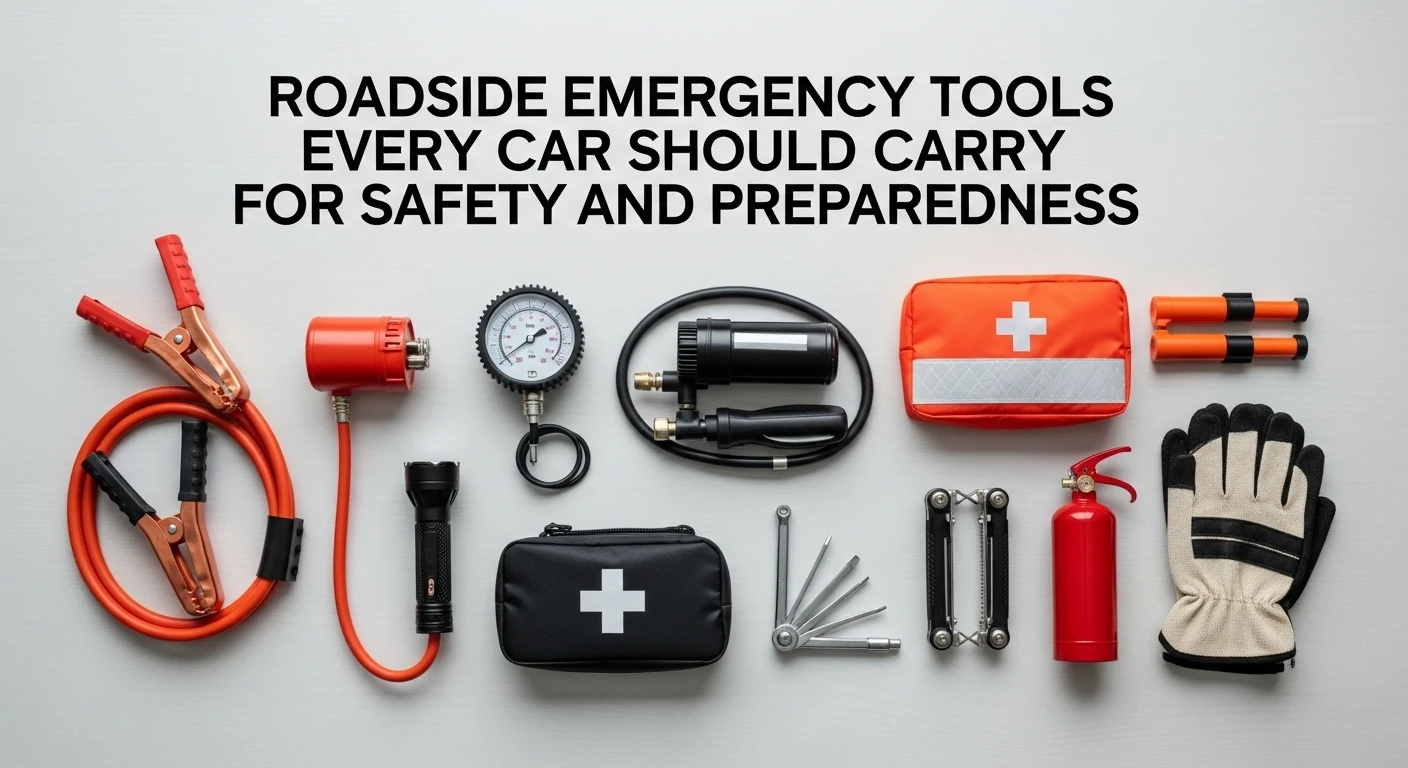
When a car breaks down or an unexpected problem happens on the road, having the right tools can make all the difference. Every driver should carry a basic set of roadside emergency tools to stay safe and handle common issues like flat tires, dead batteries, or sudden weather changes. These tools not only help drivers fix problems but also keep them prepared for different situations.
Essential items include a first aid kit, jump starter, multi-tool, flashlight, and safety gear such as flares or reflective triangles. These tools provide practical solutions, allowing drivers to act quickly and avoid waiting for long periods in unsafe conditions. Carrying weather-appropriate items and comfort supplies also adds to the readiness for any emergency.
Organizing these tools properly ensures quick access when needed. Knowing what to carry and how to use these items is key to staying safe and confident on the road in 2025 and beyond.
Key Takeways
- Carrying basic emergency tools helps drivers manage most roadside problems.
- Safety and convenience items increase comfort and protection during emergencies.
- Proper organization allows easy access to tools when time is critical.
Essential Roadside Emergency Tools

A well-equipped car should have specific tools to handle common breakdowns like dead batteries and flat tires. These tools help drivers act fast and stay safe until professional help arrives.
Jumper Cables
Jumper cables are vital for restarting a car with a dead battery. They connect your battery to another vehicle’s battery to transfer power. High-quality cables should have heavy-duty clamps and thick insulation to handle high current safely.
When using jumper cables, it’s important to connect the clamps in the right order: positive to positive, then negative to a metal ground on the dead car. This prevents sparks and damage. These cables vary in length, but 12 to 20 feet is usually best to allow enough space between cars.
Car owners should regularly check jumper cables for corrosion or damage. Keeping them in a waterproof case or pouch inside the vehicle ensures they won’t be ruined by moisture or dirt.
Tire Repair Kit
A tire repair kit is essential for fixing small punctures without removing the tire. Most kits come with plugs, insertion tools, and sealant. They work well for quick fixes on nails or screws that cause slow leaks.
Using a tire repair kit is a temporary solution until the tire can be professionally repaired or replaced. Drivers should check the patch before inflating the tire again and always carry a portable air pump or CO2 inflator to maintain pressure.
Tire repair kits are compact and easy to store in the trunk. They are especially useful in remote areas or during bad weather when changing a tire isn’t safe or possible.
Spare Tire and Jack
A spare tire and a jack are basic but critical tools in roadside emergencies. The spare allows the driver to replace a flat tire and continue driving temporarily. There are full-size spares and smaller space-saver spares; full-size offers better performance but takes more space.
The jack must match the car’s weight rating and lift height. Most vehicles come with a scissor or hydraulic jack. It needs to be stable and easy to operate, preferably with clear instructions printed or attached nearby.
It’s important to check the spare tire pressure regularly to ensure it’s ready when needed. The jack should be tested occasionally to confirm it works without issues.
Lug Wrench
A lug wrench is needed to loosen and tighten the wheel nuts when changing a tire. The most common type is the L-shaped or cross wrench with multiple socket sizes. It should fit the lug nuts securely to avoid slipping and injury.
Using a lug wrench effectively requires some strength and correct technique. Loosen nuts slightly before lifting the car with a jack, then fully remove them after the tire is off. Tighten the nuts in a crisscross pattern when putting the tire back on to ensure even pressure.
Car owners can store the lug wrench with the spare tire or in a dedicated compartment. It should be rust-free and in good condition for reliable use in emergencies.
Safety Tools Every Driver Needs
Being visible and prepared during a roadside emergency is essential for safety. Certain tools help drivers warn other vehicles, stay seen in low light, and manage dark conditions without risk. These items reduce the chance of accidents and keep drivers safer when they have to stop on the road.
Reflective Warning Triangles
Reflective warning triangles alert other drivers to a stopped vehicle ahead. They should be placed at least 50 to 100 feet behind the car to give approaching traffic enough time to react. Most kits include three triangles, allowing placement both behind and in front of the vehicle if needed.
These triangles fold flat for easy storage and use highly reflective materials so they are visible day and night. They work better than flares because they are safe around fuel. It is recommended by safety experts to carry them for any trip, especially in areas with high-speed traffic. For proper use guidelines, the National Safety Council offers detailed advice.
High-Visibility Safety Vest
A high-visibility safety vest helps drivers stay visible when outside the car, especially at night or in poor weather. Its bright colors and reflective strips make the wearer easy to spot by other drivers.
This vest should be kept in the glove box or door panel for quick access. Emergency responders recommend using it anytime you step out onto a busy road. Lightweight and adjustable vests provide comfort without bulk. Wearing one significantly lowers the risk of accidents by increasing visibility during breakdowns or tire changes.
LED Flashlight or Headlamp
A reliable LED flashlight or headlamp is crucial for seeing and being seen during nighttime emergencies. LED lights offer long battery life and bright, clear illumination, which is better than traditional bulbs.
Flashlights help inspect the vehicle, change tires, or signal for help. Headlamps free up both hands, making it easier to work in the dark. Drivers should carry extra batteries or choose rechargeable models. It is wise to pick lights with a durable, water-resistant design to withstand weather challenges. To choose the best options, resources like Consumer Reports provide tested recommendations.
Emergency Power and Lighting
Reliable power and proper lighting are essential during roadside emergencies. Having the right tools can help restart a dead battery, keep phones charged, and signal for help safely. These items improve both safety and convenience when stranded.
Portable Jump Starter
A portable jump starter is a compact device designed to start a vehicle with a dead battery without another car. Most models deliver enough power for multiple jump starts on a single charge.
Users should look for jump starters with at least 400-600 amps for typical sedans. Many come with built-in safety features like reverse polarity protection and short-circuit prevention, reducing the risk of user error.
Additional functions often include USB ports for charging phones and small devices. A built-in flashlight or emergency light is a common bonus, which aids in nighttime repairs or signaling.
Rechargeable Battery Pack
A rechargeable battery pack is vital for keeping communication devices powered during an emergency. It offers multiple USB outputs and can charge phones, tablets, or other small electronics multiple times.
Look for battery packs with at least 10,000 mAh capacity for extended use. Some models include fast-charging technology and can recharge quickly themselves.
Many also feature rugged designs with water-resistant or shockproof construction, making them reliable in harsh weather conditions. This device ensures users can call for help or use navigation apps even when their car’s battery fails.
Emergency Roadside Flares
Emergency roadside flares provide clear visual signals to other drivers and rescue teams, especially in low visibility conditions. Modern flares are often LED-based, offering longer battery life and no fire risk.
They come in bright colors like red or orange and can flash or stay steady. Some models include magnetic or tripod bases, making it easy to set them on or near the vehicle.
A good set of flares should last at least 8-12 hours and be water-resistant. These lights increase visibility, helping prevent accidents and alerting others to the vehicle’s location effectively.
First Aid and Personal Care Essentials
A car emergency kit must include items that help treat injuries and maintain hygiene. These supplies allow someone to handle minor wounds quickly and reduce infection risks. Proper personal care tools also protect anyone providing assistance.
First Aid Kit
A complete first aid kit is critical for roadside emergencies. It should contain adhesive bandages in various sizes, sterile gauze pads, and medical tape to cover cuts and scrapes. Antiseptic wipes or solution help clean wounds to prevent infection.
Pain relievers like ibuprofen or acetaminophen offer relief from discomfort. Tweezers can remove splinters or debris safely. Scissors and safety pins are useful for cutting bandages or fastening dressings.
It’s important that the kit also includes allergy medication and any personal prescriptions. Kits should be checked regularly for expired items and replenished to stay ready for use.
Disposable Gloves
Disposable gloves protect both the injured person and the helper from germs and bloodborne pathogens. They should be made of latex or nitrile for durability and proper fit.
Having gloves readily available can prevent direct contact with bodily fluids or contaminated surfaces. It reduces the risk of infection and cross-contamination during first aid.
Drivers should carry multiple pairs in their emergency kit and replace used or damaged gloves promptly. Gloves are lightweight and take up little space but are vital for safe personal care.
Hand Sanitizer
Hand sanitizer with at least 60% alcohol content is essential when soap and water aren’t available. It quickly kills most germs on the hands, reducing infection risks after treating wounds or touching potentially contaminated surfaces.
A small, travel-size bottle fits easily in the car emergency kit. It should be used before and after administering first aid or handling food and water.
Hand sanitizer supplements hand washing, especially in remote locations, and helps maintain personal hygiene during roadside emergencies.
Weather-Specific Emergency Items
Certain tools and gear become essential when driving in harsh weather conditions. These items help maintain visibility, warmth, and dryness, improving safety during roadside emergencies caused by ice, snow, or rain.
Ice Scraper and Snow Brush
An ice scraper and snow brush are necessary for clearing frost, ice, and snow from windows and mirrors. Ice buildup can block vision and cause dangerous driving conditions.
The brush quickly removes snow, while the scraper breaks and clears tough ice layers. Look for models with ergonomic handles and sturdy blades made from plastic to avoid scratching glass. Some ice scrapers include extendable handles to reach across larger windshields.
Shedding ice before driving saves time and prevents accidents. Keeping these tools in the car year-round, especially in snowy climates, ensures readiness. For more guidance on winter car safety, the National Highway Traffic Safety Administration (NHTSA) offers useful tips.
Blanket or Emergency Thermal Blanket
A warm blanket or emergency thermal blanket helps protect against cold exposure during roadside delays. Regular blankets offer comfort, while Mylar thermal blankets reflect body heat and pack small for easy storage.
Cold weather can cause hypothermia, especially if a vehicle breaks down in freezing temperatures. Having a blanket means the driver or passengers can stay warm while waiting for help. It’s important to keep extra blankets or thermal blankets in the emergency kit during winter months.
Thermal blankets are also water-resistant and lightweight, which makes them practical in wet or windy conditions. The American Red Cross recommends including these in any winter survival kit.
Rain Poncho
A rain poncho is useful to keep drivers dry if they must exit the vehicle during heavy rain or storms. It protects clothing and prevents discomfort and chills caused by wet conditions.
Ponchos are lightweight and can be folded to fit in a glove box or door pocket. Unlike umbrellas, ponchos allow hands to remain free for emergency tasks like fixing a flat tire or signaling for help.
Having a poncho simplifies tasks during wet weather and reduces the risk of catching a cold while stranded. Drivers should choose durable, waterproof ponchos made from materials like vinyl or polyester for long-lasting protection.
Multipurpose Tools for Unexpected Situations
Certain tools offer a wide range of uses during roadside emergencies. These items solve problems quickly, from fixing minor damages to assisting in vehicle recovery or securing loose parts. Their versatility makes them valuable for any driver.
Multi-Tool or Swiss Army Knife
A multi-tool or Swiss Army knife combines several tools into one compact device. It often includes a knife blade, screwdrivers, scissors, bottle opener, and sometimes pliers. This range of functions helps with small repairs like tightening screws, cutting seatbelts in emergencies, or opening packages.
Drivers benefit from its portability—small enough to fit in a glove box or pocket. The sturdy metal construction means it will last through numerous uses. It’s also easy to operate under stressful conditions, making it reliable during roadside fixes.
Duct Tape
Duct tape is known for its strong adhesive and durability, making it a must-have for quick fixes. It can temporarily secure side mirrors, hold broken parts together, or seal leaking hoses until professional help arrives.
This tape works on many surfaces like metal, plastic, and fabric. A small roll fits well in an emergency kit without taking much space. Its water-resistant quality adds protection against rain or moisture, which is practical when stranded outdoors.
Tow Strap or Rope
A tow strap or strong rope is essential for situations where a vehicle needs pulling out of mud, snow, or ditches. Tow straps are usually made of nylon and can stretch slightly to absorb shock while pulling, reducing the risk of snapping.
They should have metal hooks or loops for secure attachment to tow points on vehicles. The length and strength rating matter; most standard straps are 15 to 30 feet long and can handle several tons. Carrying one gives a driver the option to get help from another vehicle or assist others in need.
Convenience and Comfort Items for Roadside Emergencies
Having a few basic comfort items can make a roadside emergency less stressful. These items help maintain hydration, energy, and cleanliness when help is delayed. Drivers should prioritize lightweight, easy-to-store items that won’t spoil quickly.
Bottled Water
Water is essential during any emergency. It keeps the driver and passengers hydrated, especially if the wait for help takes a long time. A good rule is to carry at least one gallon of water per person per day, but a smaller amount can also be helpful for short roadside stops.
Bottled water should be stored in a cool, shaded part of the car to prevent it from heating up. Reusable bottles are fine but need to be cleaned regularly to avoid bacteria buildup. Water also serves multiple uses, like rinsing wounds or cleaning hands when no other options are available.
Non-Perishable Snacks
Non-perishable snacks provide needed calories and help maintain energy in case of a long wait. Items such as granola bars, nuts, dried fruit, and crackers are good options. These snacks require no refrigeration and have a long shelf life.
Packing snacks in small, resealable bags keeps them fresh and prevents spills. Drivers should rotate snacks periodically to avoid expired food. Having a few varied types can also help meet different dietary needs or preferences during emergencies.
Paper Towels or Rags
Paper towels or rags serve many basic needs on the roadside. They help clean hands, wipe up spills, or dry off wet surfaces. Keeping a small pack of either item can prevent dirt and grease from spreading inside the vehicle.
Rags can be reused after washing, making them an eco-friendly choice. Paper towels are disposable and convenient but need to be stored where moisture won’t ruin them. Both options provide practical solutions for quick cleanup tasks.
Organization and Storage Tips
Keeping roadside emergency tools organized makes them easier to find and use when needed. A dedicated container or bag should be used to store all items in one place. This prevents tools from rolling around in the trunk or under seats.
Using clear, labeled bags or compartments helps identify items quickly. For example, first aid supplies can be stored in a separate pouch within the main kit. Tools like jumper cables, flashlights, and tire repair kits should each have their own spot.
It is important to choose storage that fits the size of the vehicle’s trunk or storage area. Compact organizers or foldable bags save space and keep everything tidy. If space is limited, prioritize tools based on the most likely emergencies.
Securing heavy or sharp items prevents damage to the vehicle or injury during sudden stops. Velcro straps or elastic bands can hold tools in place. The kit should be checked regularly to replace expired items and ensure batteries in devices like flashlights are working.
Clear labeling and grouping by function, such as medical supplies, tools, and safety gear, can save time during a stressful roadside emergency. Having a mobile phone holder or mount nearby also helps keep communication devices accessible.
| Tips for Storage | Example |
|---|---|
| Use a sturdy container | Plastic bin, heavy-duty bag |
| Label compartments | “First Aid,” “Tools,” “Spares” |
| Secure heavy items | Velcro straps or elastic bands |
| Regularly check contents | Replace expired or used items |
FAQs
What are the most important tools to keep in a roadside emergency kit?
A basic kit should include jumper cables, a first aid kit, and a multi-tool. Other useful items are a flashlight, tire pressure gauge, and reflective warning triangles.
How often should the emergency kit be checked?
It is best to check the kit at least twice a year. This ensures supplies are fresh, batteries work, and tools are in good condition.
Can winter items be left in the car year-round?
Some winter items like blankets and a small shovel are good all year if space allows. However, keep extra clothing and ice scrapers handy when cold weather starts.
Is it necessary to include food and water?
Including non-perishable snacks and bottled water is wise for longer waits or severe conditions. Keep small amounts to avoid clutter and spoilage.
Are tools enough to handle all emergencies?
Tools help, but knowing how to use them is just as important. Practicing simple fixes or emergency steps increases safety during breakdowns.
Here is a quick checklist of key tools to carry:
- Jumper cables
- First aid supplies
- Multi-tool
- Flashlight with extra batteries
- Reflective warning triangles
- Tire pressure gauge
- Basic hand tools (screwdriver, pliers)
- Blanket or emergency foil blanket
These items cover the most common roadside scenarios and improve readiness.
Conclusion
Having the right roadside emergency tools in a car is important. These items help drivers handle unexpected problems safely and quickly. A well-prepared vehicle can reduce stress and prevent small issues from turning into major ones.
Drivers should keep items like a first aid kit, jumper cables, a multi-tool, and warning triangles. Each tool has a clear purpose, from treating minor injuries to signaling for help. Packing these essentials shows good planning and attention to safety.
Emergency kits should be checked regularly. Items can expire or get damaged over time. Keeping the kit stocked and in good condition means it will work when needed.
Safety gear such as reflective vests and flares improves visibility during a breakdown. This helps protect both the driver and other road users, especially in low light or bad weather.
In short, carrying roadside emergency tools is a practical step for every driver. It prepares them to face common roadside problems with confidence and caution.