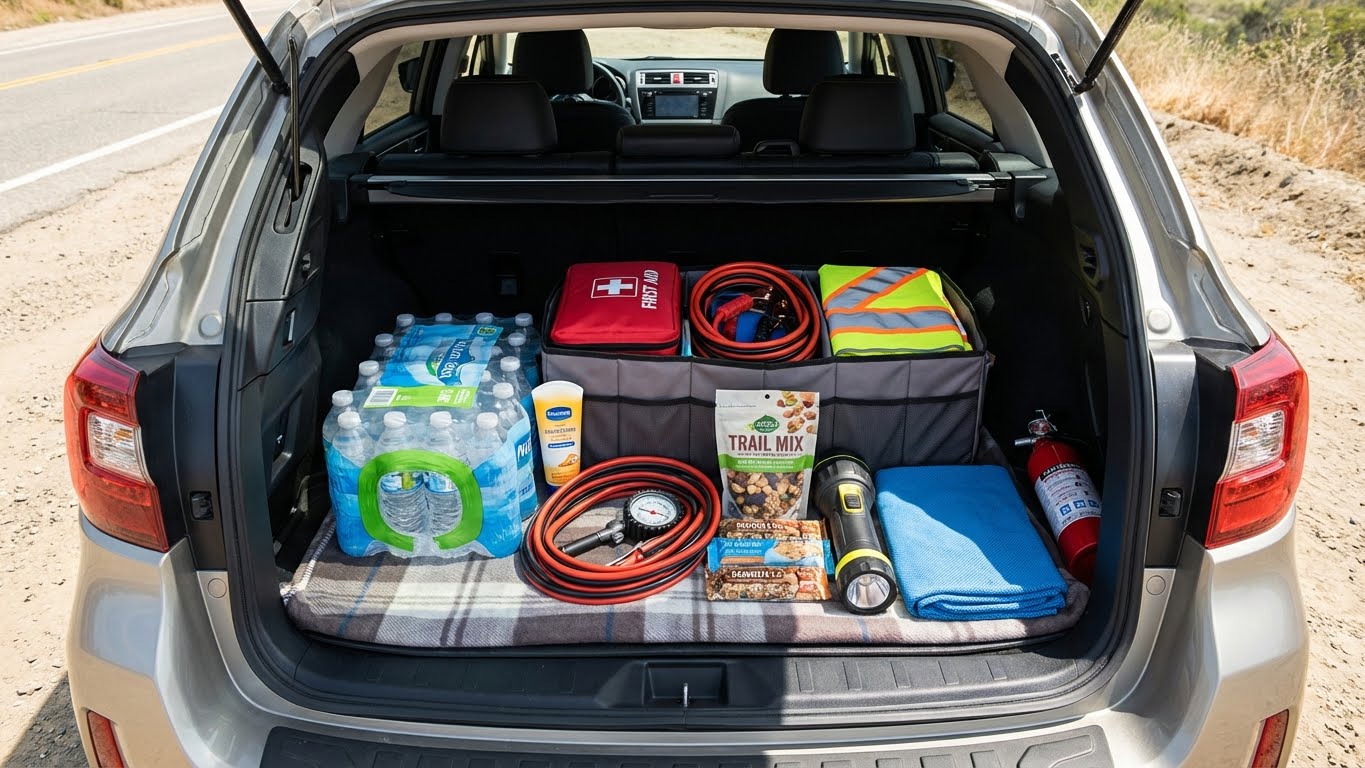
Summer driving brings unique challenges like heat, sun exposure, and breakdown risks. Being ready with the right emergency gear can make a big difference in staying safe and comfortable during your trip. A well-packed summer car emergency kit should include hydration supplies, sun protection, basic tools, and items for personal comfort.
High temperatures can cause overheating and dehydration, so water and sun protection gear are essential. Tools for quick fixes, like tire repair kits, help handle common car problems. Having a few comfort items, such as extra clothing and snacks, can make waiting for help easier.
Being prepared means you’re ready for whatever the road may bring. This guide will cover what essentials every summer emergency kit needs to keep drivers safe in hot weather.
Key Takeaways
- Hydration and sun protection are vital components of summer emergency gear.
- Basic car repair tools help manage roadside breakdowns efficiently.
- Personal comfort items improve safety and well-being during delays.
Essential Summer Emergency Gear
A summer car emergency kit should focus on key items that keep drivers safe and comfortable in hot weather. Staying hydrated, handling minor injuries, signaling for help, and having tools to start a dead battery are critical for any roadside emergency.
Water and Hydration Supplies
Water is the most important item for summer emergencies. Heat can lead to dehydration very quickly, especially if someone is stranded without access to fluids. Drivers should keep at least one gallon of water per person, ideally in sealed, BPA-free bottles.
In addition to plain water, electrolyte drinks can help replace salts lost through sweating. These maintain energy and prevent heat-related illnesses. Store water in a cool, shaded spot inside the vehicle to avoid warming.
A reusable water container with a filter can also be useful if stranded near natural water sources. For more tips on water safety and hydration, the CDC website offers detailed guidelines.
First Aid Kit
A well-stocked first aid kit is essential for treating cuts, burns, and heat-related issues while waiting for help. The kit should include bandages, antiseptic wipes, gauze, adhesive tape, and burn cream.
Include items that address common summer injuries like blisters, insect bites, and sunburn. Cooling packs or gel can help reduce heat stress on the skin. Allergy medication and pain relievers are also useful.
Organize the kit in a labeled, waterproof container to keep supplies clean and dry. Regularly check expiration dates and replace used or outdated items.
Reflective Warning Triangles
To warn other drivers and avoid accidents, reflective warning triangles are vital safety tools. They enhance visibility in case of breaks down or accidents, especially on dark or busy roads.
Place the triangles at 10, 50, and 100 feet behind the vehicle in normal conditions. This spacing informs oncoming traffic early and helps prevent collisions.
Reflective triangles are lightweight, easy to store, and do not require batteries. Make sure to practice setting them up quickly. The National Highway Traffic Safety Administration suggests keeping this equipment within reach.
Jumper Cables
Dead batteries happen more often in summer due to heat causing battery fluid evaporation and electrical failures. Jumper cables allow a quick start using another vehicle’s battery.
Choose cables with heavy gauge wires (at least 4-gauge) to handle high electrical current safely. The clamps should be sturdy and corrosion-resistant for secure connections.
Set clear steps for jumping a car: connect positive terminals first, then negative, and always wear gloves for safety. Having jumper cables in the emergency kit is one of the best preparations for avoiding long waits or towing fees.
For added safety, a portable jump starter can provide power without a second vehicle, making it a handy alternative.
Heat Protection And Sun Safety

Protecting against heat and sun is crucial when driving or stuck in a hot environment. Proper gear helps prevent heat-related illnesses and reduces sun damage. Items that block sunlight and provide skin protection are key parts of any summer car emergency kit.
Sunshade And Window Covers
Sunshades and window covers lower the inside temperature of a parked car by blocking direct sunlight. They reduce heat buildup on the dashboard and seats, making the car cooler when returning. Reflective materials are best because they bounce sunlight away instead of absorbing it.
Window covers also protect skin from UV rays while driving. Some fit inside the window frame and others are removable. It’s important to choose covers that are easy to install and remove quickly in case of emergency. Storing these in the car ensures they are always available when needed.
SPF Sunscreen
SPF sunscreen is vital for protecting exposed skin from ultraviolet (UV) rays that cause burns and long-term damage. A broad-spectrum sunscreen with at least SPF 30 is recommended for use on all exposed areas, including face, neck, ears, and hands.
In hot conditions, sunscreen must be applied every two hours or after sweating. Having sunscreen in the car emergency kit ensures it’s ready for unexpected exposure during breaks or roadside stops. Small, travel-sized bottles make it easy to carry and reapply when necessary.
Wide-Brimmed Hat
A wide-brimmed hat provides extra shade and blocks sunlight from hitting the face, ears, and neck. Unlike baseball caps, a wide brim protects multiple areas vulnerable to sunburn and heat.
Hats made from breathable, lightweight materials help keep the head cool while offering physical sun protection. It’s a simple item that can significantly reduce the risk of heat exhaustion and sun damage during prolonged exposure outdoors or during vehicle problems. Keeping a hat in the car adds a practical layer of heat safety.
Emergency Breakdown Tools
Having the right tools can make a difference during a roadside breakdown. Specific items help fix small problems quickly, allowing drivers to get back on the road or safely wait for help.
Multi-Tool or Utility Knife
A multi-tool combines several tools into one compact device. It usually includes pliers, screwdrivers, a knife, and other small tools. This makes it easy to handle many minor repairs or adjustments during a breakdown.
The utility knife is useful for cutting seat belts, rope, or materials like tape. A sharp, reliable blade can be critical in emergencies. A good multi-tool is built to last and fits in a glove compartment or emergency kit without taking much space.
It’s important to choose a model with locking blades for safety. Brands like Leatherman or Gerber have strong reputations for quality. Instructions on safe use help prevent injuries. More details on multi-tools are available from Consumer Reports.
Duct Tape
Duct tape is a simple but highly versatile tool. It can temporarily seal leaks, hold loose parts in place, or repair torn items like hoses and emergency blankets.
Its sticky, water-resistant nature makes it useful even in summer heat. Carry duct tape in small, manageable rolls to save space and make it easy to apply. It bonds well to metal, plastic, and fabric surfaces.
Drivers can use it to fix broken mirrors, patch tire inner liners, or secure wires. Even if a repair is only temporary, duct tape buys time until professional help arrives. Keeping some wrapped around a small card or plastic strip makes it easier to tear by hand.
Portable Tire Inflator
A portable tire inflator is essential for handling low or flat tires without changing them immediately. These devices plug into the car’s 12V outlet or run on batteries to inflate tires quickly.
They are compact and light, perfect for keeping in the trunk. Many models have digital pressure gauges, which allow users to monitor tire pressure accurately. This helps improve vehicle safety and fuel efficiency.
Using a portable inflator helps avoid hazards caused by driving on under-inflated tires. They come with various connectors suited for car, bike, or inflatable items. For reliable models and maintenance advice, NHTSA’s tire safety page offers useful information.
Communication And Location Devices
Staying connected during a roadside emergency is vital. Reliable power for devices and quick access to help contact information can make a big difference in response time and safety.
Cell Phone Charger
A fully charged phone loses power quickly in emergencies. Having a car charger or a portable power bank ensures the phone stays powered when needed most.
A charger that plugs into the car’s 12V outlet or USB port works well on longer trips. For times when the car battery is dead, a portable battery pack is essential. Features to look for include high capacity (at least 10,000 mAh) and fast charging.
Keeping cables organized and accessible helps avoid delays. It’s wise to test chargers regularly to confirm they work. Also, consider a charger with multiple ports for devices like phones and GPS units.
Roadside Assistance Contact Information
Knowing how to reach roadside help is crucial. Store phone numbers for services like AAA, your insurance company, and emergency towing.
This information should be saved both in your phone contacts and written on a card kept in the glove compartment. Digital backups in apps or cloud notes add extra security.
Keep details clear and updated. Preparing shortcuts for calls or text messages can save important seconds. Having a physical list helps if the phone battery dies or signal is weak.
Quick access to trusted assistance makes handling mechanical failures or accidents smoother and less stressful.
Food And Nutrition Supplies
A summer car emergency kit should include food and drinks that stay fresh and provide energy. Choosing the right items helps maintain strength and hydration during long waits or unexpected stops.
Non-Perishable Snacks
Non-perishable snacks are essential because they last long without refrigeration. Items like protein bars, nuts, dried fruit, and whole-grain crackers are good choices. These foods provide energy and nutrients while resisting heat damage.
It’s important to pick snacks that are easy to open and eat on the road. Avoid snacks that melt easily, like chocolate. Packaging should be durable to prevent spills or crushing.
Storing snacks in a cool, dry place inside the car can extend their life. Checking expiration dates regularly helps ensure the supplies are safe to consume.
Electrolyte Tablets or Drinks
Electrolyte tablets or powdered drinks help replace salts and minerals lost through sweating in hot weather. They support hydration better than water alone in high temperatures.
Tablets are convenient because they take up little space and can be added to water as needed. Drinks with balanced electrolytes like sodium, potassium, and magnesium aid in preventing dehydration and muscle cramps.
It’s best to choose options without added sugars or artificial ingredients. Keeping a few doses handy in your emergency kit allows for quick hydration when the heat becomes intense.
Personal Comfort Items
Staying comfortable during a summer car emergency can make a difference in managing heat and stress. Items that cool the body and provide light warmth at rest stops help maintain well-being and energy.
Cooling Towels
Cooling towels are designed to lower body temperature quickly. When soaked in water and wrung out, they stay cool for hours without needing refrigeration. This provides immediate relief from heat during a breakdown or wait.
They are lightweight and easy to carry, fitting in small compartments or glove boxes. These towels also help prevent heat exhaustion by keeping the neck, wrists, or forehead cool. Reusable and durable, they are a practical choice for long trips or unexpected delays in summer heat.
Lightweight Blanket
A lightweight blanket serves multiple purposes in a summer emergency kit. It offers shade when placed over windows and protects from sun exposure during breaks outside the vehicle.
At night, it provides a thin layer of warmth without overheating. This helps with resting comfortably when temperatures drop after sunset. Soft, compact blankets made from breathable materials are ideal for packing. Extra blankets can also be useful for seating comfort or covering up children during sudden weather changes.
Preparedness For Nighttime Emergencies
When a car emergency happens at night, good lighting and visibility are crucial for safety. Having gear that helps see clearly and be seen by others reduces risks. Proper tools improve the chance of handling the situation efficiently while waiting for help or making repairs.
LED Flashlight
A bright LED flashlight is an essential item for nighttime car emergencies. It provides strong, focused light that helps inspect your car, change a tire, or find items in the dark. LED lights use less battery and last longer than traditional flashlights.
Look for a flashlight that is compact, water-resistant, and has multiple brightness levels. Some models also offer a strobe mode for signaling other drivers. Always keep extra batteries in your emergency kit to avoid running out of power.
Car interior and roadside situations often involve uneven surfaces and obstacles. A reliable LED flashlight makes navigating these conditions safer and reduces the chance of injury after dark.
High-Visibility Vest
A high-visibility vest is important to wear if you have to exit your vehicle at night. Bright neon colors combined with reflective strips make the wearer stand out to other drivers, even in low light.
This vest increases personal safety by reducing the risk of being hit by passing cars on busy roads or dark highways. It is lightweight, easy to store, and should be one of the first items accessed during an emergency.
Drivers should put on the vest before leaving the car to check the problem or set up emergency markers. It’s especially valuable during summer nights when it gets dark quickly, and visibility drops suddenly.
Final Safety And Organization Tips
Keeping the summer car emergency kit organized is key to quick access during a roadside situation. Use clear, labeled containers or bags to separate items like first aid, tools, and hydration supplies. This reduces time spent searching for essentials.
Check the kit regularly, ideally before each trip. Replace expired food, batteries, and medications. Inspect tools and gear to ensure they are in working order and ready to use.
Store the emergency kit in an easy-to-reach spot, such as the trunk or under a seat. Secure it so it does not shift during driving, which can damage contents or create hazards.
Keep a small notebook or digital list of contents and emergency contacts. This helps anyone unfamiliar with the kit to find what they need fast.
Include basics like:
- Water bottles for hydration
- Sunscreen and hats for protection
- Tire repair tools and jumper cables
- First aid kit and necessary medications
Adding comfort items like extra clothing, a small pillow, or non-perishable snacks helps manage longer waits safely.
Finally, remind travelers to inform someone about their trip route and expected arrival time. This simple step pairs with having a well-stocked emergency kit to increase safety during summer road trips.
FAQs
What are the must-have items for a summer car emergency kit?
A good summer kit includes water for hydration, sun protection like sunscreen and hats, a first aid kit, and basic tools such as a tire repair kit. Including high-energy snacks and extra clothing is also helpful. These items prepare drivers for heat and common roadside problems.
How often should the summer emergency kit be checked?
It is best to check the kit before each trip. Water and food should be replaced if expired or used. Tools and supplies should be inspected for damage or wear to ensure they work when needed.
Is a summer kit different from a winter kit?
Yes. Summer kits focus on heat-related issues like dehydration and sun exposure. Winter kits usually include items to handle cold weather risks like blankets, ice scrapers, and warm clothing. Both kits share basic survival items like first aid and tools.
Can personal comfort items improve the emergency experience?
Yes. Small extras like blankets, pillows, and extra clothes can make a big difference during long waits or rest stops. These help keep passengers comfortable and reduce stress when stranded.
Why is hydration important in a summer emergency kit?
High temperatures increase the risk of dehydration. Having enough water helps keep the body functioning well and prevents heat-related illnesses. It is one of the most essential items for safety in hot weather.
Conclusion
A well-prepared summer car emergency kit is key to staying safe during hot weather trips. It should include water, sun protection, basic tools, and first aid supplies. These items help handle common problems like heat-related illnesses and vehicle issues.
Drivers should keep their kits organized and check them regularly. Replacing expired items and adding missing essentials ensures the kit is always ready. Hydration and sun protection are especially important in summer to prevent dehydration and sunburn.
Entertainment items such as books or tablets can also improve comfort during long waits. Having reliable roadside tools and a charged phone charger adds extra security. Being prepared for summer emergencies reduces stress and improves overall safety on the road.
The contents of each kit may vary based on travel plans and local climate conditions. Customizing the kit for specific needs makes it more useful. A proper summer emergency kit helps drivers face unexpected situations calmly and effectively.
Key items to include:
- Water bottles
- Sunscreen and hats
- Tire repair tools
- First aid kit
- Emergency phone charger
- Non-perishable snacks
A carefully assembled kit supports safe travel, comfort, and readiness in any summer roadside emergency.