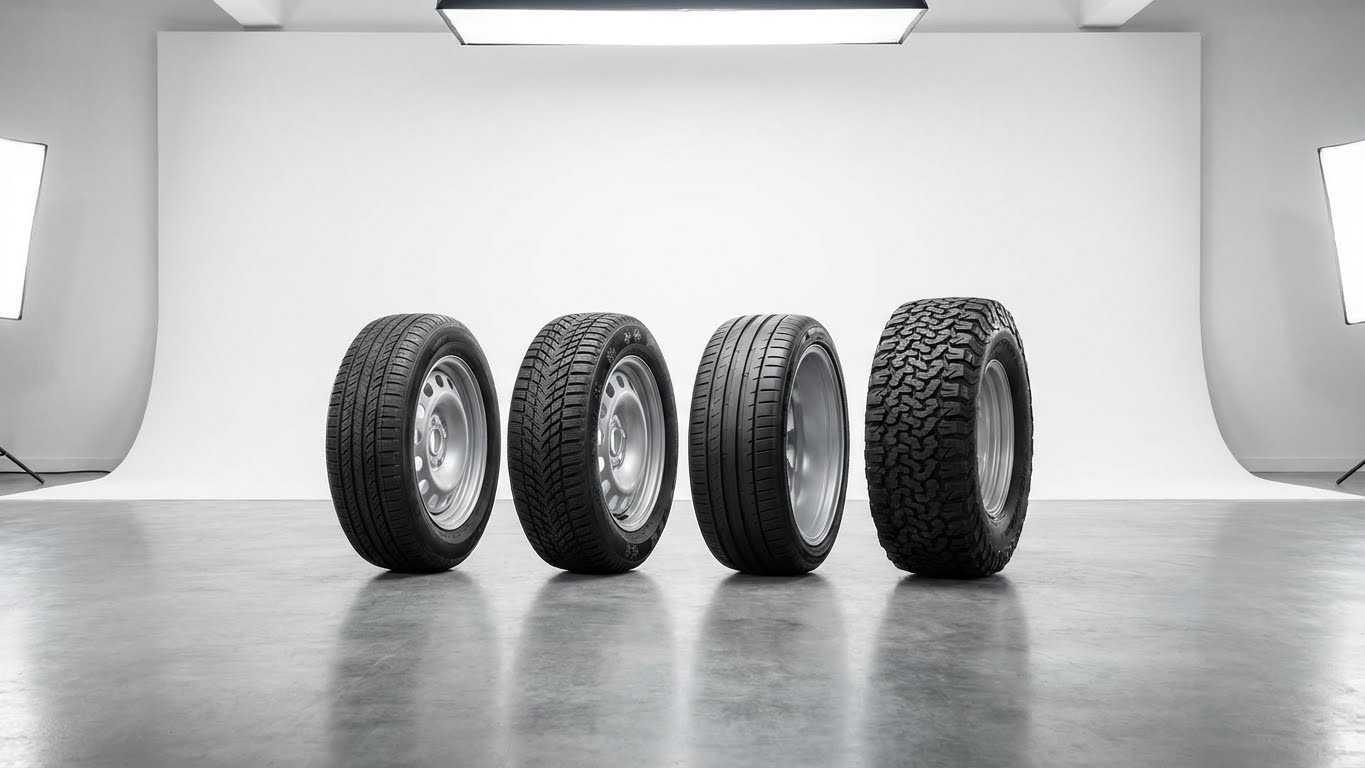
Tires come in many types, each designed for different vehicles, weather conditions, and driving needs. The main tire types include all-season, summer, winter, performance, touring, and off-road tires, each serving a specific purpose to improve safety and performance. Choosing the right type depends on factors like climate, terrain, and the kind of vehicle being driven.
Some tires are made for everyday use, while others are built to handle tough roads or high speeds. Specialty tires cover everything from mud and snow to heavy-duty work vehicles. Understanding these options helps drivers pick tires that fit their lifestyle and keep them safe on the road.
Key Takeways
- Tires are made for different weather and road conditions.
- Some tires focus on comfort and everyday use.
- Specialty tires handle extreme or off-road driving.
Tire Categories By Vehicle

Tires are designed to fit the needs of different types of vehicles. The right tire for a vehicle depends on its size, weight, and how it is used. Each category has tires tailored for performance, safety, and durability in specific driving conditions.
Passenger Car Tires
Passenger car tires are made for everyday driving on paved roads. They focus on comfort, fuel efficiency, and quiet rides. All-season tires are common in this category because they offer good grip in dry, wet, and mild snowy conditions.
There are also performance tires designed for sportier driving. These provide better handling and traction but usually wear out faster. Touring tires improve ride comfort and often last longer than basic tires.
These tires vary by size and tread pattern to suit small cars, sedans, and hatchbacks. They balance safety and cost for daily use.
SUV and Crossover Tires
SUV and crossover tires are built for heavier vehicles and varied conditions. They often have stronger sidewalls to handle more weight. Many are all-terrain tires, which work well on both highways and light off-road paths.
These tires provide extra traction in mud, rain, or snow but remain comfortable on paved roads. Some models are specially designed for luxury SUVs, focusing on noisy or rough ride reduction.
High-performance SUV tires are also popular for drivers wanting a mix of control and style.
Truck and Light Commercial Tires
Truck and light commercial tires support heavier loads and tougher driving. These tires usually have reinforced construction for durability and wear resistance.
Heavy-duty tires provide better traction on construction sites and rough roads. They often come with deep treads and extra grip for off-road use.
Light trucks like pickups use tires designed for towing and hauling, ensuring safety with heavy loads. High mileage tires help cut replacement costs by lasting longer under stress.
Motorcycle Tires
Motorcycle tires differ greatly from car tires. They must balance grip, speed, and cornering ability on two wheels.
Types vary between sport tires for aggressive riding, touring tires for long distances, and off-road tires for dirt and gravel paths. The tread patterns and rubber compounds change depending on these uses.
Motorcycle tires also include dual-sport tires that handle both pavement and dirt. Proper tire choice helps maintain control and stability to match the bike’s purpose.
Most Common Tire Types
Tires come in different types designed to match specific road conditions and climates. Each type offers benefits in grip, durability, and safety depending on the weather and driving needs. Understanding these differences helps drivers choose the right tires for their vehicle.
All-Season Tires
All-season tires are the most widely used type, built to perform fairly well in a variety of conditions including dry roads, light rain, and mild winter weather. They feature tread patterns that balance traction and tread life, making them cost-effective for year-round use.
These tires are made with rubber compounds that stay flexible in moderate temperatures but can harden in extreme cold. As a result, they are not ideal for heavy snow or icy roads. For drivers in moderate climates looking to avoid seasonal tire changes, all-season tires provide convenience and decent performance.
More details about the benefits and limitations of all-season tires can be found at the Tire Industry Association.
Summer Tires
Summer tires offer enhanced grip and handling on warm, dry, or wet roads. They use a special rubber compound that softens at warmer temperatures to improve traction and allow quicker steering response. Their tread design often includes fewer grooves to maximize road contact, which helps during high-speed cornering and braking.
However, summer tires harden and lose grip in cold weather, making them unsafe for winter driving. They work best in climates where temperatures stay above 45°F (7°C) and during seasons without snow. Drivers seeking better control and performance on highways or in sporty driving conditions often prefer summer tires.
The U.S. Department of Energy provides useful tips for choosing tires based on climate and driving style.
Winter Tires
Winter tires are specifically made for cold weather, snow, and ice. Their rubber compounds remain flexible in very low temperatures to maintain good traction. They also have deep tread patterns and unique siping, which are tiny slits in the tread, to improve grip on slippery surfaces.
These tires are crucial for safety in regions with heavy snow or freezing rain. Winter tires provide better braking and handling on icy roads than all-season or summer tires. Many states recommend or require winter tires during certain months for safer winter travel.
Information on winter tire rules and safety tips is available from the National Highway Traffic Safety Administration (NHTSA).
Performance and Specialty Tires
These tires are built for drivers who want specific handling, comfort, or durability features. They suit different driving styles and road conditions, focusing on safety, control, and ride quality.
Performance Tires
Performance tires are designed to offer better handling, traction, and response at higher speeds. They usually have softer rubber compounds and unique tread patterns that improve grip on dry and wet roads. This makes them ideal for sporty driving and quick maneuvers.
However, softer rubber wears out faster, so these tires often need more frequent replacement. Performance tires also tend to be less effective in snow or ice compared to other types. Drivers who prioritize steering precision and braking power often choose these tires.
Touring Tires
Touring tires focus on a smooth, comfortable ride and long tread life. They often have features like multiple tread grooves and noise-reducing technology to provide quiet driving on highways. These tires balance good all-season traction with fuel efficiency.
They are suitable for daily driving and longer trips where comfort matters more than aggressive performance. Touring tires perform well in light rain and dry conditions but may struggle in heavy snow or off-road scenarios.
Highway Tires
Highway tires are built for vehicles that spend most of their time on paved roads. They have strong sidewalls and tread patterns optimized for steady, predictable handling at highway speeds. These tires stress durability and fuel savings.
Highway tires support heavier loads and are common on trucks and SUVs used primarily for commuting. They also aim to reduce road noise and improve wet traction but are not the best choice for off-road use or sharp cornering.
Off-Road and Terrain-Specific Tires
Different tires are built to handle specific off-road and terrain conditions. Each type has features that improve traction, durability, and performance for certain environments. Choosing the right tire depends on the terrain and driving needs.
All-Terrain Tires
All-Terrain (A/T) tires are designed for a balance between on-road comfort and off-road capability. They have moderate tread blocks and patterns that provide good traction on dirt, gravel, and paved roads. These tires often feature reinforced sidewalls for extra durability against rocks or rough surfaces.
They work well for drivers who mostly stay on highways but want the ability to go off-road occasionally. A/T tires offer better handling and less noise compared to more aggressive off-road tires. They are a common choice for SUVs and pickup trucks used in varied conditions.
Mud-Terrain Tires
Mud-Terrain (M/T) tires are built specifically for muddy, loose, and soft terrains. Their tread patterns have large, deep knobs and wide spaces that allow mud and dirt to clear easily. This design maximizes grip when driving through thick mud or wet dirt.
These tires have stronger sidewalls and tougher rubber compounds to resist punctures and cuts. Mud-terrain tires are noisier and less smooth on highways. They are best for off-road enthusiasts who frequently drive in muddy trails or rough landscapes.
Snow Tires
Snow tires, sometimes called winter tires, are made for cold weather and snowy or icy roads. They use special rubber compounds that stay flexible in freezing temperatures, improving grip. The tread patterns have many small slits, called sipes, that help bite into snow and ice.
These tires increase safety and control in winter driving conditions. Unlike all-season tires, snow tires provide better braking and acceleration on slippery surfaces. They are necessary for regions with heavy winter weather and help prevent accidents caused by loss of traction.
Sand Tires
Sand tires are designed to perform well on soft, loose sand found in deserts or beaches. They usually have a wider footprint to spread the vehicle’s weight and prevent sinking. The tread pattern is smoother and less aggressive, allowing the tire to float over sand rather than dig in.
Some sand tires also have paddle-like patterns that help push the vehicle forward. These tires are important for dune bashing or driving on sandy terrain where traction is limited. They sacrifice some off-road climbing ability for better movement on loose sand.
Special Purpose Tires
Special purpose tires serve unique roles beyond everyday driving. They focus on safety during emergencies, environmental impact, and convenience when a standard tire is unavailable. These tires offer specific benefits depending on the need, such as extra durability, compact size, or reduced rolling resistance.
Run-Flat Tires
Run-flat tires allow a vehicle to keep moving even after a puncture or loss of air pressure. They have reinforced sidewalls that support the car’s weight without air inside. This design helps drivers continue driving for up to 50 miles at reduced speeds, usually around 50 mph.
This feature reduces the risk and inconvenience of getting stranded after a flat tire. However, run-flat tires often provide a firmer ride and may wear faster than regular tires. They usually require special rims and cannot be fixed with a simple patch, meaning replacement might be necessary after a puncture.
More details about these tires and compatibility can be found at the Tire Industry Association.
Spare and Donut Tires
Spare tires come in two main types: full-size and donut (compact). Full-size spares match the vehicle’s regular tires but take up more space and add weight. Donut tires are smaller and lighter but only intended for short-term, low-speed use.
Donut tires are designed for temporary use, typically lasting less than 70 miles at speeds under 50 mph. Their smaller size means less grip and stability, so drivers should replace them with a regular tire quickly. These tires provide a useful backup but are not meant for long trips or harsh conditions.
Vehicle owner manuals usually provide instructions on when and how to use spare or donut tires safely.
Eco-Friendly Tires
Eco-friendly tires focus on reducing fuel consumption and lowering emissions. They use special materials and tread patterns to minimize rolling resistance, which helps the vehicle use less energy while driving.
These tires often have silica compounds and optimized designs that improve grip without sacrificing efficiency. This balance can save fuel money over time and reduce environmental impact. While they may sometimes cost more upfront, benefits include lower carbon footprints and better mileage.
Manufacturers like Michelin and Bridgestone offer models certified for their eco-friendly features. More info is available at the U.S. Environmental Protection Agency (EPA).
Construction and Technology Variations
Tire construction affects how a tire performs, lasts, and feels on the road. Different designs use varying layers and angles of materials, which influence durability, ride comfort, and handling.
Radial Tires
Radial tires have layers of cords arranged perpendicular to the direction of travel, at a 90-degree angle. This design allows the sidewall and tread to work independently, providing better road contact and improved fuel efficiency.
They offer stronger tread support, which leads to longer wear life. Their flexibility also results in a smoother ride and better handling, especially at higher speeds. Radial tires are common in passenger cars and many trucks because of their balance of comfort and durability.
These tires are often marked with an “R” on the sidewall to show they use radial construction.
Bias Ply Tires
Bias ply tires use layers of cords that run diagonally, crossing each other at angles between 30 to 40 degrees. This creates a stiffer sidewall that spreads impacts over a larger area.
Because of their construction, bias ply tires provide a softer ride on rough surfaces but wear out faster than radial tires. They also have less grip during cornering and handling is less precise.
They are commonly found on older vehicles or those used off-road, where toughness against damage is more important than fuel efficiency or smoothness. On the sidewall, these tires may show a “D” or no letter at all.
Tires for Industrial and Agricultural Use
Tires in industrial and agricultural settings are built for specific tasks and conditions. Their designs focus on durability, traction, and the ability to handle rough terrain or heavy loads. Selecting the correct tire type impacts both performance and equipment lifespan.
Agricultural Tires
Agricultural tires, often marked as R1 tires, are designed mainly for farm work. They have large, deep lugs spaced widely to provide strong traction in soil, mud, and snow. This tread pattern helps prevent slipping and clogging, making them suitable for plowing, planting, and harvesting.
These tires are usually narrower than others to reduce soil compaction and improve efficiency in fields. They excel on soft or uneven terrain but perform poorly on hard surfaces like pavement. Farmers prioritize traction, flotation, and resistance to wear when choosing agricultural tires.
Industrial Tires
Industrial tires, classified as R4 tires, are made for heavy machinery used in construction or factory settings. They have a denser, more rugged tread compared to agricultural tires to withstand rough surfaces like gravel, concrete, or metal.
Their tread design emphasizes durability and stability under heavy loads rather than grip in loose soil. Industrial tires often have thicker sidewalls and stronger rubber compounds to resist cuts and punctures. These features make them fit for forklifts, loaders, and other equipment working on hard or mixed terrain.
Heavy Equipment Tires
Heavy equipment tires serve large machines like excavators, bulldozers, and cranes. They feature aggressive tread patterns with deep grooves that help handle uneven, rocky, or muddy ground. These tires must carry extreme weights and absorb shocks from heavy impacts.
They are made from tough rubber designed to resist wear, cuts, and heat buildup under stress. Heavy equipment tires come in various sizes and tread styles tailored to different work sites. Their primary purpose is to ensure safety and stability while supporting massive machines on challenging surfaces.
Frequently Asked Questions (FAQ)
Which tire type is best for daily driving?
All-season tires are the best choice for most daily drivers. They offer a good balance of comfort, durability, and traction in dry, wet, and mild winter conditions.
Can I use summer tires all year?
No. Summer tires lose grip in cold weather and become unsafe on icy or snowy roads. They are only suitable for warm climates and summer driving.
Do I really need winter tires?
Yes, if you live in an area with snow or freezing temperatures. Winter tires provide better traction, braking, and control on ice and snow compared to all-season tires.
Are off-road tires safe for highway driving?
Some off-road tires, like all-terrain tires, are safe for highways. However, mud-terrain tires are noisier, wear faster, and offer less comfort on paved roads.
How long do most tires last?
Most tires last between 3 to 6 years depending on driving habits, road conditions, and maintenance such as proper inflation and alignment.—
Conclusion
Tires play a major role in vehicle safety, comfort, and performance. With so many types available—from all-season and winter tires to off-road and specialty tires—choosing the right one depends on your vehicle type, climate, and driving habits.
Understanding tire categories by vehicle, terrain, and construction helps you make smarter decisions that improve fuel efficiency, handling, and overall road safety. Whether you drive a daily commuter car, a heavy truck, or farm equipment, using the correct tire ensures better control and longer service life.
Before buying your next set of tires, always consider your local weather, driving style, and load requirements. The right tire choice not only protects your vehicle—but also protects your life.