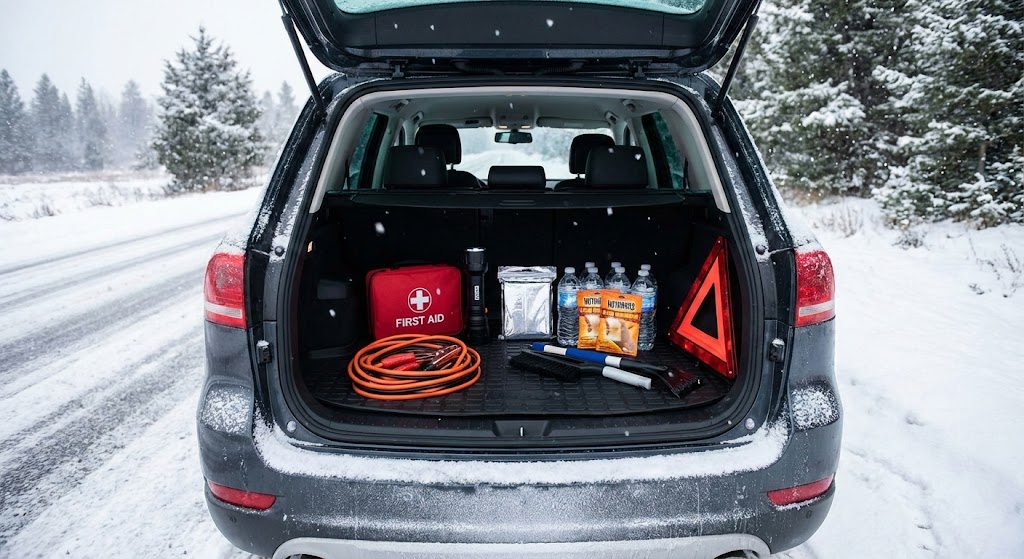
Driving in winter can bring unexpected challenges like icy roads and sudden storms. Being prepared with the right supplies in your car is important for safety and peace of mind. A winter car emergency kit should include items that keep you warm, help you stay visible, provide food and water, and allow you to fix common car problems.
This kit isn’t just for bad weather; it can save lives if you get stuck or stranded. Essential items include flashlights with extra batteries, blankets, warm clothing, first aid supplies, and tools like a snow shovel and ice scraper. Having communication devices and traction aids can also make a big difference in an emergency.
Knowing what to pack and how to organize these supplies can help drivers stay ready all winter long. Preparing your vehicle properly reduces risks and can make roadside emergencies easier to handle.
Key Takeways
- A winter emergency kit should cover warmth, visibility, and basic survival needs.
- Tools for vehicle recovery and maintenance are essential to include.
- Proper organization and regular updates keep the kit effective.
Essential Winter Car Emergency Kit Items

Preparing for winter emergencies means having the right supplies to stay safe and comfortable. Key items include medical supplies, warmth essentials, food and water, and reliable lighting. Each type of gear plays a specific role in handling common roadside challenges during cold weather.
First Aid Supplies
A basic first aid kit is vital for treating minor injuries or stabilizing more serious ones until help arrives. It should include adhesive bandages, sterile gauze pads, antiseptic wipes, adhesive tape, and scissors. Pain relievers, allergy medicine, and any personal prescriptions should also be part of the kit.
Adding items like a thermal blanket and burn cream can improve readiness. First aid kits designed for cars are compact but comprehensive, allowing quick access when needed. Check the kit periodically to replace expired items or used supplies.
For detailed guidance on first aid essentials, consider consulting resources from the American Red Cross.
Blankets and Warm Clothing
Staying warm is critical if stranded. Wool or thermal blankets provide insulation and help retain body heat better than standard blankets. Extra hats, gloves, scarves, and socks should be included to replace wet or lost clothing.
Packing a waterproof jacket or poncho can protect against snow and wind. Space-saving options like emergency heat blankets are lightweight and offer effective warmth.
Proper warm gear reduces the risk of hypothermia. Drivers should prioritize materials that dry quickly and provide insulation even when damp.
Non-Perishable Food and Water
Keeping hydrated and fueled during an emergency can prevent fatigue and maintain energy. Pack bottled water in sealed containers that won’t freeze quickly. High-calorie, non-perishable snacks like granola bars, nuts, dried fruit, and jerky are ideal.
Avoid foods that require cooking or refrigeration. Compact, nutritiously dense options save space and last long. Check expiration dates regularly.
Having enough supplies for at least 24 hours increases safety during extended delays caused by road closures or bad weather.
Flashlight and Extra Batteries
Reliable light sources are essential in winter emergencies when visibility is low. A strong flashlight helps with signaling, checking under the hood, or navigating outside the car at night.
LED flashlights with adjustable brightness and long battery life are preferred. Including extra batteries ensures the light remains functional during prolonged use.
Headlamps or hand-crank flashlights are useful alternatives. Keep all lighting tools in an easy-to-reach spot inside the vehicle for quick access.
For more information on car emergency preparedness, visit the National Weather Service’s winter safety page.
Safety and Survival Equipment
A well-stocked winter car emergency kit includes items that improve visibility, provide basic tools, and help signal for help. These tools are essential for staying safe when stranded in cold weather.
Reflective Warning Triangles
Reflective warning triangles alert other drivers to a stopped or disabled vehicle, especially in low light or snowy conditions. They should be placed at least 50 to 100 feet behind the car on highways to give approaching drivers enough time to slow down.
The bright, reflective material makes the triangles visible from a distance, reducing the risk of accidents. They are lightweight, easy to set up, and durable enough to withstand winter weather. Drivers should carry at least two or three triangles to cover multiple lanes if needed.
Multitool or Swiss Army Knife
A multitool or Swiss Army knife provides several tools in one compact device, useful for small repairs or emergency tasks. It typically includes blades, screwdrivers, scissors, and can open cans or bottles.
This versatility lets drivers cut ropes, remove debris, or handle other unexpected problems without needing a full toolbox. The compact size means it fits anywhere in the emergency kit. Regular checking keeps the blades sharp and tools functional for winter emergencies.
Whistle
A whistle is a simple, loud device to help signal for assistance when a person is stranded and out of sight from passing cars or rescuers. Unlike shouting, a whistle can be heard over longer distances and through snow or wind.
It requires no batteries and is easy to carry. Using short, repeated blasts increases the chance that someone will notice. Including a whistle in the kit improves communication options when phones or radios fail.
Personal Locator Beacon
A personal locator beacon (PLB) sends a distress signal with GPS coordinates to emergency responders. It is critical in remote or severe winter conditions where phone signals may be weak or unavailable.
The PLB is activated manually in emergencies and can greatly speed up rescue efforts. They usually come with a robust casing to withstand cold and water exposure. While planning trips in isolated areas, having a PLB is a key safety measure.
Tools for Vehicle Recovery and Maintenance
Having the right tools in your car can make a big difference when dealing with winter driving problems. These tools help you fix common issues like dead batteries, flat tires, stuck vehicles, and ice buildup quickly and safely.
Jumper Cables
Jumper cables are essential for restarting a dead battery. Cold weather drains batteries faster, making it common for cars to fail to start in winter. Jumper cables connect your battery to another car’s battery, allowing you to jump-start your vehicle.
When choosing jumper cables, look for ones that are at least 10 to 12 feet long with thick, heavy-gauge wires. Thicker wires carry more current, which is necessary in cold conditions. Keep the cables in a waterproof bag to protect them from moisture.
Using jumper cables safely requires following the correct steps to avoid sparks or damage. The AAA website offers detailed jumper cable safety tips to ensure proper use.
Tire Repair Kit
A tire repair kit can save you from being stranded with a flat tire. These kits typically include a sealant and a small compressor to temporarily fix holes in the tire tread. This is especially useful in winter when getting a full tire change may be difficult.
The sealant works by plugging small punctures, allowing you to reach a service station safely. Most kits are designed for quick use but are not a permanent fix. Always check the kit instructions and ensure it suits your tire size and type.
Having basic knowledge of how to use the kit influences how quickly and effectively it works. It’s also helpful to include a tire pressure gauge in your kit to monitor inflation levels.
Tow Strap
A tow strap is necessary if the car gets stuck in snow, ice, or mud. It allows another vehicle to pull you out safely. Choose a strap made of strong, durable nylon with reinforced loops on each end for secure attachment.
Know the weight limits of the strap and your vehicle before use to prevent accidents. Tow straps are different from chains; they stretch slightly and reduce shock during pulls, which protects both vehicles.
Store the strap in an easy-to-reach place in your trunk. Learning proper towing signals and techniques can prevent injuries or damage. Information on safe towing can be found at the National Highway Traffic Safety Administration (NHTSA).
Ice Scraper and Snow Brush
An ice scraper and snow brush combo is a must-have for clearing frost, ice, and snow from your windows and lights. Visibility is crucial in winter driving, so removing buildup quickly is key to safety.
Look for tools with a sturdy plastic scraper and a brush with firm bristles to handle heavy snow. Some brushes come with extendable handles to reach the roof or large windshields.
Keeping these tools in good condition helps prevent scratching windows. Also, using a scraper before the defroster warms up can save time. Carrying a compact set fits easily in your car and is effective for fast winter cleanup.
Emergency Communication Devices
Staying connected during a winter emergency is critical. Reliable communication tools help call for help, stay informed, and keep others updated on your situation. The right devices ensure this, even if your main phone runs out of power or signal.
Portable Phone Charger
A portable phone charger, also called a power bank, is essential for keeping a phone charged when stranded. Winter conditions can quickly drain battery life, especially in cold weather. A fully charged power bank gives extra hours of phone use.
Look for chargers with at least 10,000 mAh capacity to recharge most smartphones two to three times. Compact and lightweight models fit easily in the kit. Some chargers have multiple USB ports, allowing you to charge more than one device.
Remember to keep the power bank charged before trips. It should be stored inside the car so it stays warm, helping maintain its battery efficiency in cold temperatures.
Two-Way Radio
Two-way radios provide reliable communication when cell signals are weak or unavailable. They work without needing cell towers and can connect with others nearby, such as family or rescue teams.
Choose radios that operate on FRS or GMRS frequencies. GMRS radios usually have longer range but may require a license. Make sure to test the radios before winter and carry extra batteries.
Radios with weather alert features are useful. They provide updates on storms and emergencies, helping drivers stay informed of changing conditions.
Pen and Notepad
A pen and notepad are simple but vital tools in emergencies. They allow writing down important information like locations, phone numbers, or details about accidents.
If communication devices fail, paper notes can be a way to leave messages for rescuers or passersby. Writing down symptoms or events can also help emergency responders.
Use waterproof notebooks and pens designed to work in cold or wet conditions. Keep them easily accessible in the car’s survival kit for quick use when needed.
Comfort and Additional Preparedness Items
Staying warm and dry is essential when stranded in winter. Having tools that provide heat and extra clothing can prevent hypothermia and make waiting for help much more bearable. Small personal care items also keep basic hygiene possible when stuck for a long time.
Hand Warmers
Hand warmers are compact, easy-to-use heat sources that can be activated by air or friction. They stay warm for several hours and are critical in preventing frostbite or numbness in fingers during cold weather.
They can be disposable or reusable. Disposable hand warmers are single-use packets activated by exposure to air. Reusable warmers often contain a gel and can be heated in hot water or microwaves.
It’s wise to keep several pairs in the kit, stored in an airtight bag to keep them fresh. Their lightweight design makes them easy to carry in gloves or pockets. For more detailed advice, the American Red Cross offers winter safety tips that include hand warmer use.
Extra Socks and Gloves
Wet or cold feet and hands are a major cause of discomfort and can increase the risk of frostbite. Packing extra pairs of thick socks and insulated gloves is essential to keep extremities dry and warm.
Avoid cotton socks, as they retain moisture and can cool the skin down. Wool or synthetic materials that wick moisture away work best. Bringing multiple pairs allows for changes if the first set becomes wet or dirty.
Gloves should be waterproof and insulated. Liner gloves inside heavier gloves add extra warmth and flexibility. These items help maintain body heat and prevent cold injuries, especially during long waits or walking to find help.
Travel-Size Toiletries
In a long emergency, having basic toiletries adds comfort and preserves hygiene. Small packets or travel-sized bottles of items like wet wipes, hand sanitizer, toothbrush, and toothpaste can make a significant difference.
Wet wipes help keep hands and face clean when water is unavailable. Hand sanitizer reduces germs, which is important in close quarters or shared spaces. Toothbrush and toothpaste help prevent discomfort from missed oral care.
Compact and lightweight, these items don’t take much space but improve well-being during extended waits. For a complete list of essentials, the National Weather Service provides a car emergency kit checklist that includes hygiene items.
Storage and Organization Tips
Keeping a winter car emergency kit organized is key to quick access during an emergency. Items should be stored in a durable container that fits securely in the trunk or backseat. A waterproof, hard-sided box or heavy-duty plastic bin works well to protect supplies from moisture and damage.
Small items like batteries, first aid supplies, and snacks should be grouped in clear, labeled bags or smaller boxes. This prevents loose items from scattering and makes it easier to find what is needed fast. For example:
| Item Category | Storage Method |
|---|---|
| First Aid Kit | Small, labeled pouch |
| Tools and Equipment | Hard plastic compartment |
| Food and Water | Sealed airtight bags |
Heavy or bulky gear, such as shovels or jumper cables, should be placed flat on the trunk floor to avoid shifting during driving. Straps or bungee cords can hold larger items in place for added safety.
It is important to check and refresh the kit regularly. Heavier items should be balanced evenly to keep the car stable, while frequently used tools should sit near the top for easy reach.
By organizing the kit thoughtfully, drivers can reduce stress and respond more effectively in winter car emergencies. Clear labeling and compartmentalized storage save time and effort when it matters most.
Regular Maintenance and Seasonal Checks
Regular maintenance is key to keeping a car safe during winter. Drivers should check tire tread and pressure often. Good tires improve traction on icy or snowy roads.
Fluids also need attention. Antifreeze levels must be sufficient to prevent the engine from freezing. Windshield washer fluid should be full and rated for cold temperatures.
Battery health is important. Cold weather can reduce battery power, so testing it before winter helps avoid breakdowns. Replacing an old or weak battery is a good idea.
Brake systems need inspection. Proper brake function is critical on slippery roads. Worn brake pads or low brake fluid should be fixed immediately.
Heating and defrosting systems must work well. These keep windows clear and the driver warm, which supports safe driving.
Filling the gas tank before storms helps prevent fuel line freeze and ensures enough fuel if delayed.
Drivers should also inspect wiper blades and replace them if worn. Clear visibility is vital in winter conditions.
Performing these checks regularly reduces the risk of car trouble in cold weather. It prepares the vehicle to handle winter hazards safely and reliably.
FAQs
What are the most important items to include in a winter car emergency kit?
A basic kit should have a flashlight with extra batteries, a first aid kit, an ice scraper, snow shovel, warm blankets, and extra clothing. Food and water are also important in case of long waits.
How often should the kit be checked or updated?
The kit should be checked at least once each winter season. Batteries need to be fresh, and any expired food or medicine should be replaced. It’s also good to review clothing and tools for wear.
Is it necessary to include car maintenance tools?
Yes. Items like jumper cables, a tow rope, tire chains, and a small container of windshield washer fluid help maintain safety and mobility during winter conditions.
Can the kit help if someone is stranded overnight?
Yes. Emergency blankets, high-calorie snacks, water, and warm clothing can help prevent hypothermia and keep comfort until help arrives.
Where should the winter emergency kit be stored?
It should be kept in an accessible place inside the vehicle, like the trunk or under the seat. This ensures it can be quickly reached when needed.
Are cell phone chargers important for the kit?
Yes. Including a portable charger or car charger helps maintain communication in emergencies. Staying connected can be crucial for assistance.
Conclusion
A winter car emergency kit is essential for safety during cold weather. It helps drivers handle unexpected situations like getting stuck or waiting for help. Having the right items in the car can make a big difference.
Key items to include are a flashlight, extra batteries, first aid supplies, and an ice scraper. Warm blankets, non-perishable snacks, and water are also important. Vehicle tools like jumper cables and a snow shovel add practical support.
Drivers should check the kit regularly. Replace used or expired items and adjust supplies based on weather conditions. Keeping the kit accessible and well-organized saves time during emergencies.
Being prepared reduces stress and improves safety. It allows drivers to stay comfortable and stay connected while waiting for help. This simple step supports safer winter travel for everyone.